



Survey Data
Reg No
60260176
Rating
Regional
Categories of Special Interest
Architectural, Artistic, Historical, Social
Previous Name
Mount Louise originally Kerrymount
Original Use
House
In Use As
House
Date
1860 - 1870
Coordinates
321616, 225020
Date Recorded
12/12/2012
Date Updated
--/--/--
Description
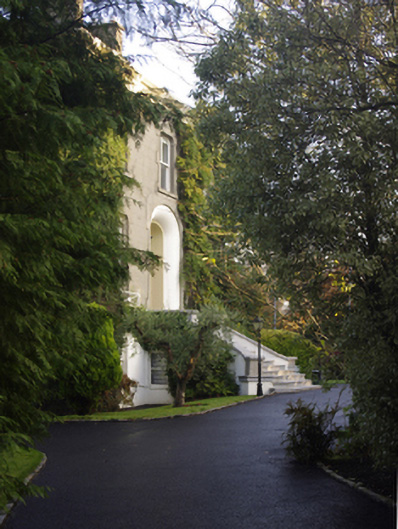
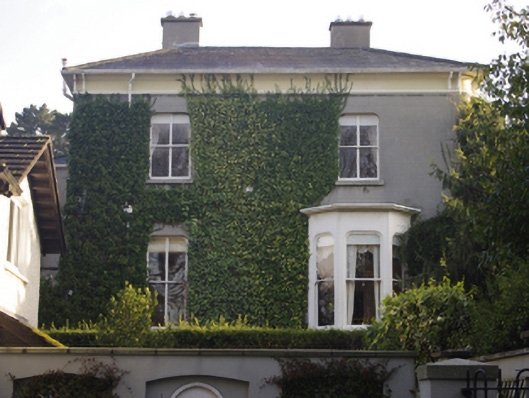
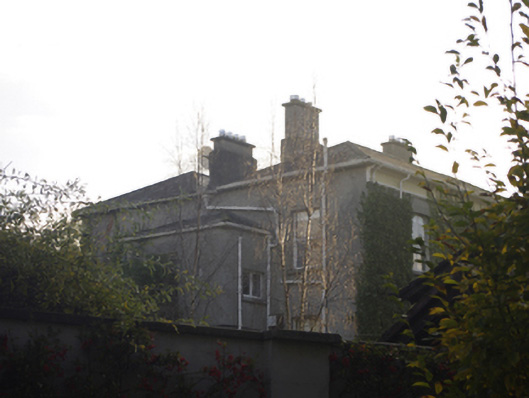
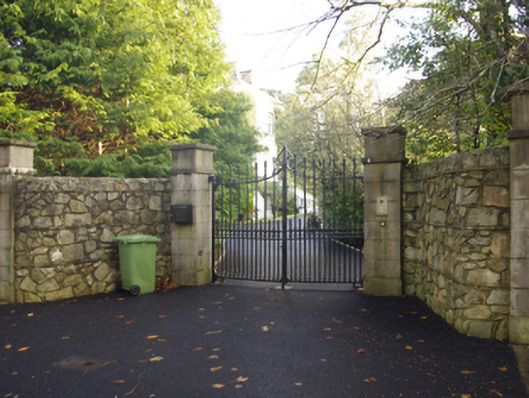
Detached three-bay (two-bay deep) two-storey over raised basement house, built 1865; extant 1871, on a T-shaped plan with single-bay (single-bay deep) two-storey lower central return (east). Occupied, 1911. Hipped slate roof on a U-shaped plan; hipped slate roof (east), clay ridge tiles, paired cement rendered central chimney stacks having concrete capping supporting terracotta pots, and replacement uPVC rainwater goods on slightly overhanging eaves on paired timber consoles on beaded stringcourse retaining cast-iron octagonal or ogee hoppers and downpipes. Part creeper- or ivy-covered rendered, ruled and lined walls on cushion course on rendered, ruled and lined base with rendered "bas-relief" quoined piers to corners. Round-headed central opening approached by flight of cut-granite steps with rendered "bas-relief" block-and-start surround having convex or rounded reveals. Pseudo three centre-headed flanking window openings in pseudo three centre-headed recesses with cut-granite sills supporting wrought iron balconettes, and rendered "bas-relief" block-and-start surrounds framing two-over-two timber sash windows. Pseudo three centre-headed window openings (first floor) with cut-granite sills, and rendered "bas-relief" block-and-start surrounds framing two-over-two timber sash windows. Pseudo three centre-headed window openings to side elevations with cut-granite sills, and concealed dressings framing two-over-two timber sash windows. Square-headed window openings to rear (east) elevation with cut-granite sills, and concealed dressings framing two-over-two timber sash windows. Interior including (ground floor): central hall retaining carved timber surrounds to door openings framing timber panelled doors; and carved timber surrounds to door openings to remainder framing timber panelled doors with timber panelled shutters to window openings. Set in landscaped grounds.
Appraisal
A house erected for Reverend John Fawcett representing an important component of the mid nineteenth-century domestic built heritage of south County Dublin with the architectural value of the composition, one of the 'several villa residences and elegant mansions…of a very superior character' mentioned in "The Dublin Builder" (1st June 1861; cf. 60230031; 60230043; 60230044; 60230045; 60230047; 60260185), suggested by such attributes as the compact square plan form centred on a sheltered doorcase; the definition of the principal floor as a slightly elevated "piano nobile"; the diminishing in scale of the openings on each floor producing a graduated visual impression with the principal "apartments" or reception rooms further defined by polygonal bay windows; and the John Skipton Mulvany (1813-70)-esque elongated timber work embellishing a slightly oversailing roofline. Having been well maintained, the elementary form and massing survive intact together with substantial quantities of the original fabric, both to the exterior and to the interior where contemporary joinery; chimneypieces; and plasterwork refinements, all highlight the artistic potential of a house having historic connections with Reverend William Wallace (d. 1884), 'Clerk late of Kerrymount Foxrock Carrickmines County Dublin' (Calendars of Wills and Administrations 1884, 814; DIA); and Arthur MacMurrough Murphy (1835-1918), 'Secretary of Bank of Ireland commonly called The O'Morchoe [late of] Kerrymount Foxrock County Dublin [and] Monamolin County Wexford' (Calendars of Wills and Administrations 1918, n.p.).