Survey Data
Reg No
50130088
Rating
Regional
Categories of Special Interest
Architectural, Artistic, Historical
Original Use
Grave monument
In Use As
Grave monument
Date
1865 - 1875
Coordinates
314767, 236889
Date Recorded
21/06/2018
Date Updated
--/--/--
Description
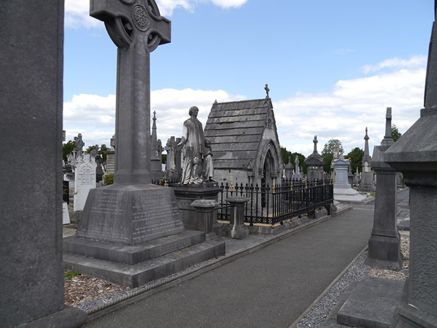
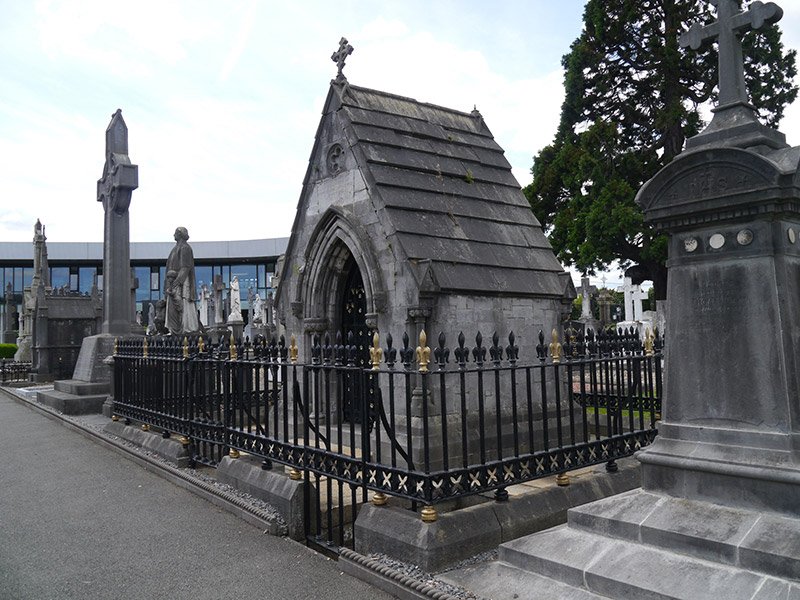
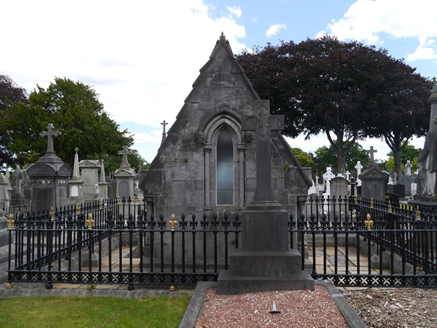
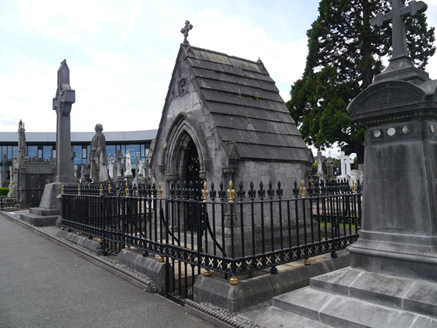
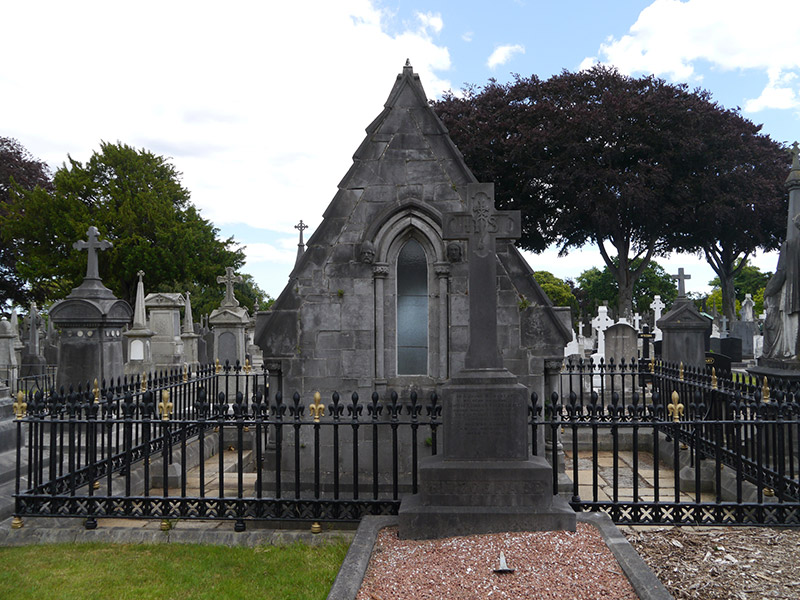
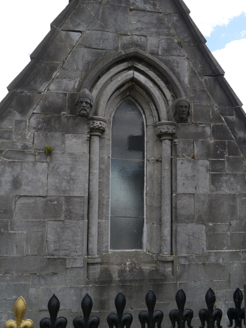
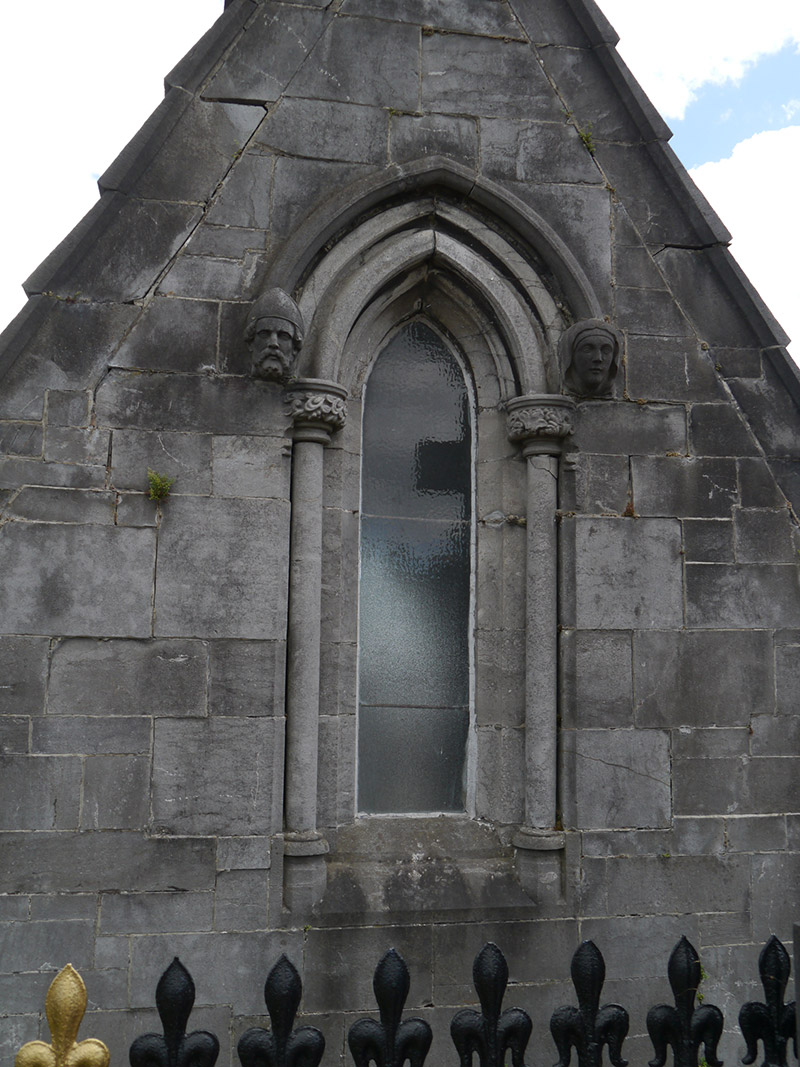
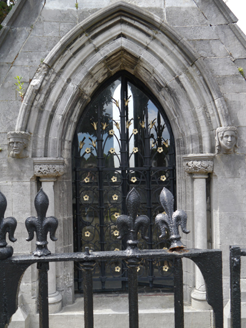
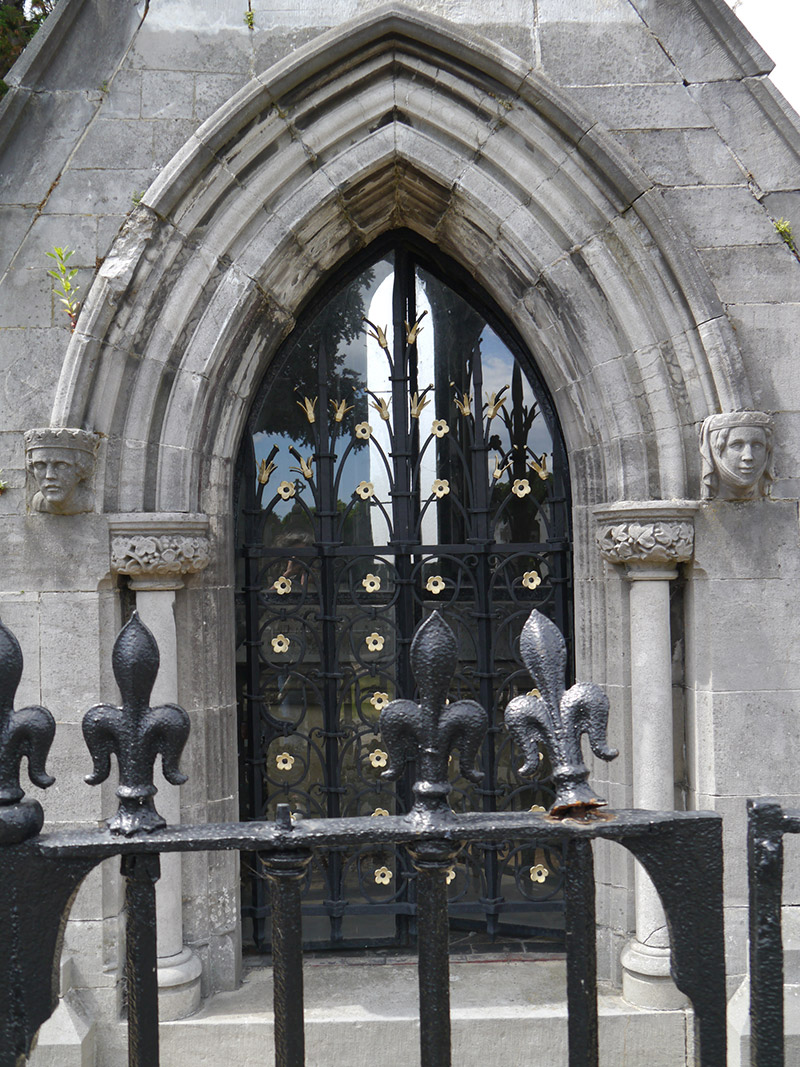
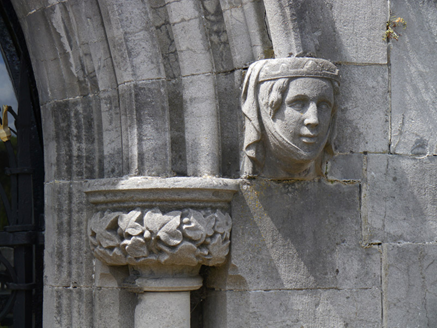
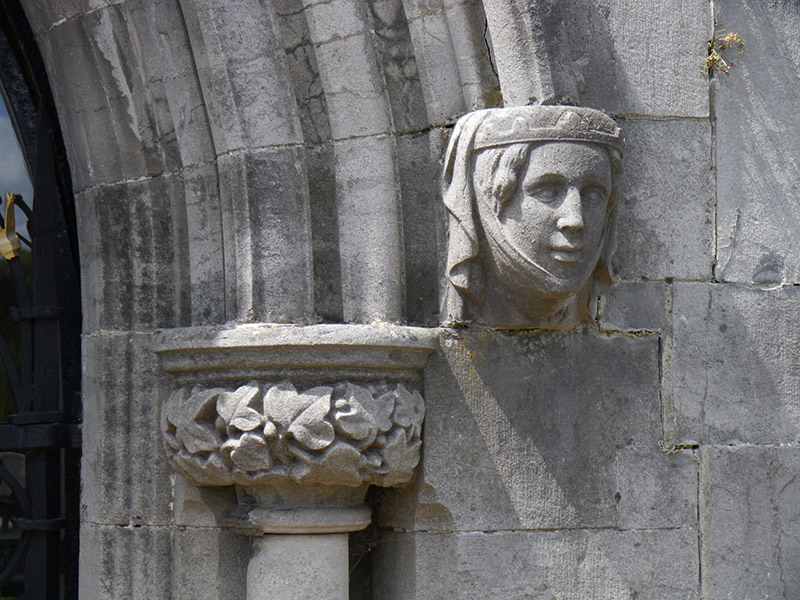
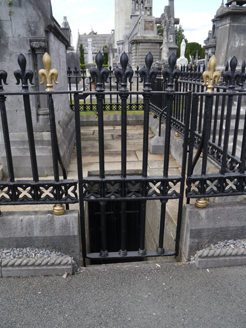
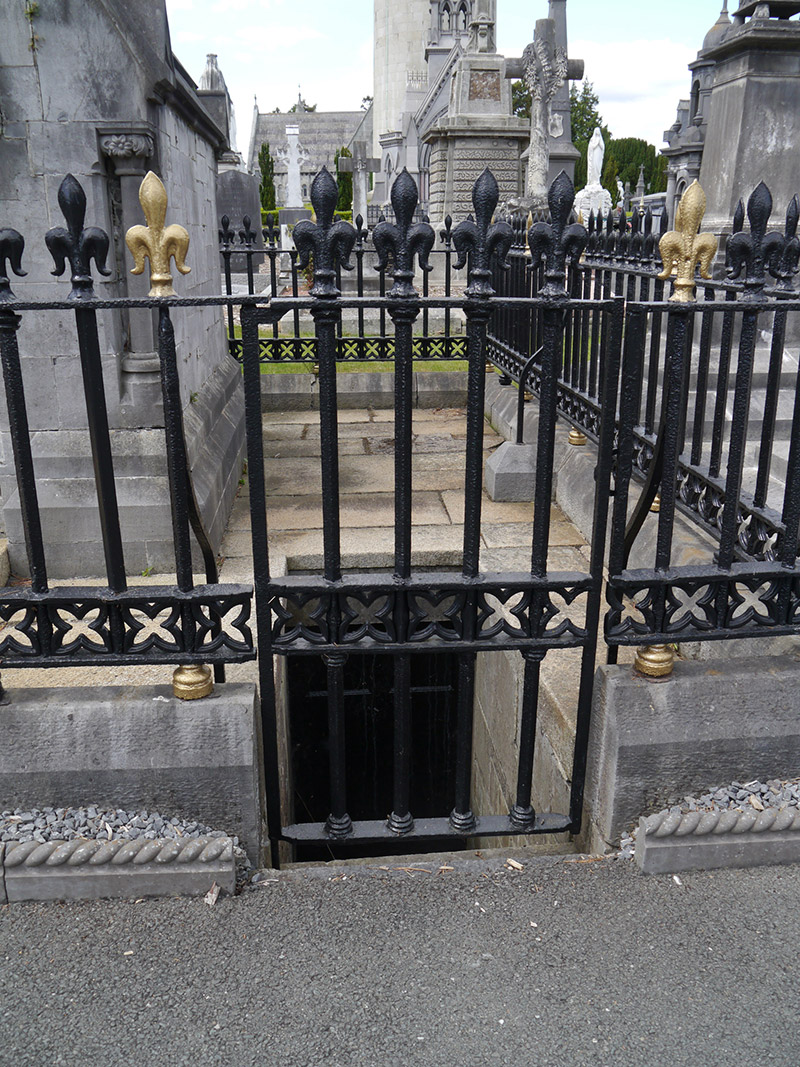
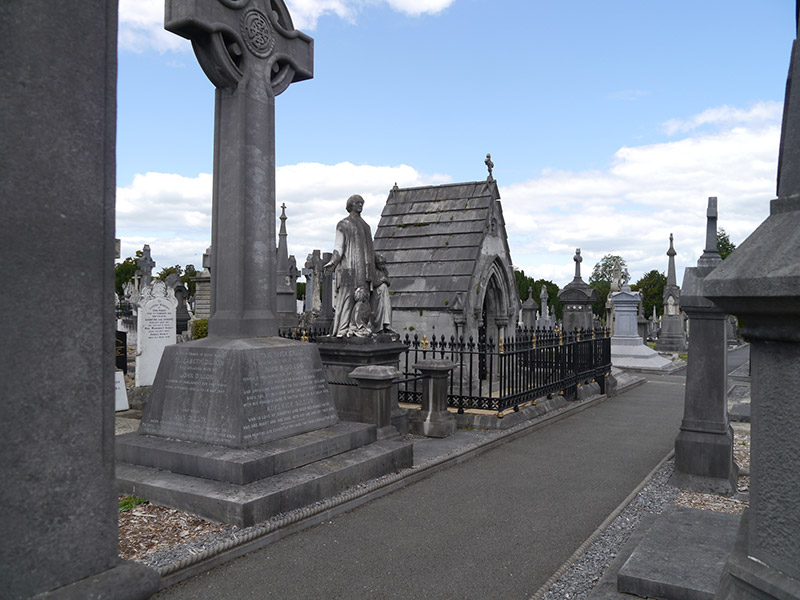
Freestanding limestone Gothi -Revival funerary monument in form of chapel over vault, erected c. 1870 as burial place of Lawler family. Steeply pitched limestone roof with trefoil-profile ridge and sculpted cross finial. Ashlar limestone walling over plinth with rebated corners having inset half-shafts with floriate capitals and cusped gablets; blind cinquefoil oculus to front (east) apex over memorial inscription. Lancet window opening to west gable, having chamfered reveals and sill, shafts with foliate capitals and hood-moulding with figurative stops; replacement obscured glazing. Pointed-arch doorway to front (east) having shafts with foliate capitals, moulded architrave and hood-moulding with figurative stops; glazed double-leaf door having decorative wrought-iron double-leaf gate painted black with gold flowers, accessed by one limestone and one granite step. Granite flagstones to railed enclosure, and decorative cast-iron railings with fleur-de-lys finials on chamfered limestone plinth with rope-moulded kerbs. Secondary gate to north side of enclosure to steps descending to vault entrance comprising double-leaf cast-iron door.
Appraisal
A relatively modest but well-proportioned Gothic Revival memorial, erected in memory of the Lawler family. The memorial is in the form of a simple Gothic chapel, characterized by simple pointed-arch openings and unembellished ashlar limestone walling enlivened by corner shafts. The quality of carving is notable, with intricate botanical details to the capitals and fine figurative stops to the hood-mouldings, which are individually detailed. It stands over a vault, which is accessed via a secondary entrance, all contained within a large railed enclosure that elevates the status of the memorial. It contributes to the stylistic variety of Glasnevin Cemetery, standing among a number of monuments of considerable architectural quality and craftsmanship. Originally known as Prospect Cemetery, the burial ground was opened in 1832 following a successful campaign by Daniel O'Connell, as Dublin's first civic, non-denominational cemetery.