Survey Data
Reg No
50130076
Rating
Regional
Categories of Special Interest
Architectural, Artistic, Historical
Original Use
Grave monument
In Use As
Grave monument
Date
1860 - 1865
Coordinates
314699, 236920
Date Recorded
21/06/2018
Date Updated
--/--/--
Description
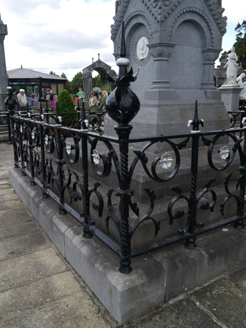
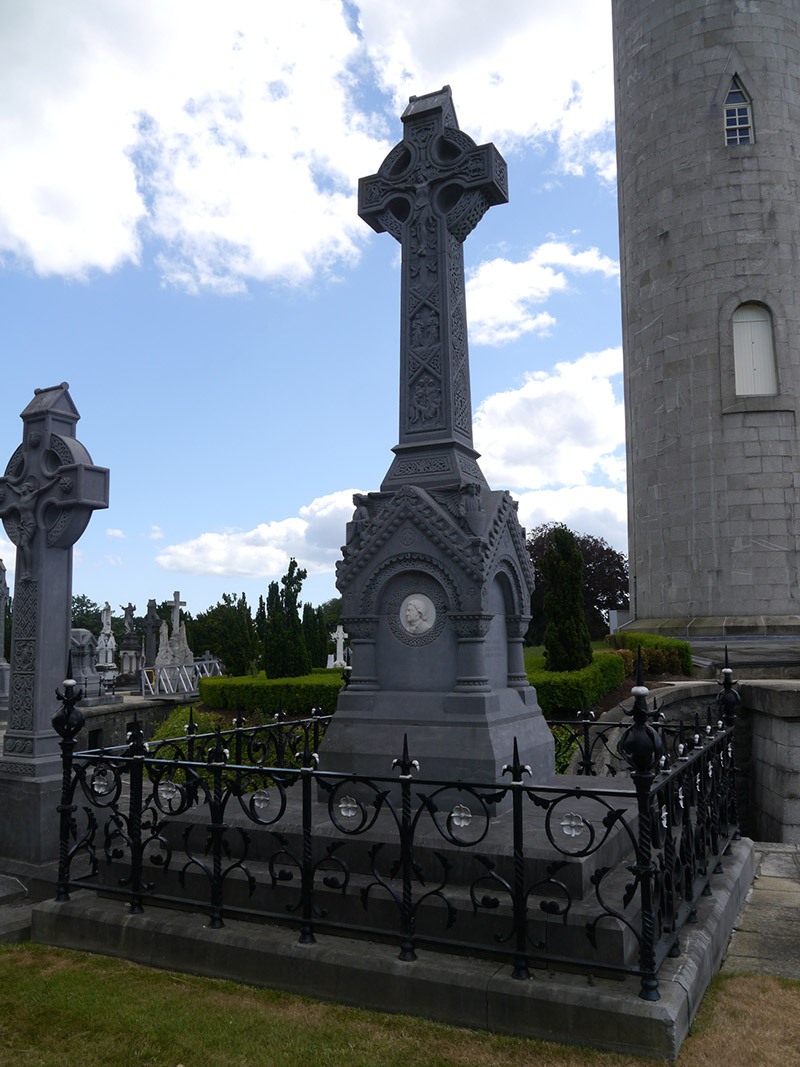
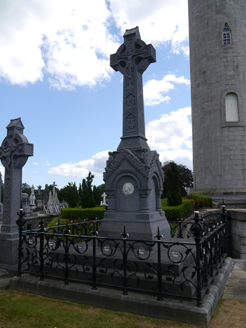
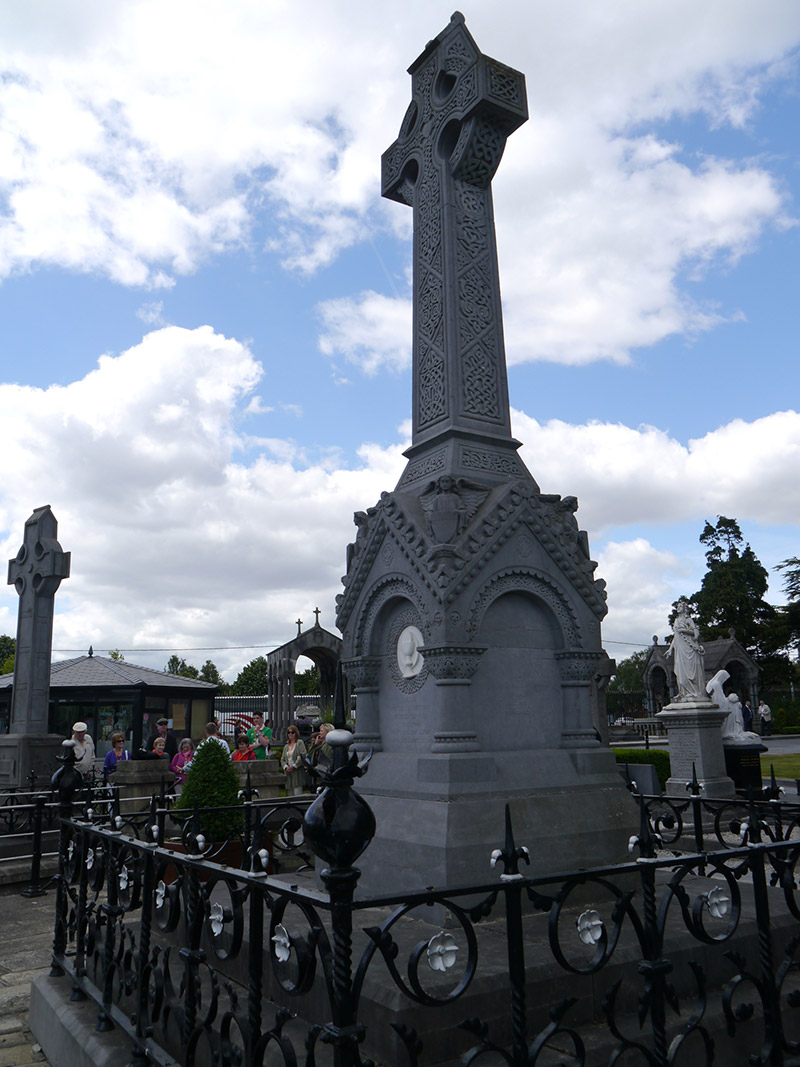
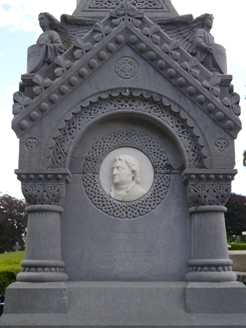
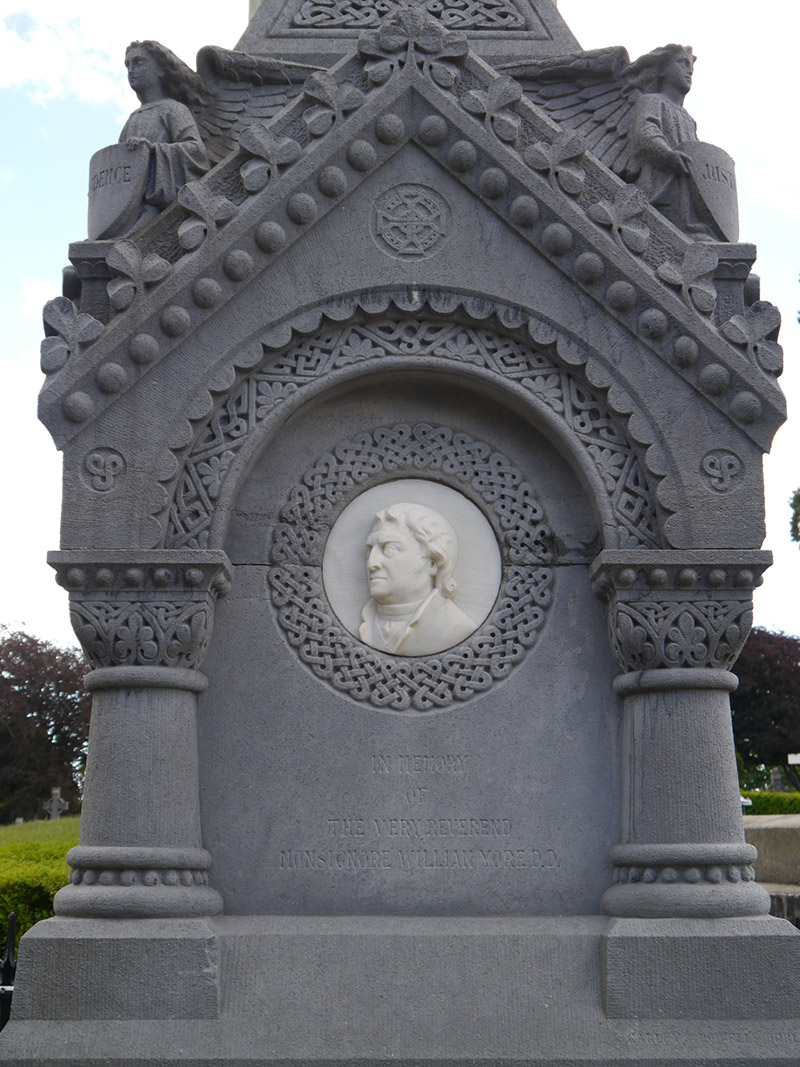
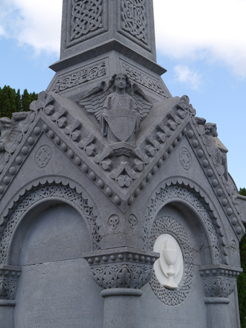
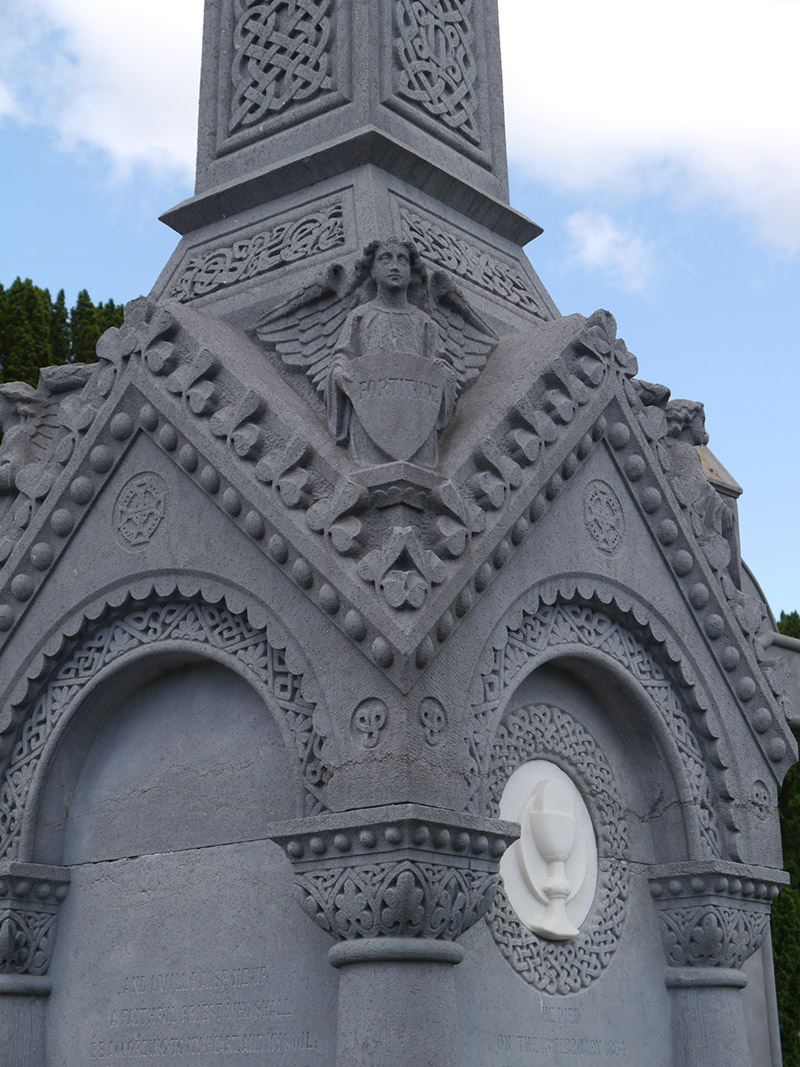
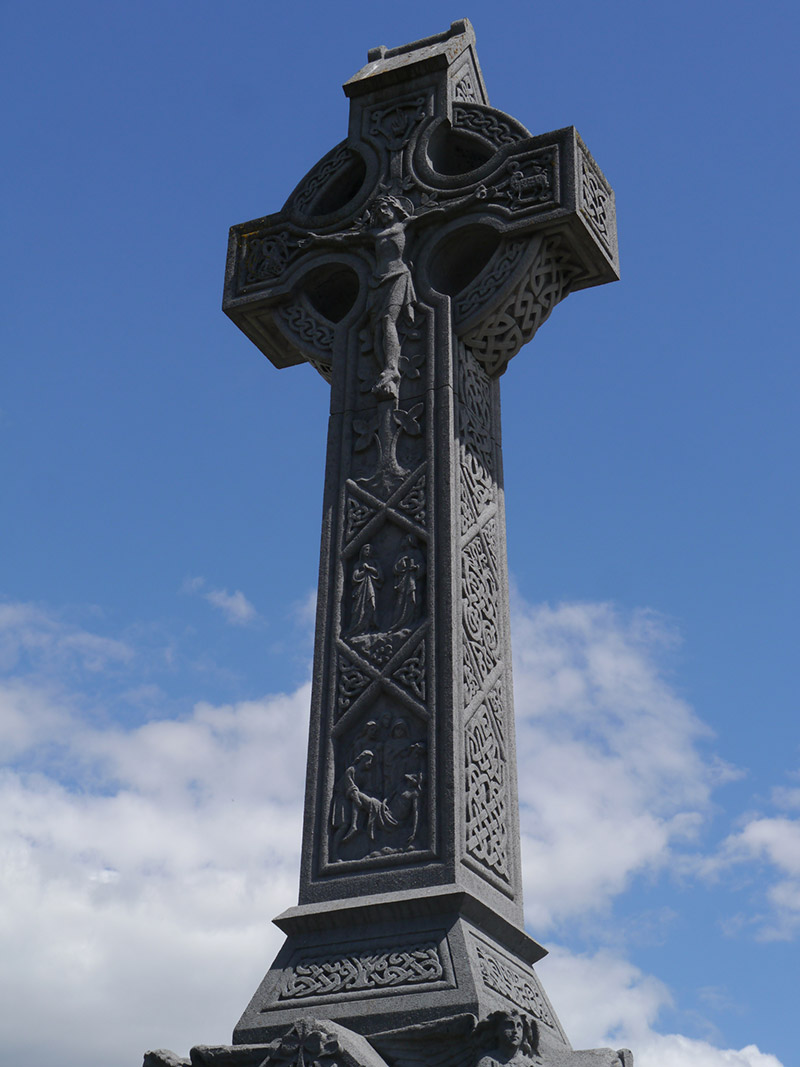
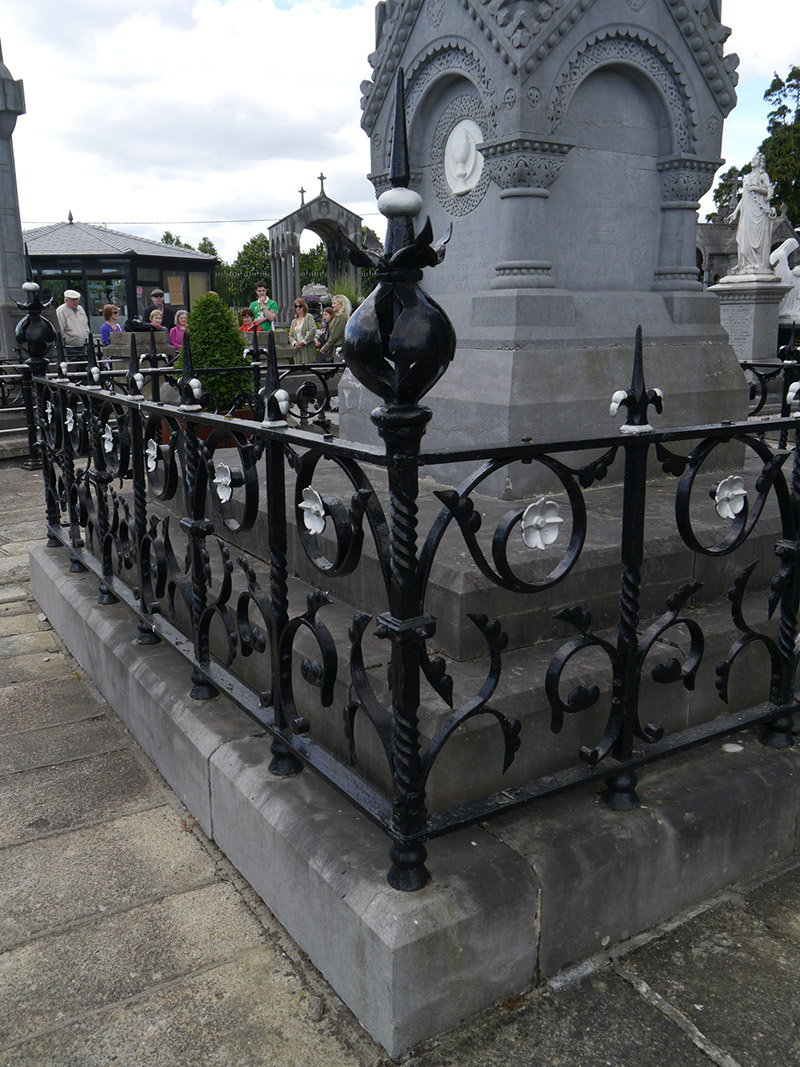
Freestanding limestone Celtic cross funerary monument, erected 1864, having stepped chamfered base and chamfered plinth supporting Gothic pedestal with gablets to each face; quarter-engaged corner columns framing round-arch recesses with memorial inscriptions. Carved vegetal detailing to capitals, archivolts and spandrels; raked cornice at each face; east and west faces have carved marble roundels with portrait to west and chalice and host to east. Winged angels to each corner at base of Celtic Cross, bearing shields inscribed 'Temperance', 'Prudence', 'Justice' and 'Fortitude'. Cross richly carved with Celtic interlace, biblical scenes and crucifix. Decorative wrought-iron railings with botanical motifs, supported on semi-twisted piers with larger barley-twist piers and finials to corners, on cut limestone plinth. Concrete flagged hardstandings to perimeter. Located on perimeter of O'Connell Monument and circle of vaults at Glasnevin Cemetery.
Appraisal
A richly carved Celtic cross funerary monument, erected in memory of Very Rev. Monsignor William Yore (1781-1864). Carved in limestone, the monument is of high craft and artistic value and is a good example of the Celtic-Revival style that grew in popularity during the nineteenth century in the context of developing scholarship and nationalist sentiment. Located on the perimeter of the circle vaults surrounding the iconic O'Connell Monument, the prominence of the memorial is reflective of the stature and confidence enjoyed by Catholicism following its emergence from the years of suppression. Monsignor Yore had worked closely with O'Connell in the campaign for Glasnevin (formerly Prospect) Cemetery, and the memorial tablet indicates that the monument was erected by the Dublin Cemeteries Committee, presumably in honour of his involvement. The wrought-iron detailing to the surround adds considerably to the quality of this monument.