Survey Data
Reg No
50080052
Rating
Regional
Categories of Special Interest
Artistic, Historical, Social
Previous Name
Royal Hospital Kilmainham
Original Use
Graveyard/cemetery
In Use As
Graveyard/cemetery
Date
1875 - 1885
Coordinates
312858, 233884
Date Recorded
22/05/2013
Date Updated
--/--/--
Description
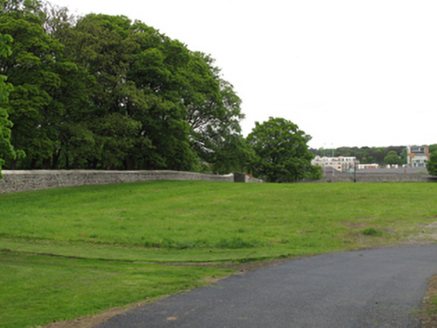
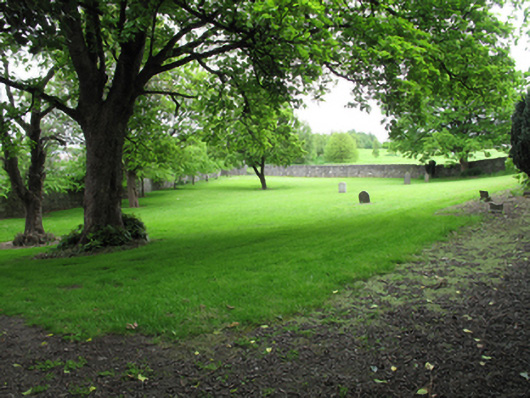
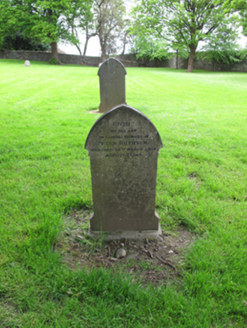
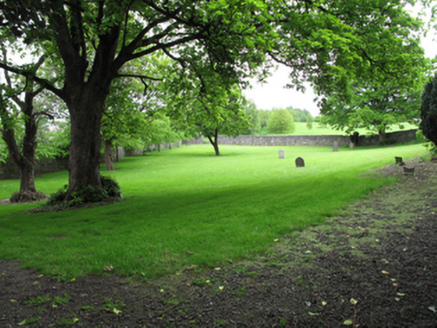
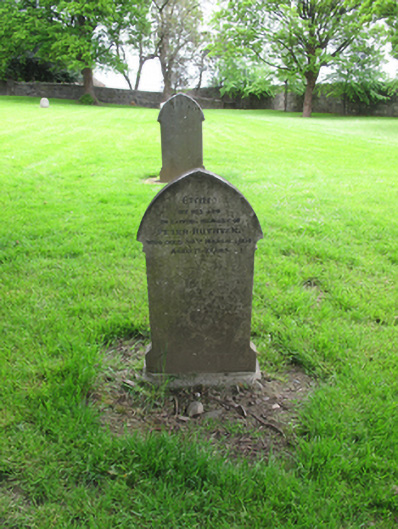
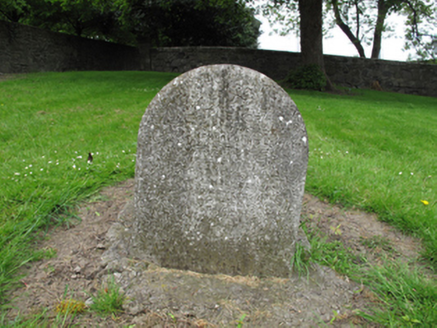
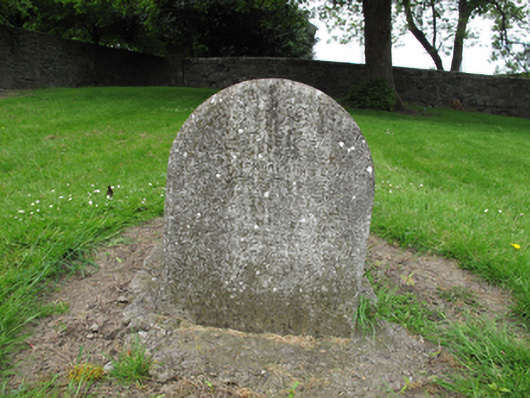
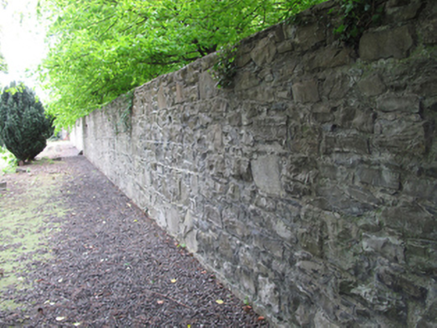
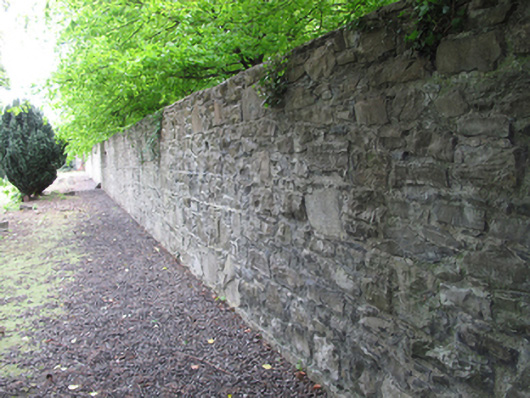
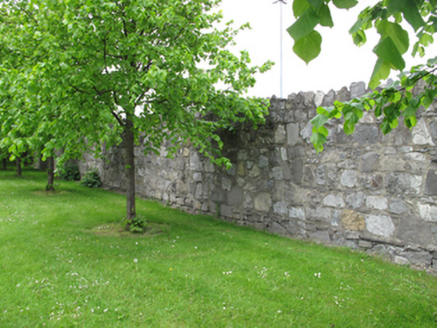
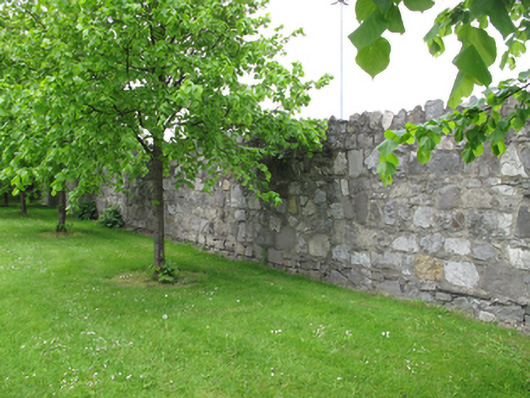
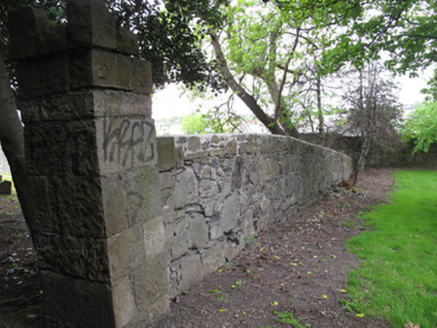
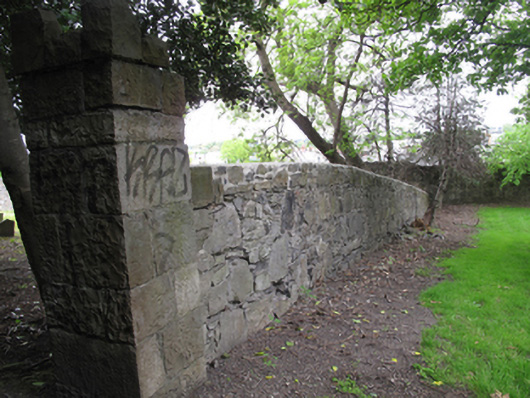
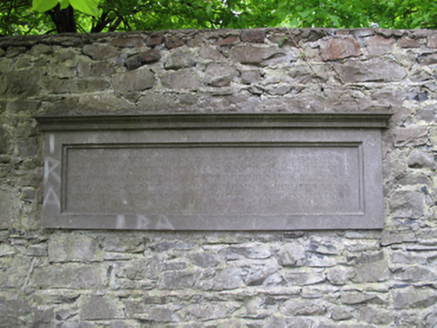
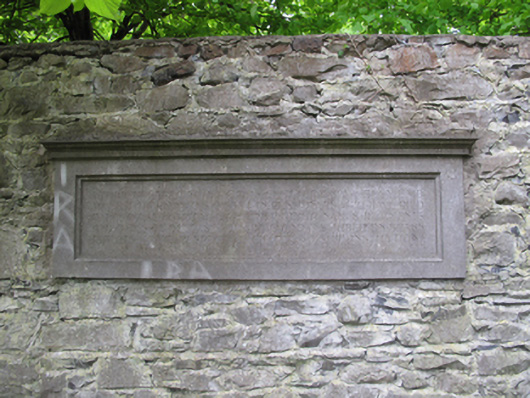
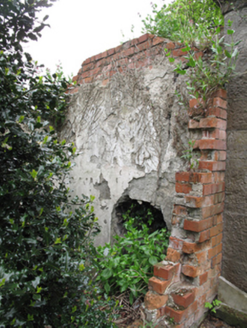
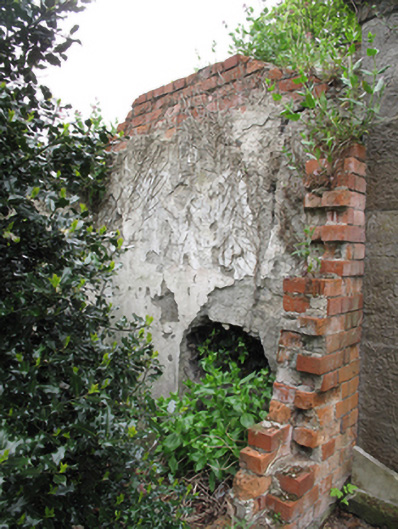
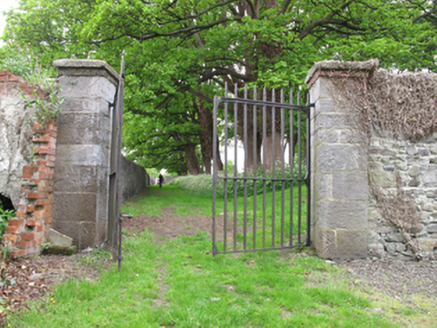
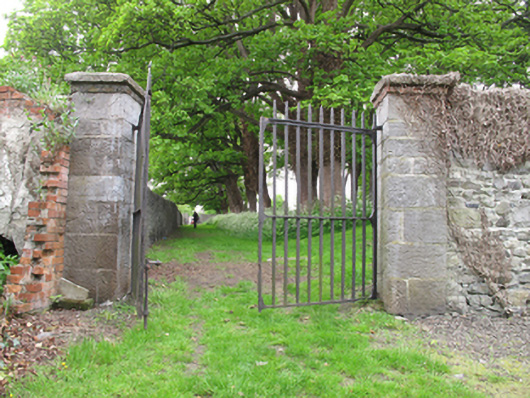
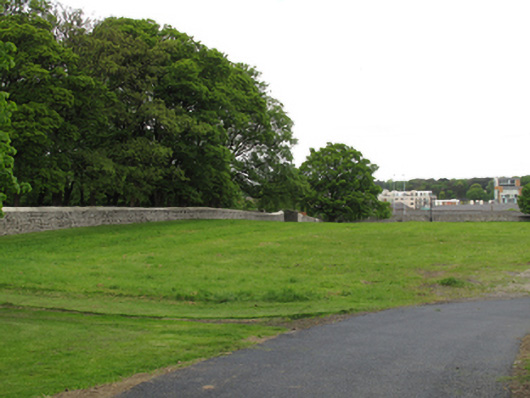
Military cemetery for occupants of Royal Hospital Kilmainham, established 1880 and used until 1905. Four intact limestone gravestones upstanding, one erected recently to commemorate those who were exhumed and re-interred to accommodate road-widening. Regular-plan area enclosed by rubble limestone boundary wall, recent wall built to north (c.1960) to accommodate road development. Divided from later section by rubble limestone boundary wall, square-profile limestone pier to south. Inscribed limestone plaque to wall to south. Remains of red brick structure to south-east corner of cemetery. Pair of square-profile cut limestone piers with limestone capping flanking double-leaf wrought-iron gate, providing access to Bully’s Acre.
Appraisal
Part of the Royal Hospital Kilmainham, this cemetery is sited on the former grounds of St John’s Priory, which was established by the Knights Hospitalliers in the twelfth century. Accessed through Bully’s Acre, this privates and in-pensioners cemetery was established for the burial of non-commissioned officers who were resident in the Royal Hospital Kilmainham, as distinct from the officers who were buried in the officers' cemetery to the south of Bully's Acre. Originally graves were marked by numbered shamrocks which are now missing. The use of the shamrock motif indicates a connection between the soldiers and Ireland, and reflects the large number of Irish men who fought for the British Army. An inscribed limestone plaque to the wall indicates that the names of those interred in the graveyard are to be found within the hospital building, providing contextual as well as artistic interest. The red brick structure to the south-east was a ‘robing house’ in which the priest could change into appropriate robes before burial rites. This site is important in the social and religious history of the area, attesting to the long-standing ecclesiastical presence in the locality.