Survey Data
Reg No
50011046
Rating
Regional
Categories of Special Interest
Architectural, Artistic
Original Use
House
In Use As
Shop/retail outlet
Date
1790 - 1800
Coordinates
316141, 235494
Date Recorded
15/11/2011
Date Updated
--/--/--
Description
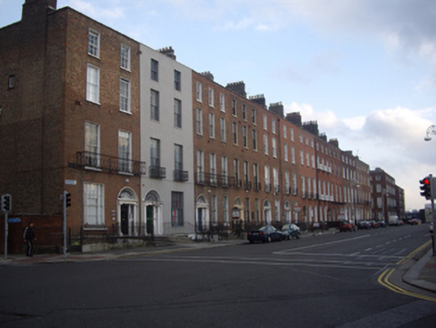
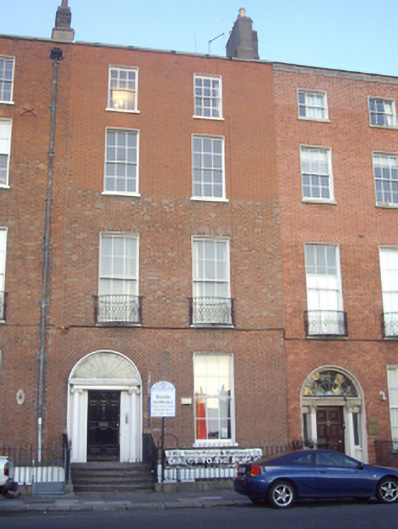
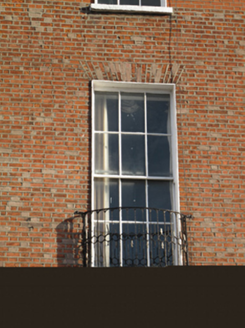
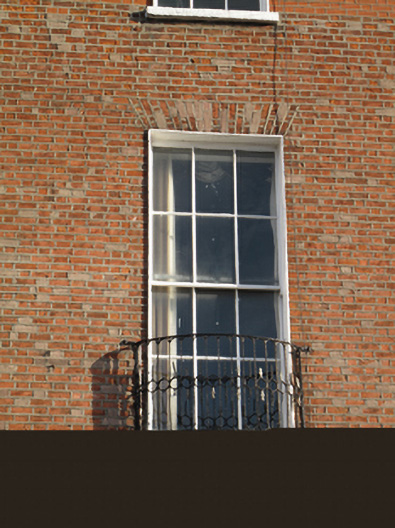
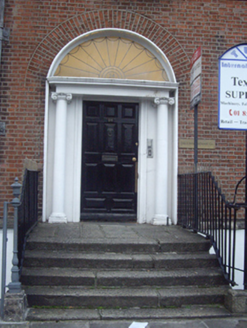
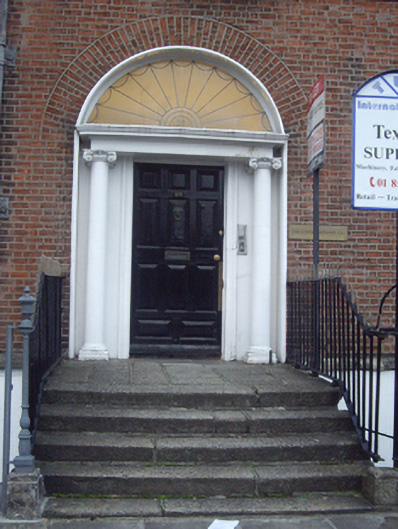
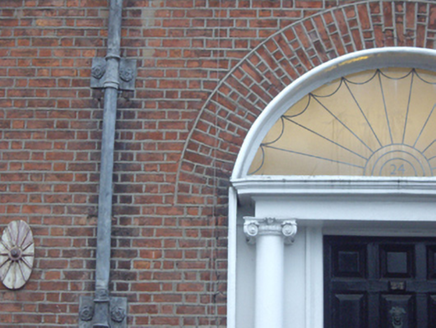
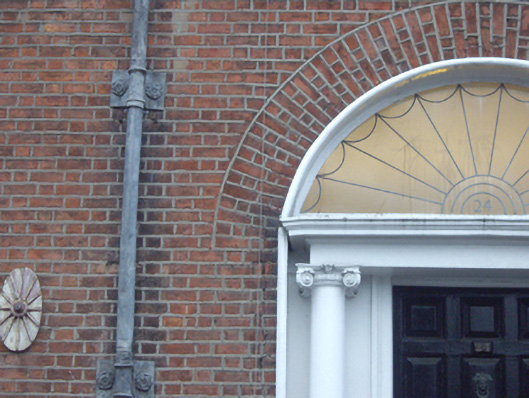
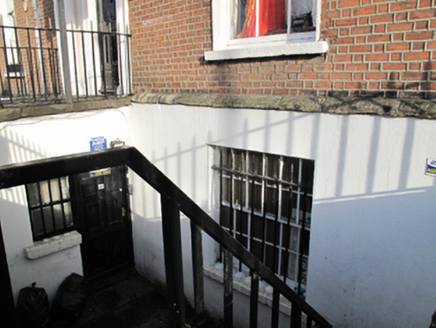
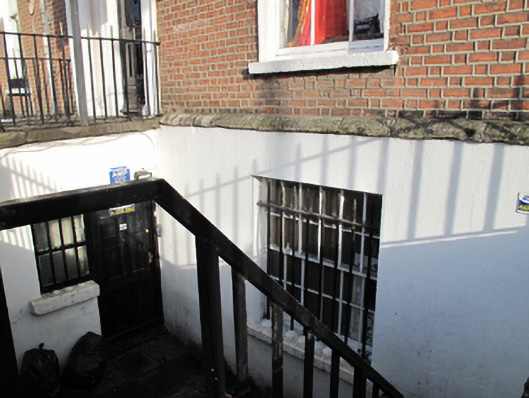
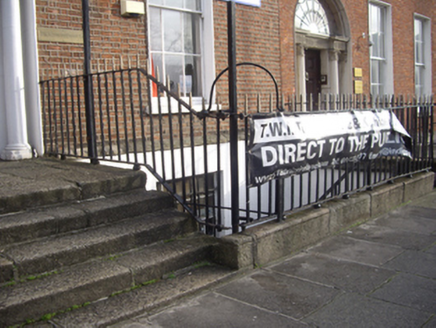
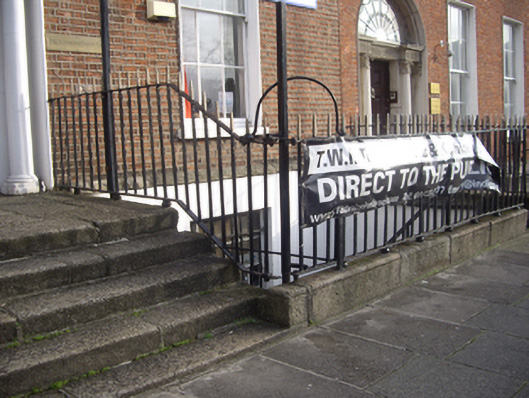
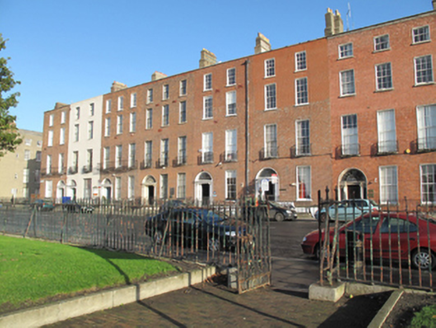
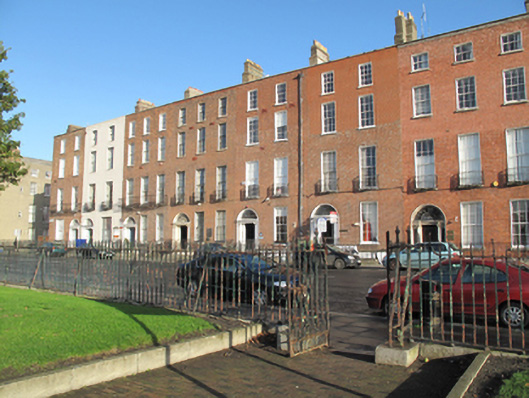
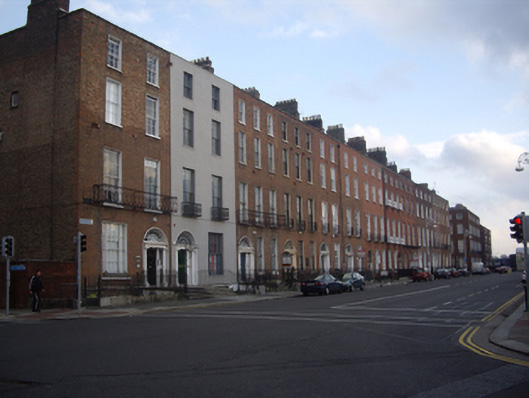
Terraced two-bay four-storey house over exposed basement, built, c.1795, as one of six. Now in commercial office use. Double-pile slate roof, pitched to front with two hipped rear projections. Roof hidden behind parapet wall with granite coping and rendered brick chimneystacks with clay pots to both party walls. Red brick walls laid in Flemish bond rebuilt to top two floors. Chamfered granite plinth course above painted ruled-and-lined rendered basement walls. Cement rendered walls to rear elevation. Gauged brick flat-arched window openings with patent rendered reveals, painted granite sills and replacement timber sliding sash windows, six-over-six pane to lower floors, three-over-three pane to top floor, and twelve-over-twelve to basement. Decorative bowed wrought-iron balconettes to first floor and wrought-iron grille to basement. Timber sliding sash windows to rear elevation with round-headed stairs window. Gauged brick round-headed door opening with moulded stucco surround and painted stone Ionic doorcase. Original timber door with eleven raised-and-fielded panels flanked by plain rendered jambs and Ionic columns on plinth bases supporting lintel cornice and replacement fanlight. Door opens onto granite platform and five granite steps bridging basement. Platform and basement enclosed by original wrought-iron railings and cast-iron corner posts set on moulded granite plinth wall to street. Rear elevation abutted by narrow full-height rendered return. Further full-width two-storey brick building forms boundary to Charles Lane.
Appraisal
Mountjoy Square was built on lands formerly belonging to Saint Mary’s Abbey, laid out in 1790 by Luke Gardiner II and complete by 1818. No. 24 is well maintained and one of a group of six similar houses, the last to be completed on the square and built by Charles Thorpe, stuccodore, alderman and one-time Lord Mayor of Dublin. The houses all have identical doorcases, in a simplified Ionic order, with freestanding columns and no sidelights. Now in commercial use this building forms an important component of the square's streetscapes with its subtle variations contributing to the interest and variation on this most uniform of Georgian squares. the retention of timber sash windows throughout contributes significantly to its architectural heritage quality and the stone plinth and steps, and iron railings to the street constitute a typically high-quality setting for this fine Georgian townhouse.