Survey Data
Reg No
41403203
Rating
Regional
Categories of Special Interest
Architectural, Cultural, Historical
Original Use
House
In Use As
House
Date
1800 - 1840
Coordinates
292216, 305958
Date Recorded
22/03/2012
Date Updated
--/--/--
Description
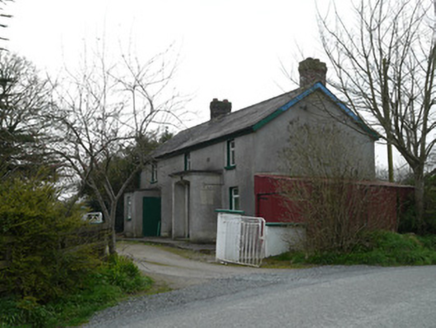
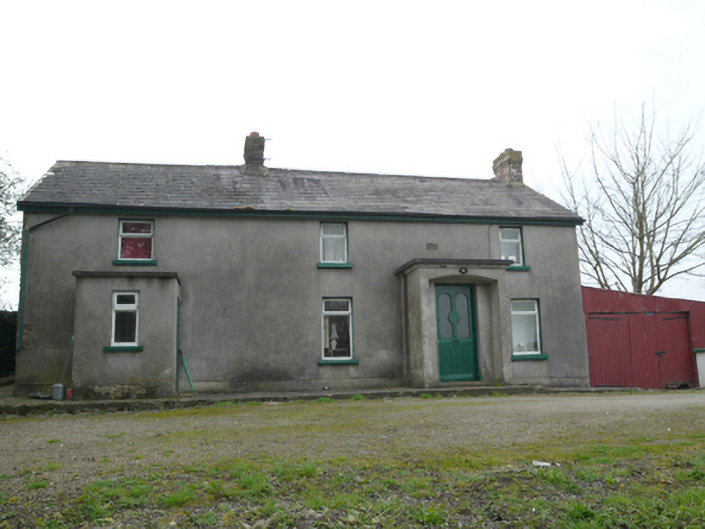
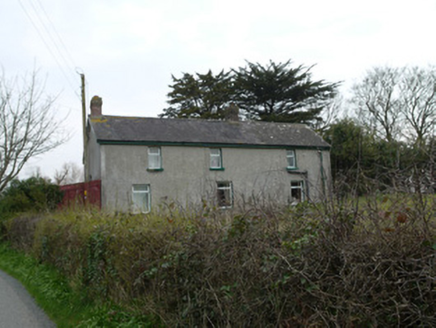
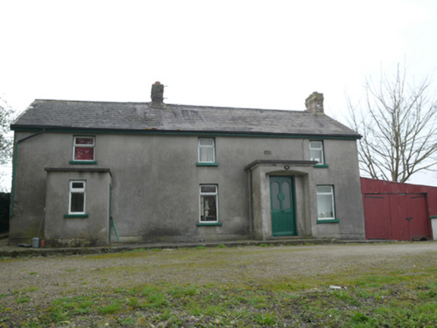
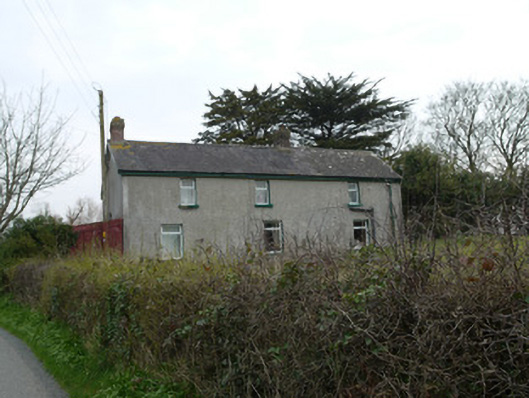
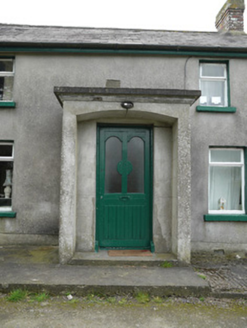
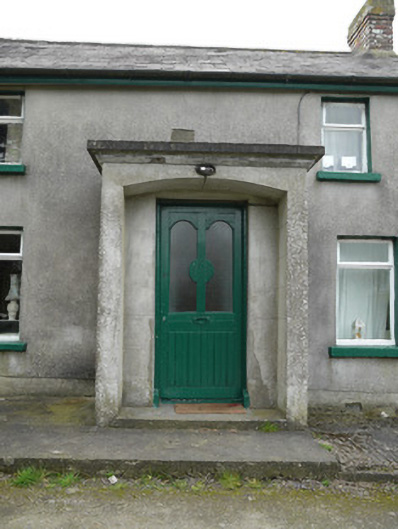
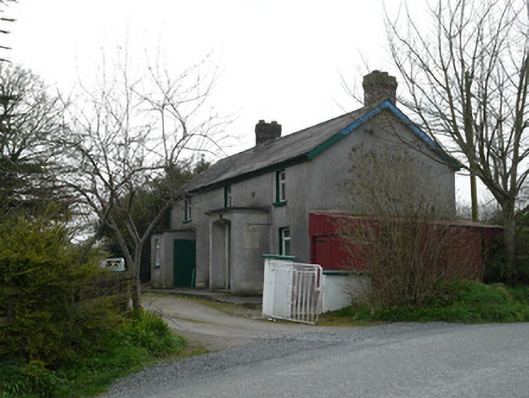
Detached two-storey house, built c.1820, having four-bay ground floor and three-bay first floor, two flat-roofed porches to front (east) elevation, southern bay being addition. Pitched slate roof with timber eaves, some cast-iron rainwater goods, and red brick chimneystacks. Cement render finish to walls, lined-and-ruled render to north entrance porch. Square-headed window openings with replacement timber casement windows, with painted masonry sills. Segmental-headed opening to north porch, having recessed square-headed door opening with half-glazed timber battened door. Square-headed door opening with timber battened door to side elevation of south porch. Single-storey lean-to garage attached to north end of house, with corrugated-iron cladding to walls and roofs. Evidence of former single-storey gabled structure to south gable. Set perpendicular to road. Site entrance has double-leaf metal vehicular gate flanked by rendered piers with matching pedestrian gate. Wrought-iron farm gate to south with round-plan cast-iron piers. Monument to Patrick Kavanagh at junction of this road and main road. Carrickmacross branch of Great Northern Railway formerly ran between house and main road.
Appraisal
This nineteenth-century rural house was enlarged and adapted over time, nonetheless retaining its modest character. The small irregularly-placed windows and simple form are typical of rural domestic buildings. Its cultural and historical significance lies in its association with one of Ireland's foremost poets of the twentieth century, Patrick Kavanagh (1904-1967), whose poems often took the surrounding landscape and rural life as a theme.