

Survey Data
Reg No
41402403
Rating
Regional
Categories of Special Interest
Architectural
Previous Name
Creeve House
Original Use
Farmyard complex
In Use As
Farmyard complex
Date
1770 - 1860
Coordinates
271446, 317498
Date Recorded
24/05/2012
Date Updated
--/--/--
Description
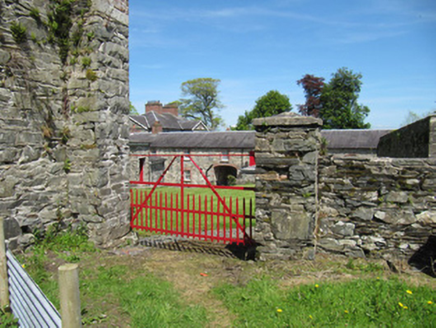
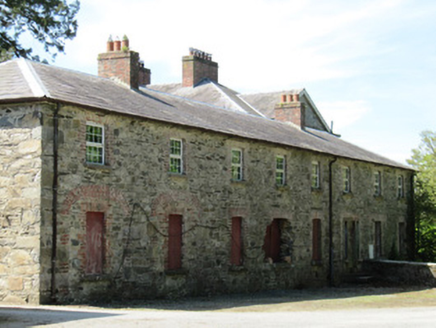
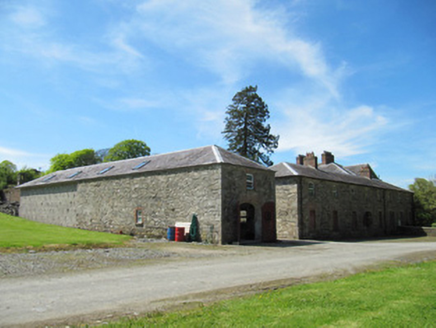
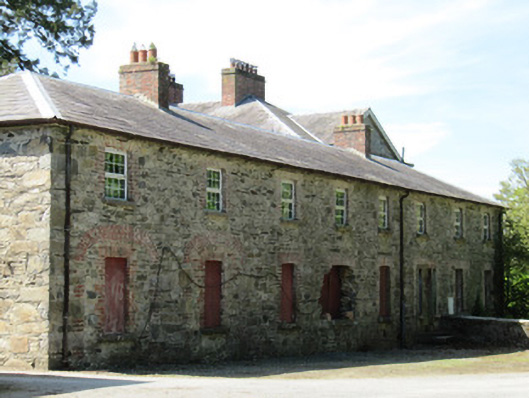
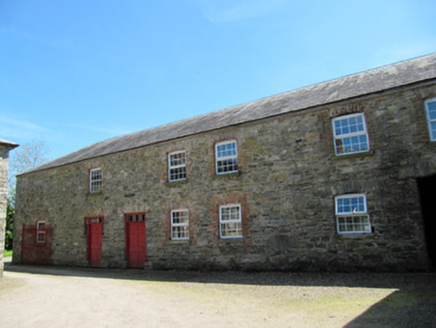
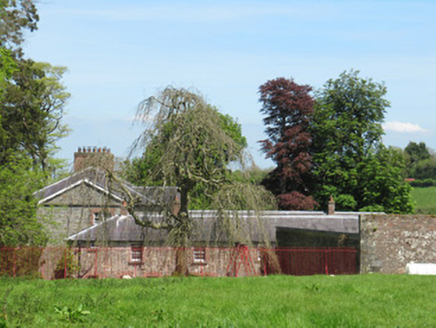
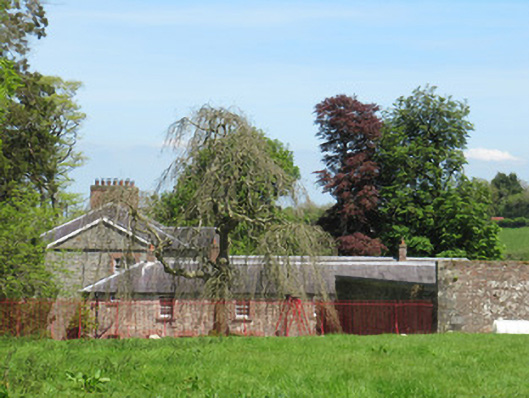
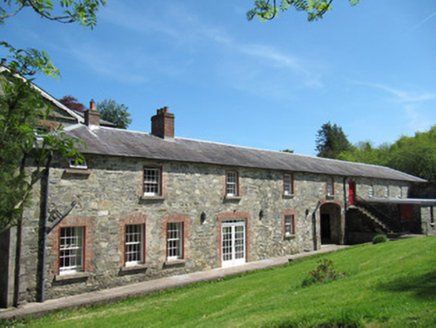
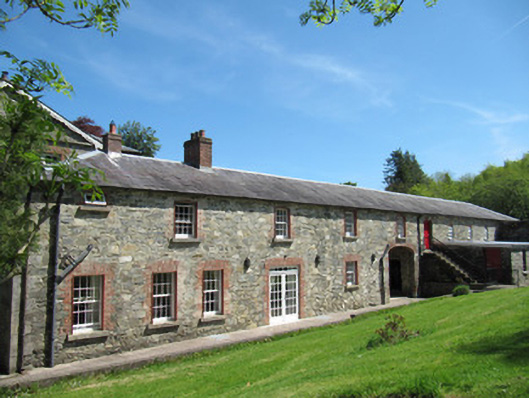
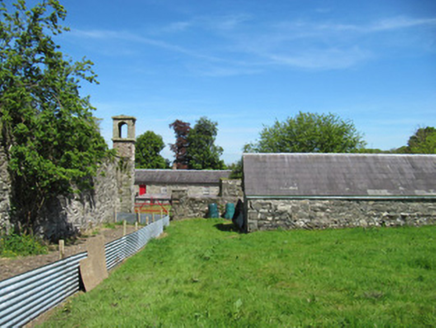
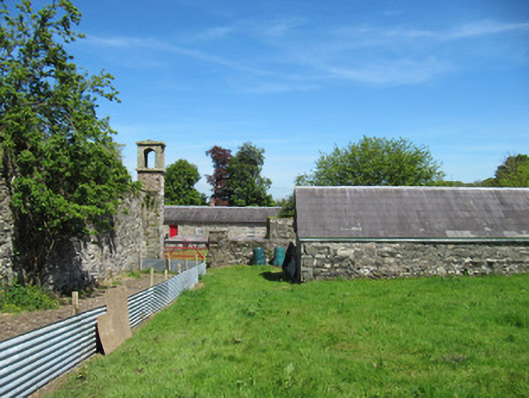
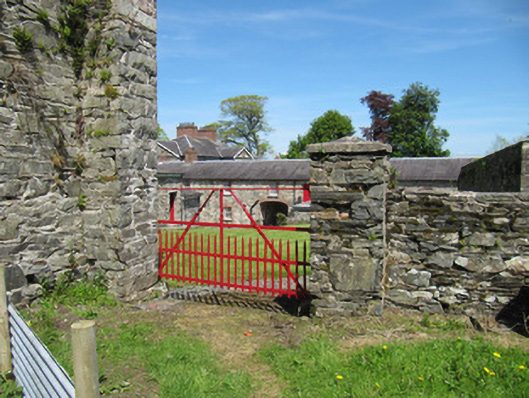
Farmyard complex, built c.1780, comprising three ranges of outbuildings forming yard to rear (south) of Creevelands country house, additional outbuilding to west, later kennels, and attendant site entrances. Recently refurbished and partly rebuilt following dereliction. Now partly in use as accommodation. Yard comprises six-bay two-storey outbuilding to east range, attached at north-west end to east elevation of house, seven-bay two-storey outbuilding to west range, having integral carriage arch, attached at north-east end to west elevation of house and attached to seven-bay two-storey outbuilding forming south range. Three-bay single-storey flat-roofed extension, and external staircase to external elevation of west range. Hipped slate roofs, with red brick chimneystacks. Recent roof-lights to south range. Coursed rubble stone walls with dressed enlarged quoins stones, some rebuilt concrete block walls. Segmental-headed door openings, now blocked up, some with square-headed window openings, to north elevation of east and west ranges. Red brick voussoirs and red brick and stone-banded surround. Red brick camber-headed carriage arches to west elevation of east range, to east elevation of south range having timber battened double-leaf doors, and to integral carriage arch to west range. Square-headed window openings with masonry sills and red brick block-and-start surrounds to east elevation, having replacement uPVC windows to first floor, and blocked windows to ground floor, with some red brick relieving arches to external elevation ground floor. Square-headed door opening to east range, having timber battened door. Square-headed door opening to external elevation of east range, having red brick surround, timber panelled door with leaded over-light, six-over-six pane timber sliding sash windows with stone sills forming sidelights, and cut-stone steps. Camber-headed window openings with masonry sills, having replacement uPVC windows to south range, and south end of west range. Square-headed window openings with masonry sills and recent timber sliding sash windows to north end of west range, having eight-over-eight panes. Square-headed door openings with timber panelled doors and over-lights to south range. Camber-headed door openings with timber battened doors to west range. Square-headed door openings with glazed timber doors to external elevation of west range. Rubble stone boundary wall surrounding garden to rear of house, having square-headed opening with recent metal pedestrian gate. Wrought-iron gate to south-east corner, hung on north elevation of south range. Attached four-bay single-storey outbuilding to external face of east wall of walled garden, having lower addition to east gable. Monopitch slate roofs, rubble stone walls, square-headed openings with recent timber fittings. Detached five-bay single-storey kennels, built c.1850, having pitched slate roof, rubble stone walls, square-headed window openings with cast-iron small-paned windows, and square-headed door openings with timber battened doors. Rubble stone and concrete block boundary wall to run. Rubble stone boundary wall and pier with wrought-iron farm gate between kennels and walled garden. Canted square-plan rubble stone piers to site entrance to lane to south of kennels. Rubble stone boundary walls to site boundary to south, with wrought-iron farm gate flanked by rubble stone piers, forming entrance to cottage and mills to south. Site entrance to lane to south-east of site formed by octagonal-plan tooled stone piers with rounded caps, forming carriage entrance and pedestrian entrance, flanked by rubble stone boundary walls with cut-stone copings.
Appraisal
This is part of an interesting group with the other structures associated with Creevelands, the gate lodges and site entrances, the walled garden and belltower, the house itself, and the ruined remains of the flax mills that John Jackson owned in the eighteenth and early nineteenth century. John Jackson was one of four brothers involved in the linen industry in the Creeve area, and Creevelands can be considered to form part of a group with the other Jackson properties, Cremorne House, Drumfaldra, Carnaveagh House, and their associated mills. Renowned for their hunting and horsemanship, the family is remembered in the song 'Jackson and Jane' which recalls the success of Hugh Jackson's horse in a race in nearby Cootehill. The extensive stables, and the later kennels, are a physical reminder of this lifestyle. Typically of these properties, the outbuildings are in close proximity to the house. The buildings are extensive and well built, mainly in the two-storey form typical of large rural houses, replete with carriage arches and varied window and door openings. Recently restored following dereliction, they retain their form and scale and much fabric, and contextualise and enhance the group.