Survey Data
Reg No
41401823
Rating
Regional
Categories of Special Interest
Architectural, Technical
Original Use
Bridge
Date
1850 - 1855
Coordinates
269825, 321234
Date Recorded
29/04/2012
Date Updated
--/--/--
Description
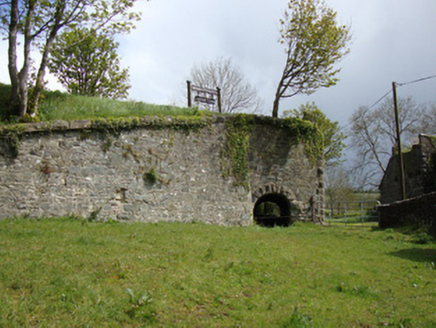
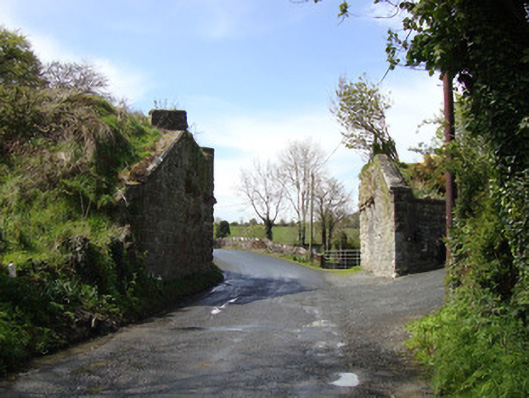
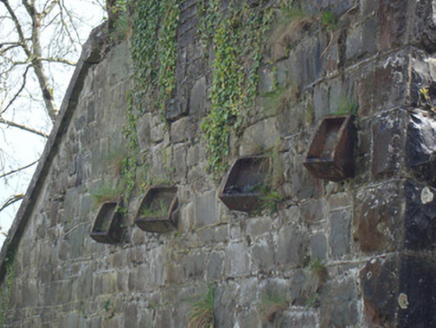
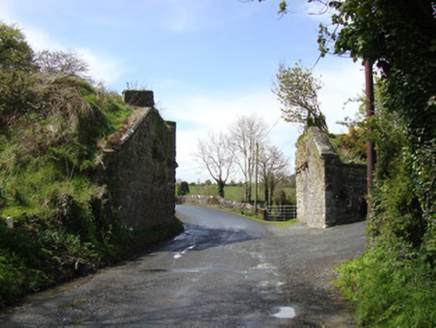
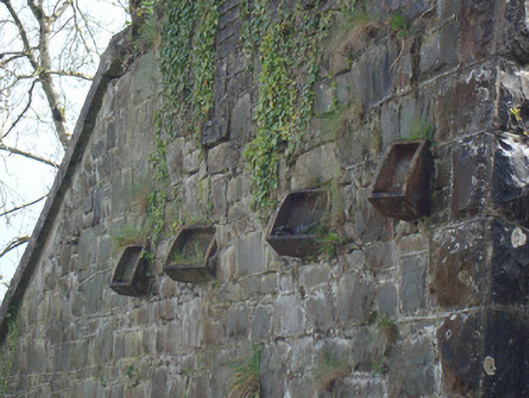
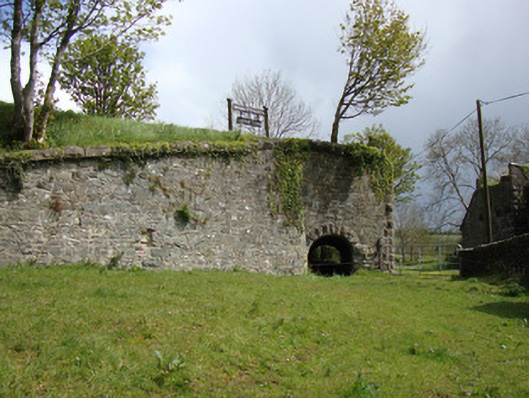
Single-span skew beam railway bridge, built c.1850, carrying embanked Dundalk & Enniskillen Branch of former Ulster Railway over road. Superstructure and railway track now removed. Coursed squared random rubble abutments, having masonry pillow blocks for beam spans, with rusticated and margined quoins and rendered brick coping. Coursed squared rubble wing walls to west. Four cast-iron shoes embedded in walls to hold diagonal braces to underside of deck (no longer present). Round-headed masonry arch, with rusticated stone voussoirs, through west wing wall and embankment, accommodating flow of mill race to former flax and corn mill to north-east. Dog-legged road approach over river bridge from south-west.
Appraisal
The Dundalk-Enniskillen Branch of the Ulster Railway (later subsumed into the Great Northern Railway) opened from Ballybay to Newbliss on 14th August 1855 and was an important transport link between Louth, Monaghan and Fermanagh until its closure in 1959. This well-composed bridge is representative of the skill in engineering and stoneworking in the nineteenth century, and although the deck has been lifted, this structure continues to be of interest. The cast-iron shoes, for supporting beams, indicate the nature of the original span. The structure is an aesthetically-pleasing structure and serves as a physical reminder of the extent and social and industrial importance of the railway network in the late nineteenth and twentieth centuries. The mill race, to the east, and the nearby road bridge over the Dromore River enhance this site’s setting and together form a pleasing group of historic infrastructure elements.