Survey Data
Reg No
41401725
Rating
Regional
Categories of Special Interest
Architectural
Previous Name
Leesborough House
Original Use
Gate lodge
In Use As
House
Date
1870 - 1880
Coordinates
258898, 320740
Date Recorded
05/06/2012
Date Updated
--/--/--
Description
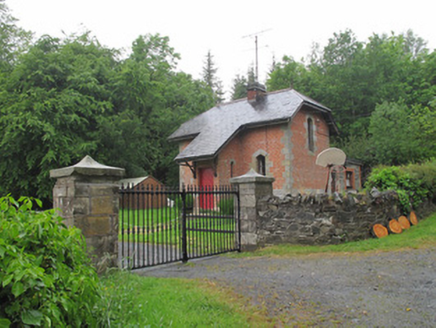
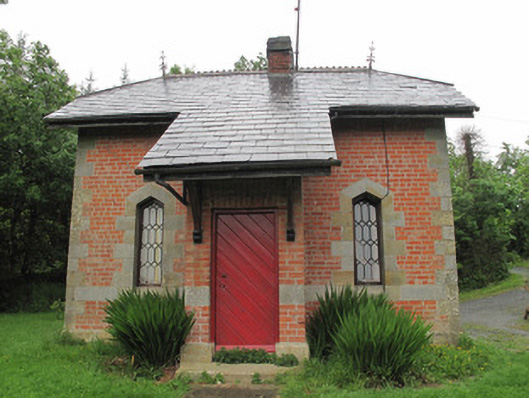
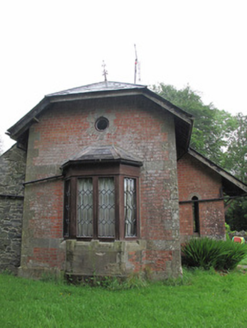
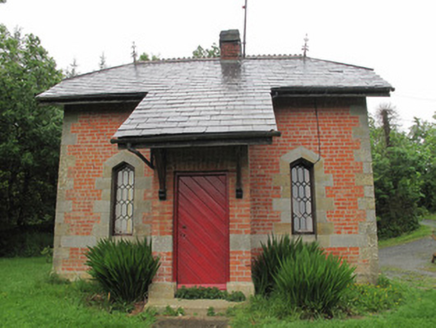
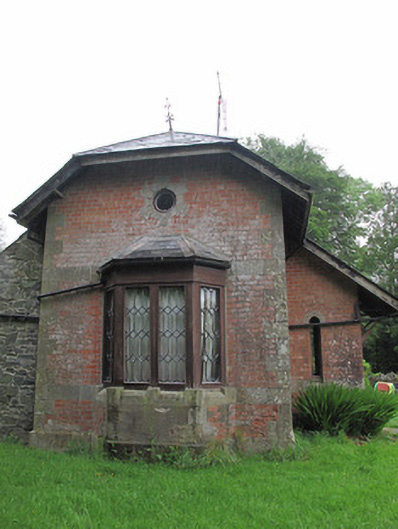
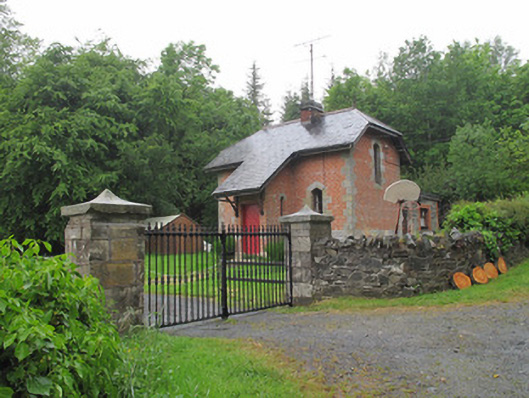
Detached three-bay single-storey gate lodge with attic floor, built c.1875, having projecting porch to front under catslide roof, canted bay window to west gable, slightly recessed addition catslide projection to rear, and recent flat-roof extension also to rear. Half-hipped slate roof with red brick chimneystack, terracotta ridge cresting with cast-iron finials, cast-iron rainwater goods, and timber eaves. Timber brackets to roof of porch. Red brick walls laid in English Garden Wall bond, with dressed sandstone block-and-start quoins, plat-band and plinth course. Rubble stone and rendered walls to rear additions. Bay window has rendered riser, timber mullions and hexagonal cast-iron latticed panes. Glazed oculus to apex of same elevation, with dressed sandstone surround. Triangular-headed window openings to front and upper east elevation, with dressed sandstone surrounds, chamfered sills and hexagonal cast-iron latticed windows. Pointed-arch window openings to side elevations of porch, with dressed sandstone sill and hood, and plain glazed windows. Square-headed timber battened door to porch, opening onto sandstone step. Double-leaf cast-iron gates flanked by square-plan squared sandstone piers having pointed stone caps, to south-east.
Appraisal
Designed by Henderson and Murray, this Gothic Revival gate lodge, known as Lake Lodge, was built in the late nineteenth century to replace an earlier lodge which had stood at the site since 1835. It was placed at the main entrance to Annaghmakerig House and as such was an integral component part of the demesne landscape. Its red brick façade is enlivened and enhanced by dressed stone detailing and terracotta ridge tiles. The lodge is similar in style to a number of workers' houses, also associated with Annaghmakerig House, and together they form an important component in the architectural heritage identity of this part of Monaghan.