Survey Data
Reg No
41401614
Rating
Regional
Categories of Special Interest
Architectural, Artistic, Historical, Scientific
Original Use
Church/chapel
In Use As
Church/chapel
Date
1839 - 1849
Coordinates
244965, 321132
Date Recorded
20/05/2012
Date Updated
--/--/--
Description
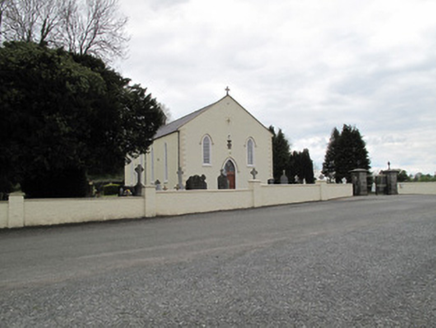
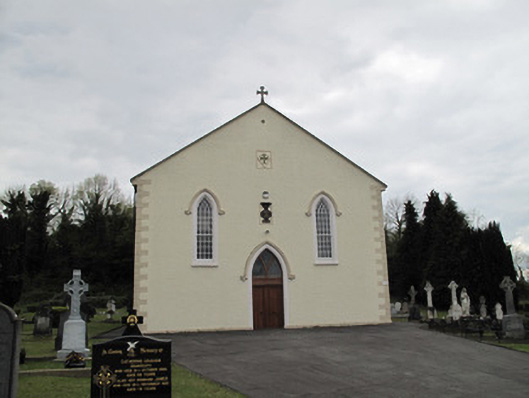
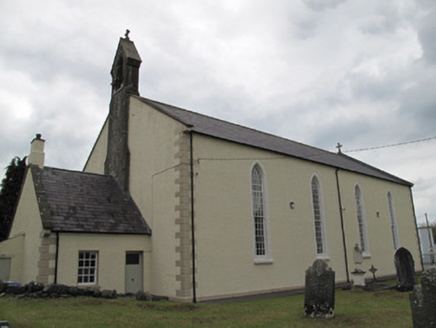
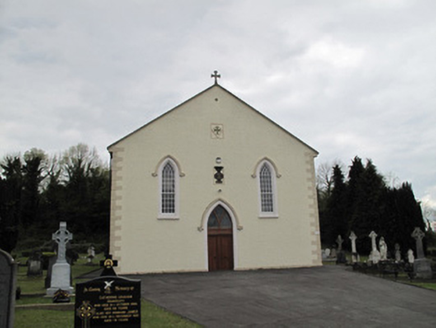
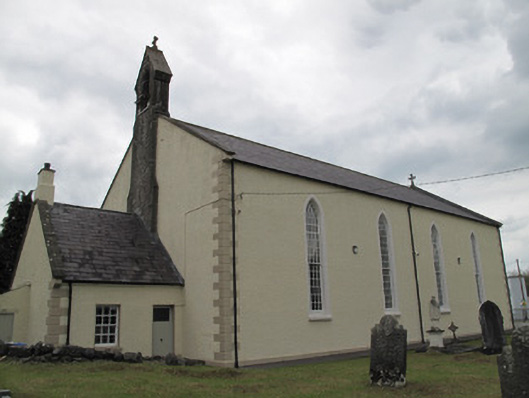
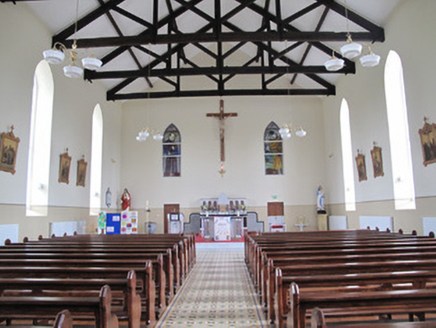
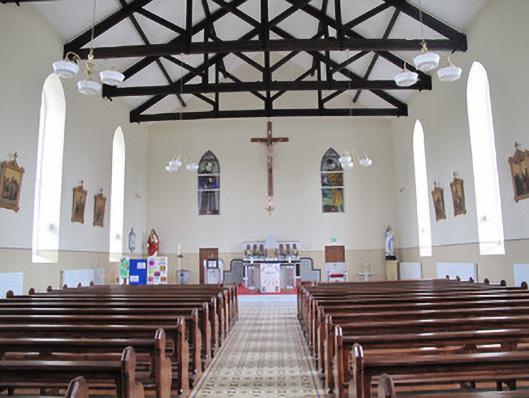
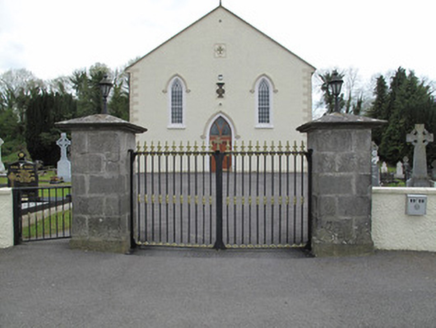
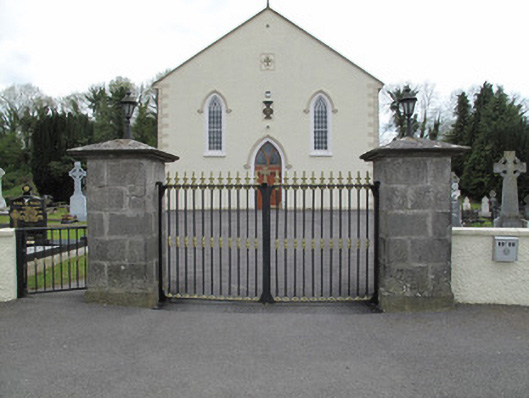
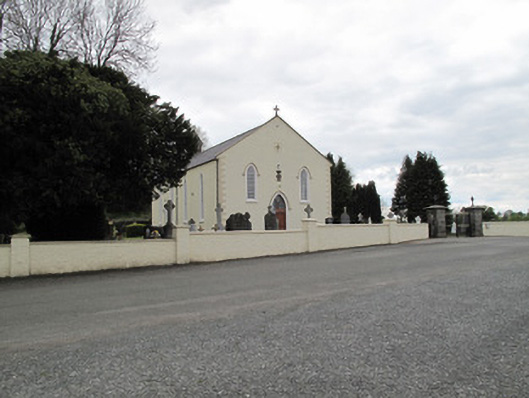
Free-standing gable-fronted Roman Catholic Church, dated 1844, and designed by William Dargan, comprising single-cell four-bay nave, and lower single-storey gabled sacristy recessed to altar end with lean-to addition to rear of latter. Pitched slate roof, with cast-iron rainwater goods, terracotta ridge tiles, tooled stone copings having cruciform finial to gable-front (north-east). Snecked masonry belfry abutting wall to altar end, with bell-cote having cruciform finial and cast-iron bell. Rendered chimneystack to sacristy. Harl-rendered walls having painted dressed stone plinth course and block-and-start quoins. Decorative render plaques over doorway to front, with cruciform symbol to top, and inscribed date plaque below. Lancet windows to front and long elevations, with painted dressed stone surrounds and sills, small-pane timber sliding sash windows having Y-tracery to fanlights, sixteen-over-sixteen pane with render hood-mouldings to gable-front and twenty-four-over-twenty-four pane to long elevations. Pointed-arch doorway to gable-front having painted chamfered tooled stone surround, render hood-moulding, double-leaf timber battened door and glazed tympanum with Y-tracery. Recent timber porch to interior. Tiled floor to entry porch having commemorative inscription. Smooth plaster to nave walls, exposed timber king-post trusses to roof. Two rows of pews on timber floors flanking central tiled aisle. Marble platform having two nosed steps carrying marble font, altar, lectern and chair. Recent timber confessionals flanking entry porch to rear, with timber gallery over. Blocked windows to rear of altar, with stained glass. Church set within graveyard with harl-rendered wall enclosing site. Double-leaf cast-iron gate flanked by square-plan dressed stone piers with pointed caps, and recent single-leaf pedestrian gate to south-east of main gate.
Appraisal
This simple-barn style church retains its original form, with the slight change of a sacristy addition to the rear, and reordered altar area to the interior. Render and painted stone detailing provide decorative interest, articulating and enhancing the façade, while stained-glass windows depicting saints, including Saint Alphonsus, to the interior provide artistic as well as contextual interest. The diminutively-paned timber sash windows considerably enhance the exterior. The setting is pleasant, with a well-wrought entrance gateway. It has historical significance, having been designed by William Dargan, who was then an engineer working on the construction of the Ulster Canal, and went on to become known as the Father of Irish Railways. It was completed by Fr McClusker in 1844 and in 1846, officially opened by John Hughes, who was born in County Tyrone and went on to become the 'First' Archbishop of New York in 1850.