Survey Data
Reg No
41401410
Rating
Regional
Categories of Special Interest
Architectural, Social
Previous Name
Braddocks Seceders' Meeting House
Original Use
Church/chapel
In Use As
Church/chapel
Date
1800 - 1805
Coordinates
272698, 328324
Date Recorded
08/04/2012
Date Updated
--/--/--
Description
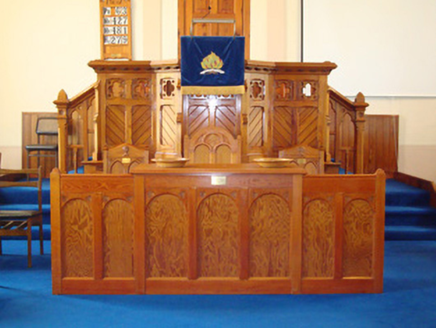
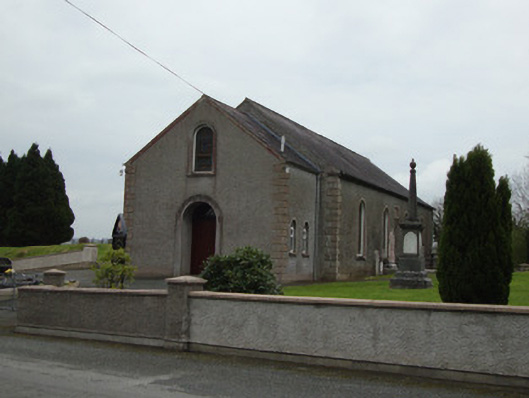
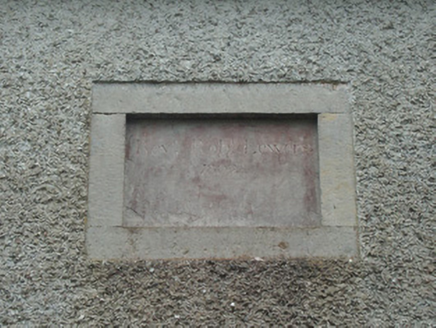
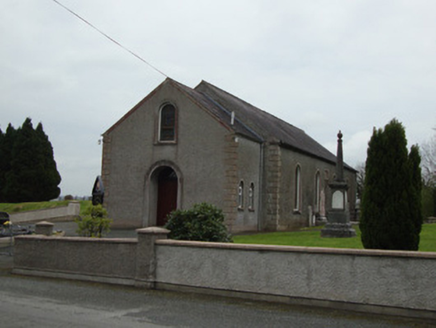
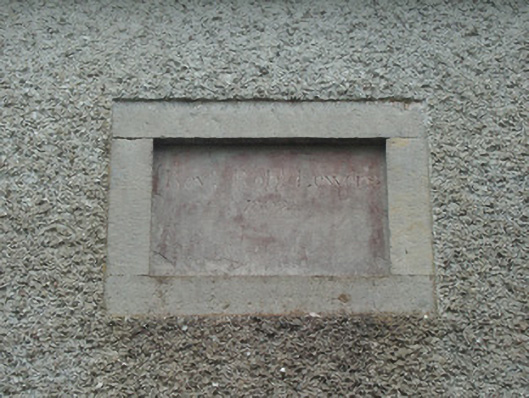
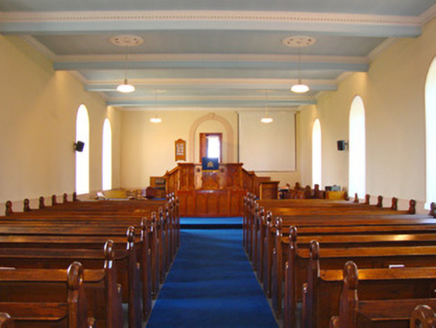
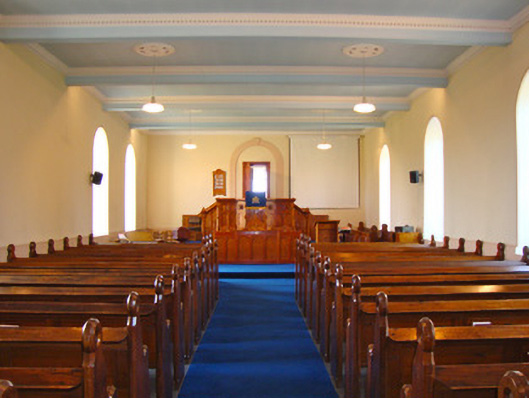
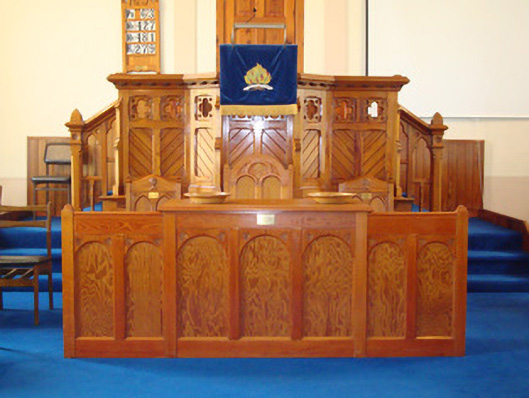
Freestanding Presbyterian church, dated 1802, having four-bay nave, later gable-fronted porch recessed to west end, and vestry extension to east. Pitched slate roof, having replacement metal rainwater goods. Roughcast-rendered walls, having smooth rendered quoins and plinth course. Inscribed stone date plaque to south elevation. Round-headed window openings, having smooth rendered surrounds and stone sills, with original stained-glass windows. Round-headed timber window over porch doorway, having stained glass. Square-headed window opening to vestry, having stone sill and replacement uPVC window. Round-headed doorway to porch, with moulded surround, replacement double-leaf timber door and over-light. Square-headed door opening to south elevation of vestry, having concrete steps and timber door. Interior has smooth rendered walls, moulded cornice and rendered horizontal beams to ceiling. Original pews to each side of nave, replacement pulpit to east end. Round-headed timber panelled door with stained-glass panels and overlight into nave from porch. Square-headed door opening with timber panelled door from pulpit to vestry. Church set within graveyard at crossroads in rural setting, bounded by roughcast-rendered wall.
Appraisal
Braddocks Presbyterian Church dates to 1802, following the split of the community of nearby Clontibret First Presbyterian Church, which was founded at Legnecreeve c.1715, and split in two in 1798. The two Presbyterian communities were re-united in 1905 and the churches at Braddocks and Legnacreeve are maintained to this day. The church is named on the first edition Ordnance Survey map c.1835 as 'Seceders' Meeting House', the term 'Seceder' indicating the breakaway from the congregation at Legnacreeve. The stained-glass windows to the church itself add artistic interest to the site, which is enhanced and contextualized by the graveyard, which itself contains some decorative funerary monuments of artistic value. Braddocks Presbyterian Church played an important social role in this rural community acting as a focal point, and its social importance is enhanced by the presence of a former school-house directly opposite at this rural crossroads.