Survey Data
Reg No
41401323
Rating
Regional
Categories of Special Interest
Architectural, Artistic, Social
Original Use
Church/chapel
In Use As
Church/chapel
Date
1810 - 1870
Coordinates
261609, 325246
Date Recorded
07/08/2013
Date Updated
--/--/--
Description
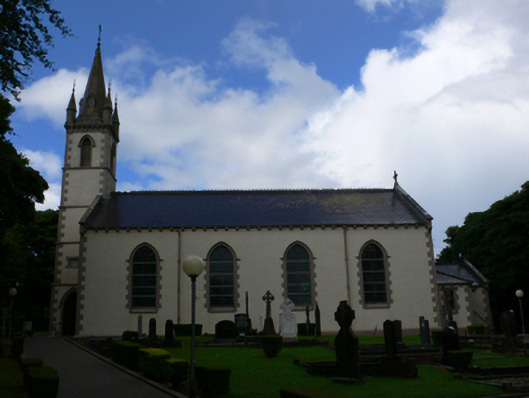
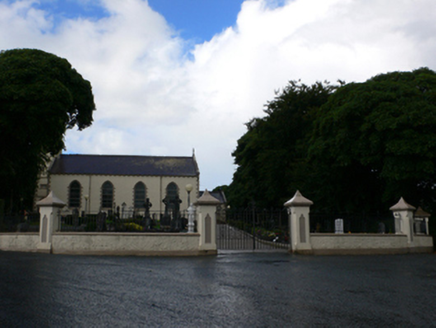
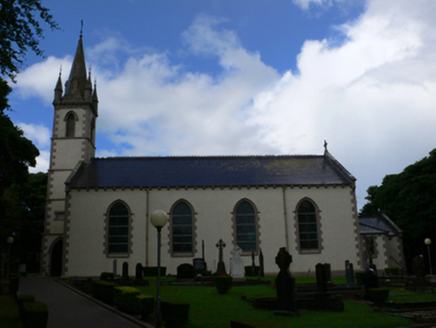
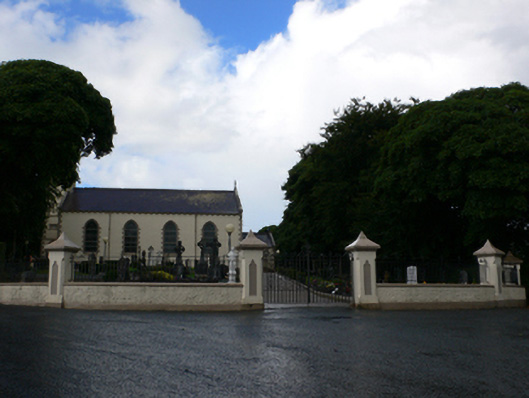
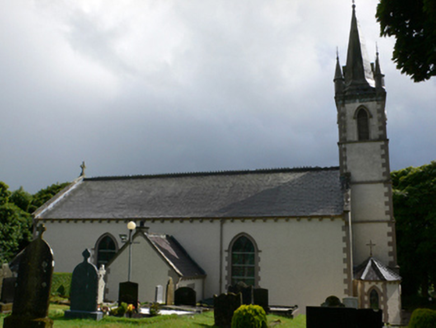
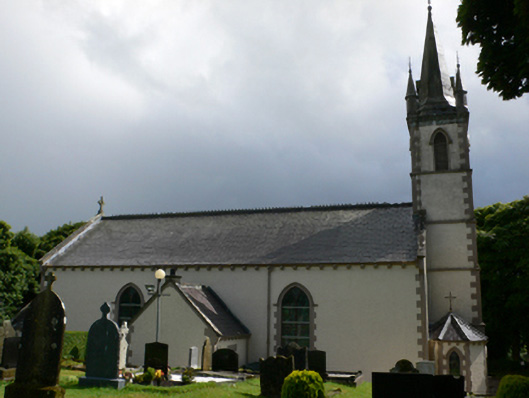
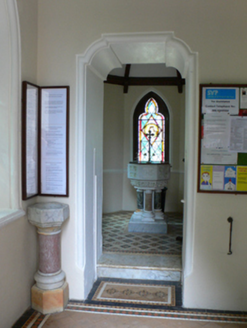
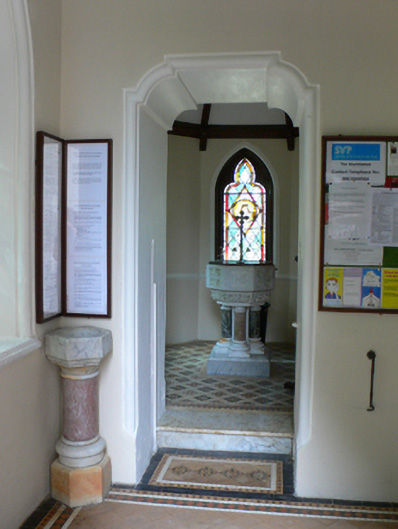
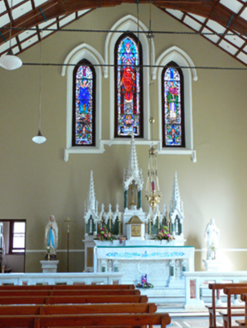
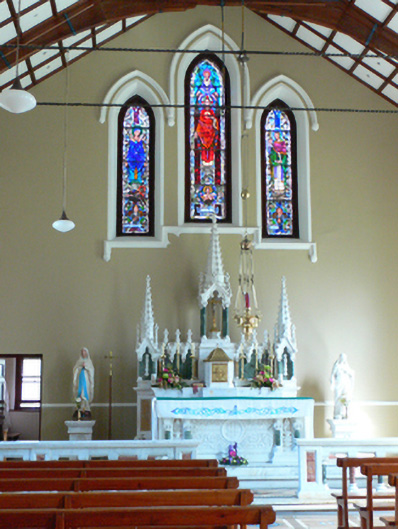
Freestanding barn-style Roman Catholic church with Gothic Revival detailing, built 1812, enlarged 1867. Consisting of four-bay nave, five-stage spired tower to west, canted baptistery to north of tower internal angle, off-centre boiler room to north of nave, and two-bay sacristy to east flanked to internal angles by hipped single-bay wings. Pitched slate roof, with crested blue/black crested ridge tiles, corbelled-out sandstone verges, Celtic Cross finial to south gable, moulded cast-iron gutters on moulded stone corbels. Stone broach spire with off-set base, gabled blind trefoil-headed lucarnes with blind quatrefoils over, and conical octagonal pinnacles to corners on spurred square bases. Wrought-iron finals throughout. Painted roughcast walls with chamfered napped plinth and quoins, painted stone quoins, and with string courses between tower stages. Tower second stage south elevation has marble dedication framed in sandstone surround with stop-ended hood-moulding: 'THIS TOWER WAS ERECTED / TO THE / HONOR AND GLORY OF GOD / IN THE YEAR OF OUR LORD / 1867 / REV J A CASSIDY being P.P.' Pointed-arch windows with Y-tracery, diagonally-glazed, with stained-glass margins, napped surrounds, splayed sills, and stop-ended hood-mouldings, four to south elevation, two to north elevation. Lancets without tracery. Lancets to tower first and third stage west elevation, baptistery elevations, three stepped to east gable (with connected hoods), and central lancet flanked by square-headed windows to sacristy east gable (with connected hoods). Square-headed windows to east elevation of sacristy wings. Pointed-arch stained vertically-sheeted double-leaf doors, with splayed surrounds and stop-ended hood-mouldings. Access via west porch (under tower) opening onto baptistery to north, and nave to east. Coved plaster ceiling with moulded painted timber ribs and cornicing, painted plaster walls, apertures have edge roll-moulded reveals and sills (stop-ended to doors), splayed embrasures to windows, encaustic tile floors. Nave has moulded stone corbel-supported stained timber collared exposed roof structure with square plaster panels between timber rafters and purlins, barley-shaft iron tie-rods between principal beams with ornamental petalled centre. Walls have sill course and Victorian or early twentieth-century stained-glass; stained-glass windows in three east lancets over high altars in style of Harry Clarke, and carved timber confessionals. Set far back from road by bitmac drive and rendered dwarf walls supporting mild steel railings and gates, and square piers with spired caps. Situated in sloping graveyard rising to north (rear), having fine nineteenth-century gravestones to south (front) (including unusual gravestone of c.1829 with reverse face featuring bas relief motif of elevated disc (communion host?) over column). Modern graveyard separated by ditch to north (rear); Jubilee Mission Crucifixion (dated 2000) to rear.
Appraisal
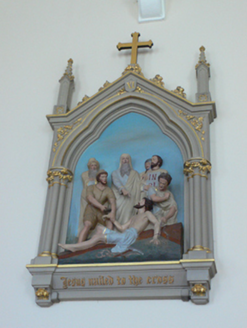
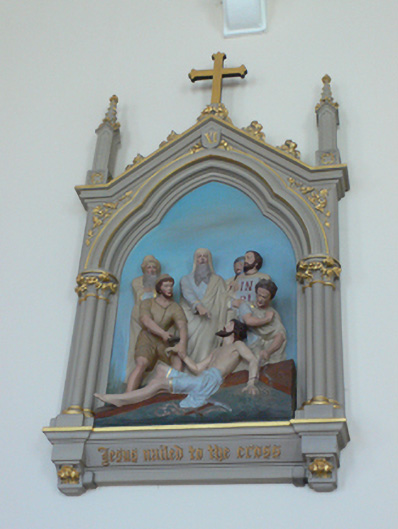
Saint Mary's Church is given particular prominence by its tall, narrow, spired tower, making it a landmark in the district. The building has evidence for at least three building phases, similar to nearby Tedavnet Saint Dympna's Catholic Church. The earliest part, of 1812, was erected prior to Catholic Emancipation, perhaps explaining its distance from the roadside. Extended after Emancipation and given a modest tower, it was finally remodelled during Victorian times, Gothicised, and liturgically reordered. The boiler house may have been the sacristy to the original T-plan structure and the north elevation fenestration suggests that the altar was centred on the north wall. The building is given a lightened appearance by the subtle render colouring. The baptistery adds interest to the plan and displays a finely-wrought sculpted marble font. The nave is enhanced by the fine sculpted reredos and the stepped stained-glass windows behind. There are also unusually three-dimensional Stations of the Cross.