Survey Data
Reg No
41401317
Rating
Regional
Categories of Special Interest
Architectural
Original Use
House
Date
1840 - 1860
Coordinates
263575, 329475
Date Recorded
22/04/2012
Date Updated
--/--/--
Description
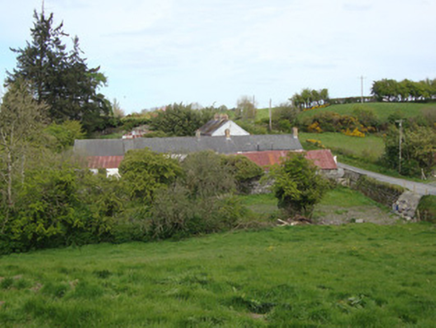
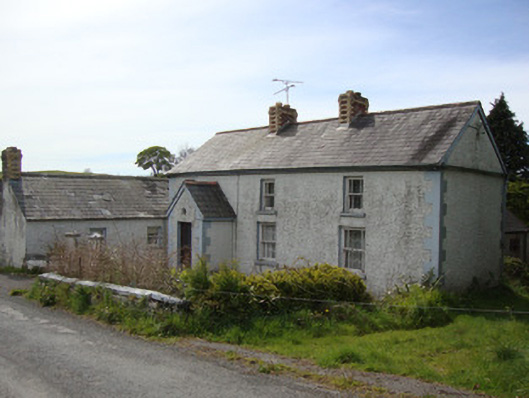
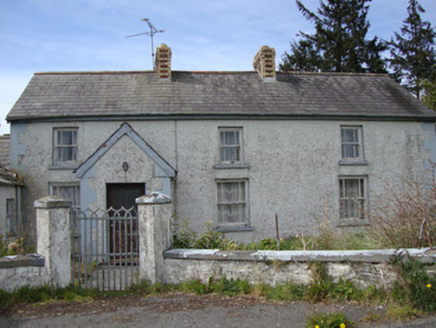
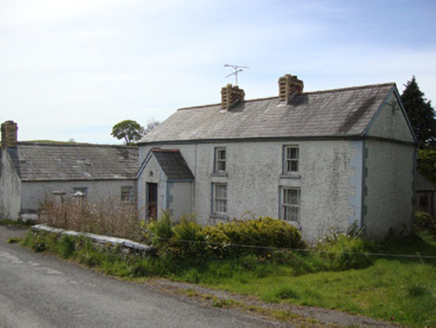
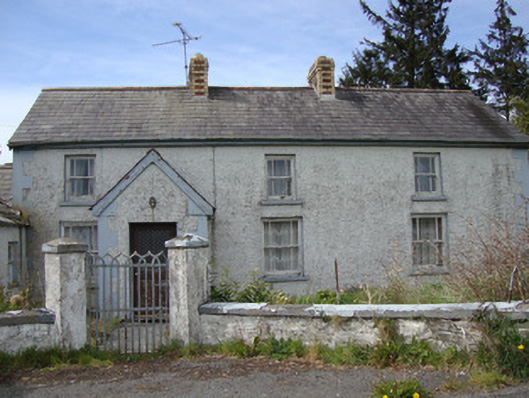
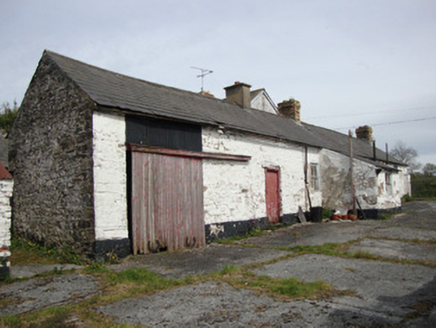
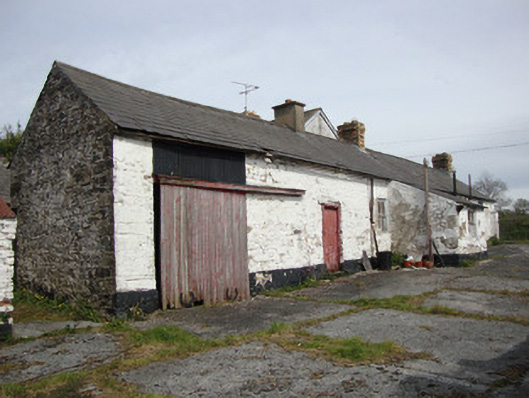
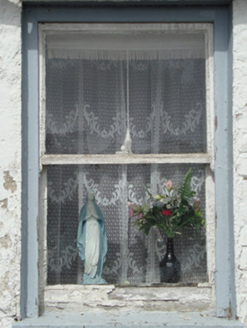
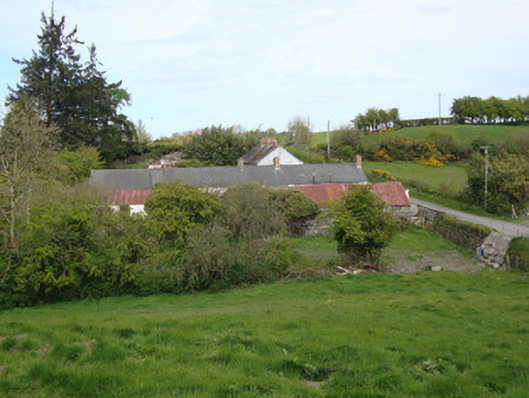
Detached four-bay two-storey vernacular house, built c.1850, with gabled porch to front elevation, and single-storey ancillary farm buildings to south and rear (west). Now vacant. Pitched natural slate roof, with cast-iron rainwater goods, having two centrally-placed polychrome red and yellow brick chimneystacks. Roughcast rendered walls, having smooth-rendered quoins. Square-headed window openings with rendered and painted reveals and painted stone sills, having side-margined one-over-one pane timber sliding sash windows to front and rear elevations. Square-headed door opening with rendered reveals and replacement timber door, with concrete path to east. Low boundary wall, having limestone coping, terminating in square-plan gate piers, having wrought-iron pedestrian gate. Double-leaf decorative cast-iron vehicular gate to south-east, with square-plan piers. Single-storey outbuildings to south and west, and two-storey outbuilding to west, some with pitched replacement slate roofs, some with pitched and lean-to corrugated-iron roofs, with cast-iron rainwater goods, some roughcast rendered and some coursed rubble stone walls, square-headed openings, some with visible red brick surrounds, having timber battened doors and timber fixed and sliding sash windows. Segmental-arch vehicular entrance, with red brick reveal, part in-filled with cement blocks, having timber battened door and recent square-headed window opening with fixed timber window.
Appraisal
This vernacular house retains its essential form and fabric, and its setting is enhanced by the survival of mid-nineteenth-century farm buildings. The porch is characteristic of Irish rural houses, and the timber sash windows contribute to its authentic mid-nineteenth-century character. The polychrome chimneystacks are typical of County Monaghan, whilst other local materials have been used in the construction of the buildings and boundary walls. The structures are a picturesque addition to this country road, and are bounded by a stream to the south.