Survey Data
Reg No
41401302
Rating
Regional
Categories of Special Interest
Architectural, Social
Original Use
Rectory/glebe/vicarage/curate's house
In Use As
House
Date
1790 - 1795
Coordinates
261108, 331014
Date Recorded
22/04/2012
Date Updated
--/--/--
Description
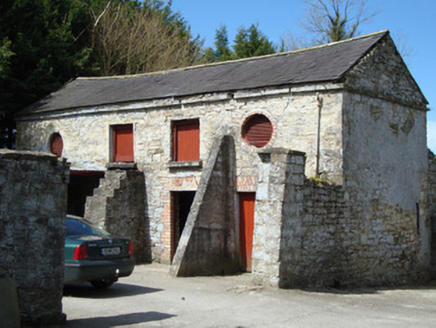
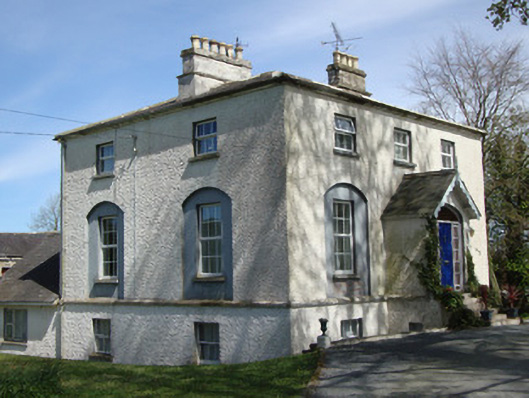
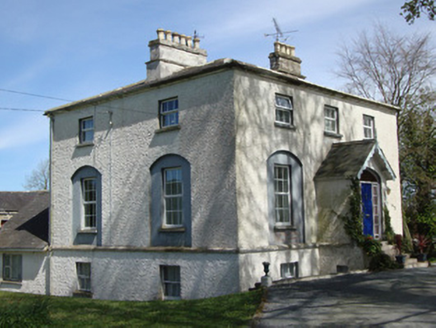
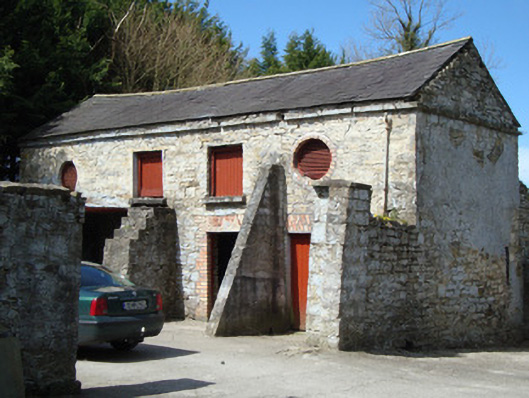
Detached three-bay two-storey over basement former rectory, built c.1792, with two-bay side elevations, projecting gabled porch to front elevation, and with later additions to rear (north). Now in use as private house. Hipped slate roof with two rendered chimneystacks having octagonal-plan terracotta chimney-pots, and with cast-iron rainwater goods. Roughcast rendered walls with segmental-headed recessed panels to ground floor, and with limestone plinth course over basement. Square-headed openings with replacement uPVC windows and painted limestone sills, with some three-over-three pane timber sliding sash windows to basement and two-over-two timber pane to basement level of porch. Porch has carved timber bargeboards with finial, Tudor-arch door opening with square-headed replacement timber door, sidelights and over-light. Low plinth wall to basement of south and east elevations, having moulded limestone coping to east elevation. Yard to north with four-bay two-storey outbuilding having pitched slate roof, remains of cast-iron rainwater goods, coursed rubble limestone walls and projecting eaves course, square-headed and round window openings to first floor, and square-headed door openings to ground floor with later gauged-brick door surrounds. Main entrance from west having lined-and-ruled square-plan piers with plinths, with large carved stone acorns, flanked by smooth rendered plinth wall with limestone coping. Steel vehicular gate and chamfered stone piers to east. Situated north of Ulster Canal and east of Saint Mollua's Church of Ireland church.
Appraisal
This former rectory was associated with nearby Saint Mollua's Church of Ireland church (1788) and was built in 1792 with the aid of a grant from the Board of First Fruits. the house formed part of an ecclesiastical group with the church and the former schoolhouse. The house is shown to be extended north by the time of the second edition OS map (1908). The picturesque setting is enhanced by a gated entrance from the Ulster Canal and Drumsnat Lough to the south. This elegant and attractive Georgian house maintains its early form and character, exhibiting fine craftsmanship, whilst the remaining sash windows give a good indication of the original fenestration style. As a former rectory it is of social historical significance and its form and detailing give it architectural interest.