Survey Data
Reg No
41401203
Rating
Regional
Categories of Special Interest
Architectural
Original Use
House
In Use As
House
Date
1780 - 1800
Coordinates
256189, 330141
Date Recorded
02/05/2012
Date Updated
--/--/--
Description
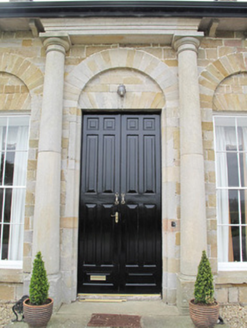
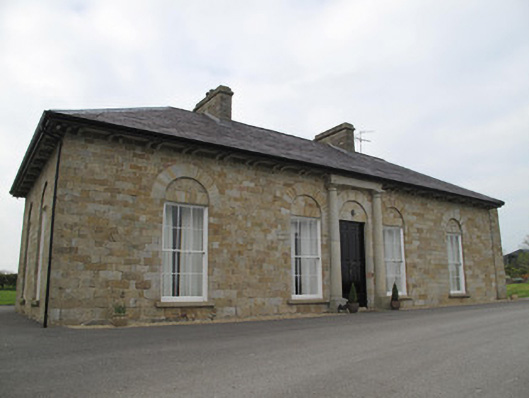
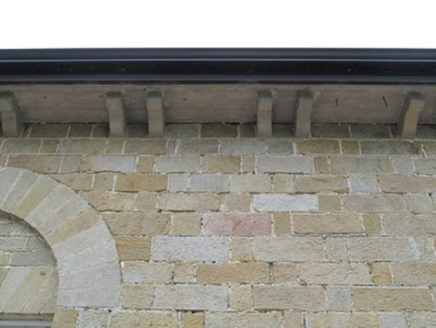
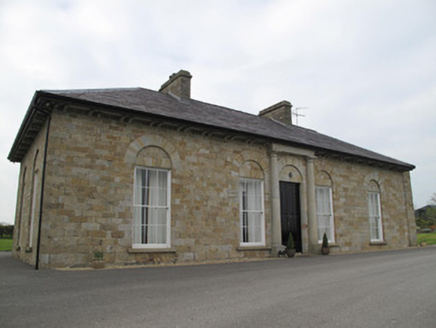
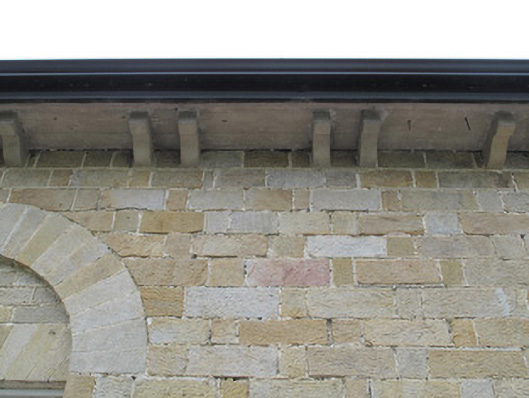
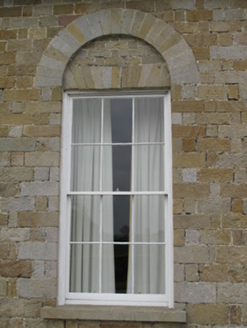
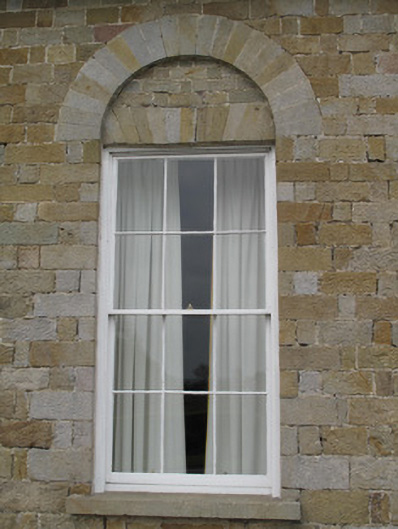
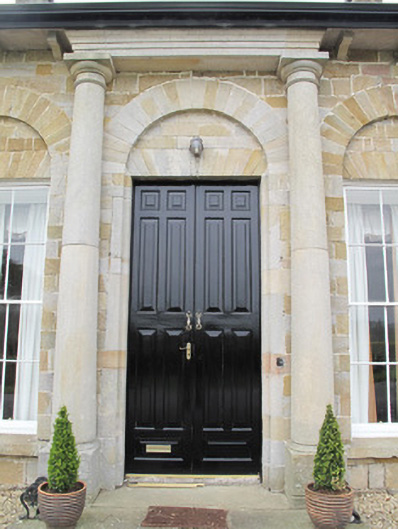
Detached L-plan five-bay house, built c.1790, having multiple-bay two-storey return slightly partly recessed to east end of front (south) elevation, return having lean-to extensions to rear. Hipped slate roof with replacement rainwater goods, and paired moulded eaves brackets to overhanging eaves to front and side (west) elevations, clay ridge tiles, roof-light, and dressed sandstone chimneystacks. Coursed dressed sandstone to front and west elevations with shallow round-headed recesses to door and window openings with gauged tooled stone surrounds, voussoirs and sills. Harl render to rear and east elevations, with render plinth course. Square-headed six-over-six pane timber sliding sash windows to stone facades and one to east end of return. Square-headed replacement uPVC windows elsewhere. Double-leaf timber panelled door opening to front, flanked by sandstone columns supporting moulded lintel cornice and fronted by stone flag and having cast-iron boot-scrapers. Square-headed replacement uPVC door to rear. Colonnaded outbuilding to rear having pitched slate roof, rendered rubble stone walls and elliptical-arch openings between round Doric-style columns. Replacement square-plan stone-clad piers and boundary walls to south-west of house, having cast-iron post box inserted.
Appraisal
This attractive, well-proportioned house maintains features characteristic of the early and late Georgian period, notably the reserved classically derived detailing to the front. This style is further reflected in the colonnaded outbuilding to the rear, which adds context. The well-tooled sandstone walls with recessed door and windows openings is the most apparent feature, the different hues of the sandstone offering visual interest. The retention of timber sash windows to the stone facades greatly enhances the architectural heritage value of the building. The house is prominently sited at a height and makes a visually interesting contribution to the landscape.