Survey Data
Reg No
41400942
Rating
Regional
Categories of Special Interest
Architectural
Previous Name
Cornakessagh House
Original Use
Farmyard complex
In Use As
Farmyard complex
Date
1790 - 1810
Coordinates
265247, 334055
Date Recorded
18/04/2012
Date Updated
--/--/--
Description
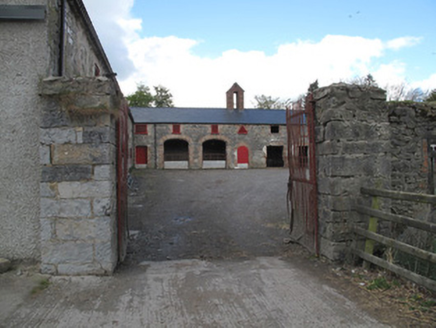
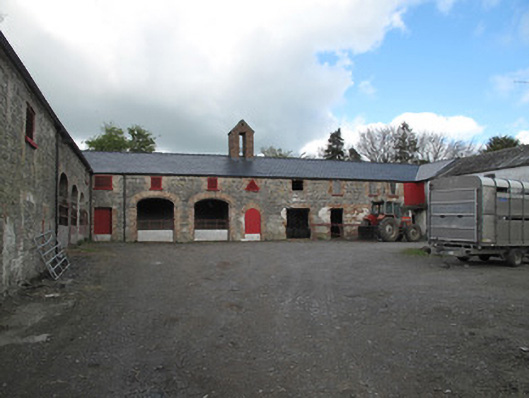
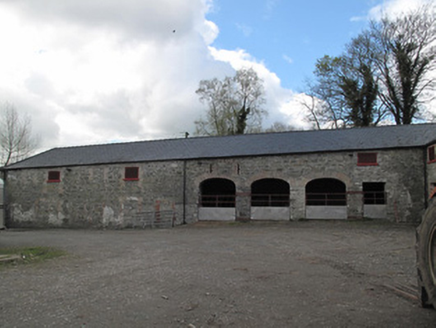
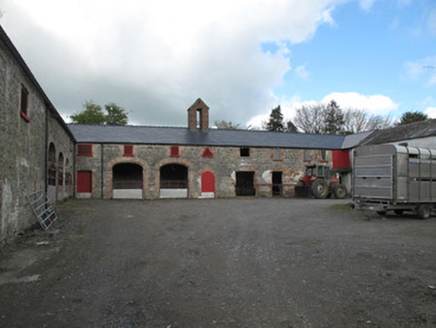
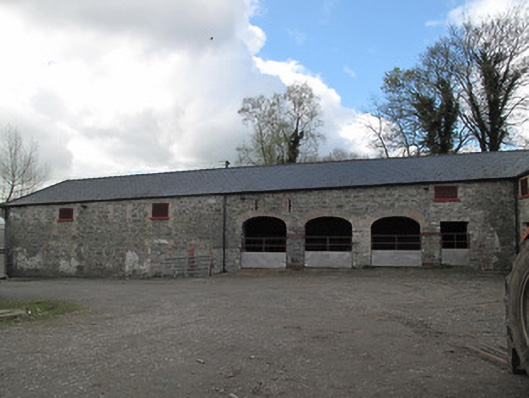
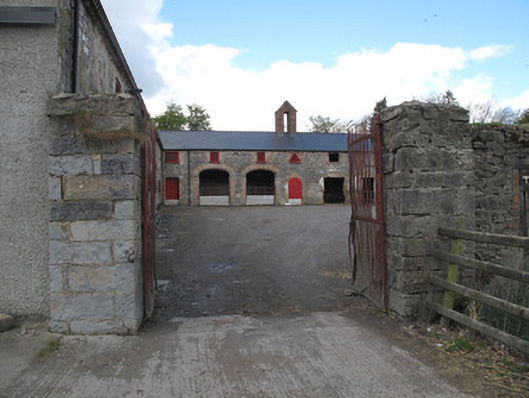
Range of two-storey outbuildings, built c.1800, around rectangular courtyard. Comprising nine-bay block to east, nine-bay block to north and six-bay block to west of central courtyard. Lean-to extension to east elevation of east block. Hipped replacement slate roof to north and west, with cast-iron rainwater goods. Red brick openwork bell-cote, in facer bond with closer bricks, having rectangular aperture and pitched slate roof to north block. Pitched slate roof to east having rendered chimneystacks and clay pots. Coursed rubble stone walls having red brick blocked surrounds. Some red brick facer bond wall sections visible, roughcast render to east block, painted rubble stone to rear (east) elevation. Flight of stone steps abutting north block to north-east corner. Square-headed openings to east block with painted masonry sills. Some three-over-three pane timber sliding sash windows and some replacement uPVC windows. Openings to rear having render reveals, some with fixed timber windows. Square-headed openings to first floor to other ranges having red brick surrounds and timber louvered vents and fittings, some with painted masonry sills. One triangular window opening with timber louvered fitting. Square-headed door openings to east having half-glazed timber battened doors, timber battened doors, corrugated-iron doors, and replacement uPVC doors. Gauged-brick triple-centred, round and square-headed door openings to front of north and west blocks. Red brick surrounds, some having timber battened doors. Square-plan coursed squared limestone and sandstone piers, with double-leaf cast-iron gates, and coursed rubble stone wall, forming boundary to south of courtyard.
Appraisal
This extensive range of outbuildings is informal in proportion and arrangement of openings. The range of openings imply that a number of different purposes were served in the one courtyard. Although it has undergone alterations, notably the conversion of the east wing into housing which is now derelict, the original form and character can still be seen. These outbuildings would have constituted an integral component of Cornecassa Demesne, and are good examples of the agricultural architecture of their era.