Survey Data
Reg No
41400415
Rating
Regional
Categories of Special Interest
Architectural, Social
Original Use
Worker's house
In Use As
House
Date
1875 - 1885
Coordinates
270424, 346685
Date Recorded
28/03/2012
Date Updated
--/--/--
Description
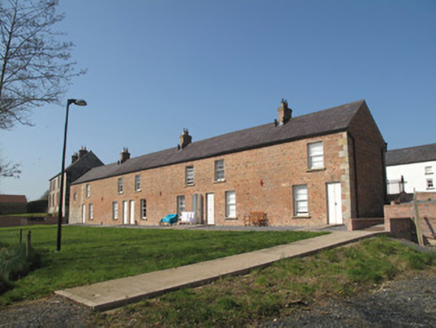
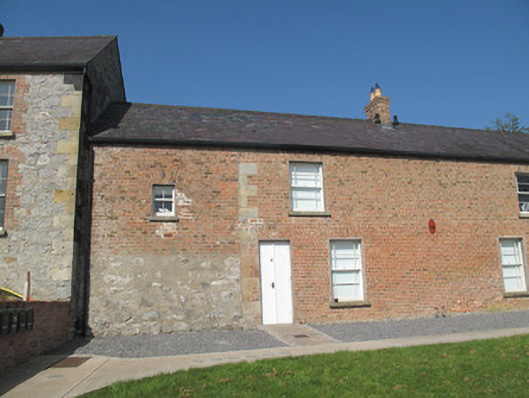
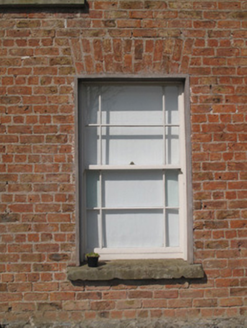
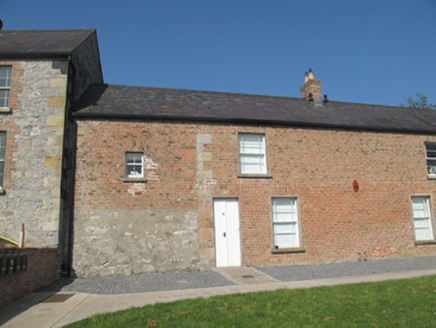
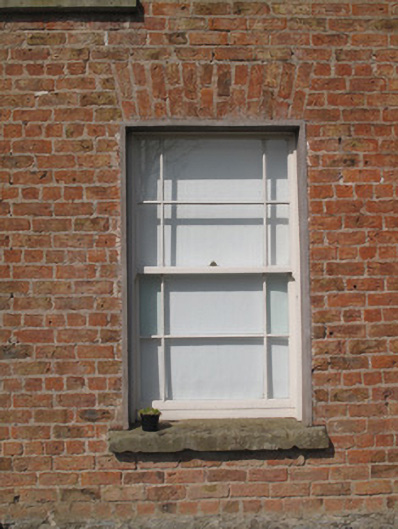
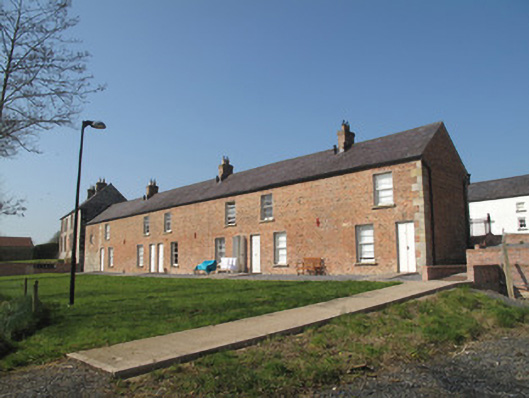
Terraced two-bay split-level house, built c.1880, comprising two-storey front (south-east) elevation and single-storey rear (north-west) elevation. Part of terrace of six, adjoining lodging house to south-west by red brick extension having coursed rubble limestone base. Pitched slate roof with shared red brick chimneystack and clay chimneypots and clay ridge tiles. Replacement steel rainwater goods. Red brick walls laid in English garden wall bond, coursed rubble limestone to base of wall to rear, tooled limestone block-and-start quoins and cast-iron oval wall-tie to front. Gauged-brick square-headed window openings with render reveals, tooled limestone sills, and side-margined two-over-two pane timber sliding sash windows. Two-over-two pane timber sliding sash window to extension to front. Gauged-brick square-headed door opening to front having render reveal and double-leaf timber battened door.
Appraisal
This modest house retains much of its original form and character. It is largely identical to its neighbouring buildings, with which it forms a terrace known as 'The Red Row'. It housed workers at the adjacent textile mill from the late nineteenth century, having been built at a later date than the neighbouring 'White Row', perhaps reflecting increased accommodation requirements for employees. The façade of this house, maintaining a rich patina of age through the soft colours of the clamp kilned bricks, is enlivened by the timber sash windows, which add architectural and decorative interest. Mullan is representative of the mill villages which were constructed in Ulster throughout the 18th and 19th centuries, providing both housing and public buildings adjacent to the workplace. The scale and form of the terrace make an interesting contribution to the predominantly rural landscape.