

Survey Data
Reg No
41308025
Rating
Regional
Categories of Special Interest
Architectural, Scientific
Original Use
House
Date
1820 - 1840
Coordinates
282814, 319907
Date Recorded
01/10/2011
Date Updated
--/--/--
Description
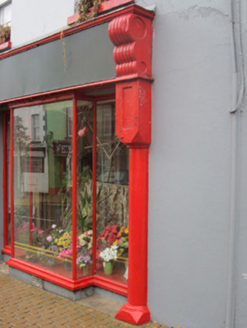
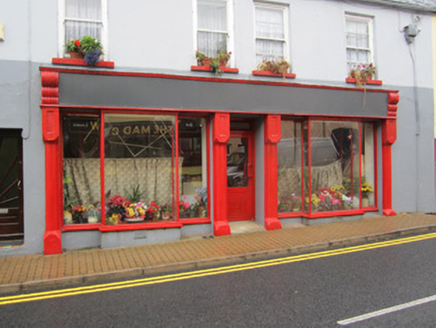
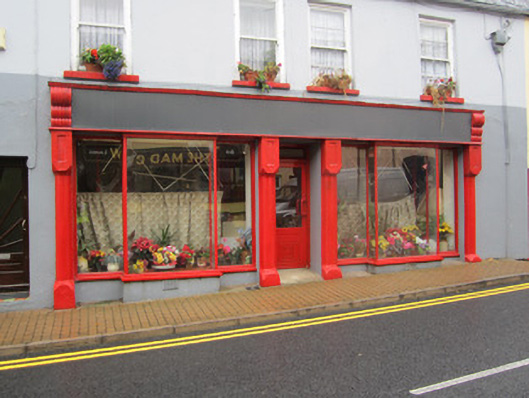
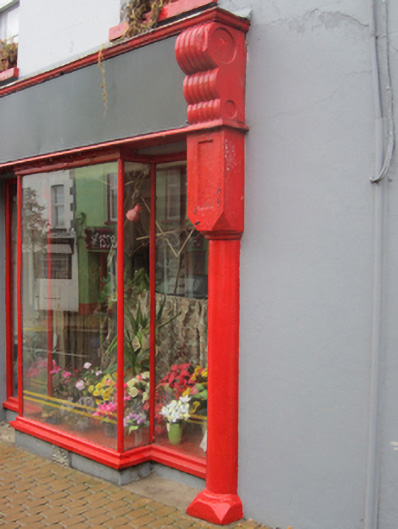
Terraced four-bay two-storey house, built c.1830, formerly two two-bay houses, with shop to ground floor. Pitched fibre-cement slate roof with black clay ridge tiles. Rendered and brick chimneystacks, with single projecting course to northern stack and stepped courses to southern. Half-round cast-iron gutters fixed to smooth rendered platband with wrought-iron brackets and round-profile downpipe. Painted smooth rendered walls, with render and timber shopfront. Uneven but symmetrically spaced square-headed one-over-one pane timber sliding sash windows to first floor with convex horns to northern bays and two-over-two horizontal-pane to southern bays, all with painted stone sills. Engaged render columns with cubic bases and capitals frame central doorway with partially glazed replacement timber door with overlight and ramped concrete access. Ordnance Survey benchmark carved into smooth rendered reveal of door, either side of which are large, square canted display windows with fine timber glazing bars to junctions, and moulded timber sill over low smooth rendered stall riser. Blank fasciaboard held by columns with moulded timber cornice and fluted consoles to each end. Square-headed doorway to north end of shopfront providing access to house over shop, with replacement glazed timber door.
Appraisal
This building has a very distinctive shopfront and, although not as intricate in carved detail as some other late nineteenth or early twentieth-century examples, the robust but attractive capitals and extra display area afforded to the original shop by virtue of the canted windows, make it building stand out among other less distinctive structures on this once busier commercial street. The colourful presentation of the shopfront adds to the streets visual qualities. Other historic fabric, such as the varied timber sash windows (that indicate that this was formerly two separate houses), and cast-iron rainwater goods, enhance the architectural heritage quality of the building.