Survey Data
Reg No
41304031
Rating
Regional
Categories of Special Interest
Architectural
Original Use
House
In Use As
House
Date
1900 - 1910
Coordinates
250145, 325898
Date Recorded
19/12/2011
Date Updated
--/--/--
Description
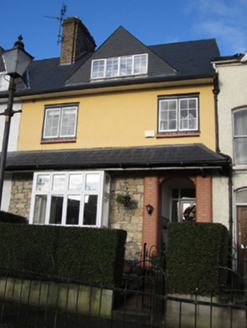
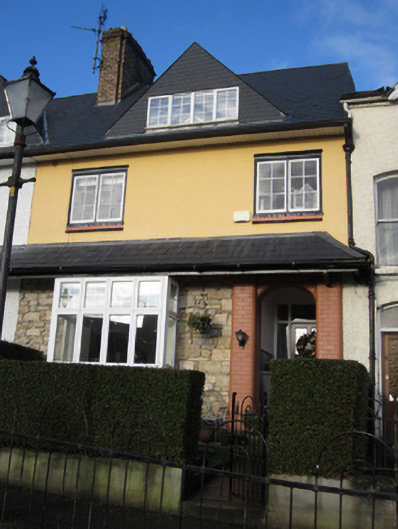
End-of-terrace two-bay two-storey Arts and Crafts-style house, constructed 1905, with box-bay window to front and recessed entrance under lean-to hipped roof that is continuous to other houses in terrace. Single-bay dormered return to rear, with monopitch roof. Pitched fibre-cement slate roofs with sprocketed overhanging eaves, brick chimneystack, and cast-iron rainwater goods. Return has monopitch fibre-cement roof. Triangular-fronted dormer window to front roof slope, with slate-hung sides, and modern triangular dormer to rear. Exposed random coursed limestone walling to ground floor front, rendered elsewhere. Lean-to roof supported on carved timber bracket over entrance. Bay window fully glazed, with replacement uPVC glazing mimicking original, above rendered base. Square-headed window openings elsewhere with brick sills, first floor having two double-light windows, dormer having four-light window. First floor has six-pane timber casement windows and others have uPVC replacements whose form mimics the original. Recessed main entrance doorway framed by brick piers with moulded arrises, with segmental brick arch. Inner side of porch has glazed timber panelled door with sidelights and overlights. House fronts onto The Diamond, with small garden to front with brick plinth and wrought-iron railing having cast-iron ornaments.
Appraisal
This house is the second most intact of three similar houses in a short terrace of Edwardian Arts and Crafts domestic architecture on this most prominent of sites close to the summit of the distinctive Diamond of Clones. It and its neighbours replaced a thatched terrace of traditional town houses and is probably the work of the architect, William Scott (1871-1921). Several Arts and Crafts motifs such as the box-bay window and prominent gable and dormer adorn this building and give it, along with the others on this short terrace, an architectural quality and distinction that is appropriate and adds to the notable variety of styles visible around The Diamond.