Survey Data
Reg No
40910760
Rating
Regional
Categories of Special Interest
Architectural, Technical
Original Use
House
In Use As
Guest house/b&b
Date
1700 - 1800
Coordinates
192126, 363394
Date Recorded
02/10/2007
Date Updated
--/--/--
Description
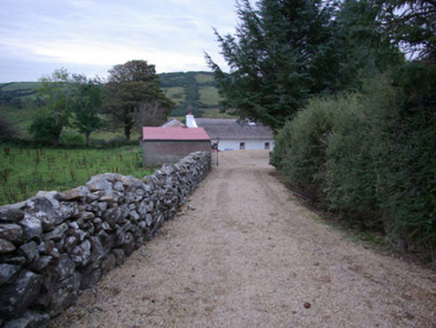
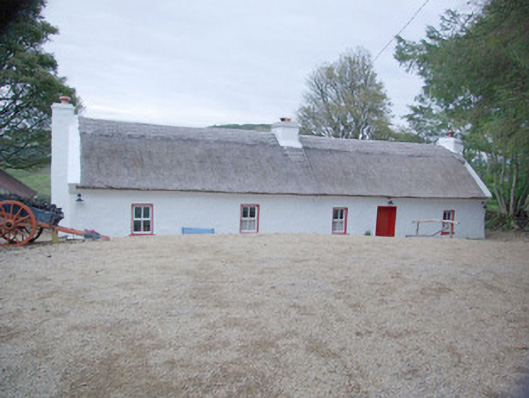
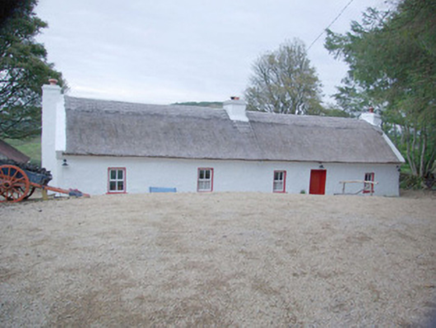
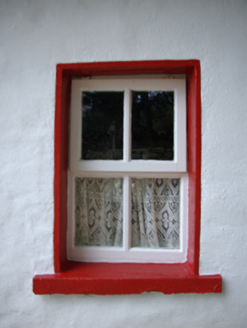
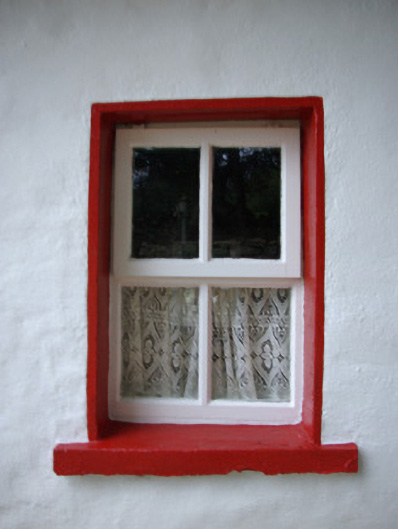
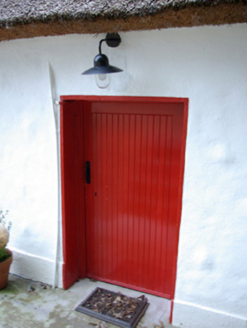
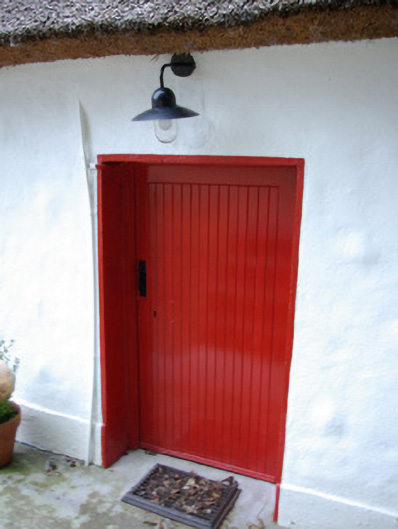
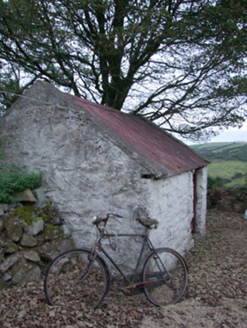
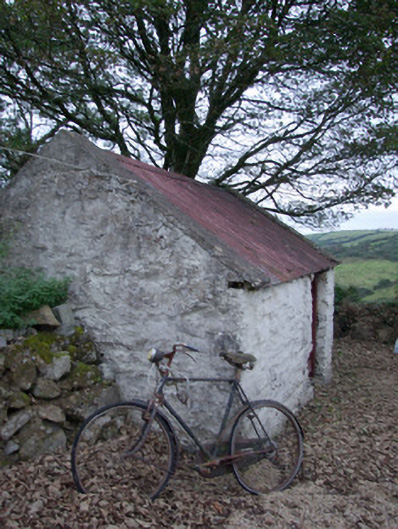
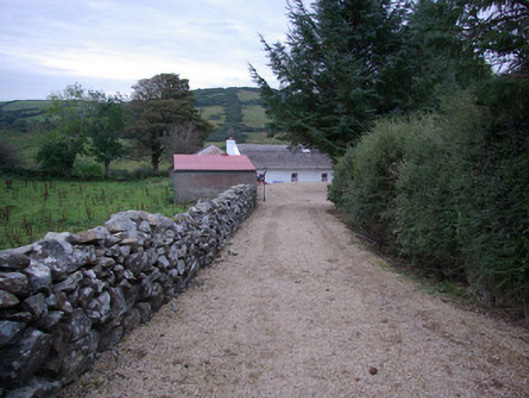
Detached five-bay single-storey vernacular house, built c. 1750, having modern single-bay single-storey extension to rear elevation (north). Now in use as holiday accommodation. Pitched reed thatch roof (laid over corrugated-metal sheeting) having raised rendered coping to gable ends (east and west) with kneeler stone-type detailing at eaves level, and with three rendered chimneystacks (one to either gable end and one to the centre). Smooth rendered walls over projecting plinth. Square-headed window openings with smooth rendered reveals, replacement timber casement windows and with painted sills. Square headed door opening offset to the east side of centre of the main elevation (south) having replacement timber battened door; doorway accessed by flight of five stone steps down from raised gravel forecourt to the south. Set well back from the road, and sited below road level, in the rural countryside to the north-east of Ballyshannon. Gravel forecourts to front and rear. Site accessed from the south along gravelled laneway having rubble stone boundary walls. Detached single-storey outbuilding to the north-west having pitched corrugated-metal roof with raised rendered verges to the gable ends, painted rubble stone walls, and square-headed doorway with timber door. Single-storey outbuildings to the south-west and north.
Appraisal
Despite some modern alterations, this well-maintained thatched vernacular house retains much of its early form and character, and is an appealing feature in the scenic rural landscape to the north-east of Ballyshannon. Modest in scale, it exhibits the simple and functional form of vernacular building in Ireland. The loss of the early fittings to the openings fails to detract substantially from its appeal and suitable replacements could easily be re-installed. Of particular interest in the survival of the thatch roof, which is now sadly becoming increasingly rare in Donegal. According to local information, the thatched roof was recently laid over corrugated-metal sheeting. However, this building was originally thatched. The form of this building hints that it may have originally been two semi-detached houses that were later combined to form a single property. The plan of this building, having chimneystacks to the gable ends and a central doorway to the section to the east, suggests that this building is of the ‘direct entry’ type that is characteristic of the vernacular tradition in north-west Ireland. This house represents a fine surviving example of a once ubiquitous building type in the rural Irish countryside, and is a valuable addition to the vernacular heritage of County Donegal. The simple rubble stone outbuilding to site adds to the context and setting.