Survey Data
Reg No
40910756
Rating
Regional
Categories of Special Interest
Architectural, Technical
Original Use
Bridge
In Use As
Bridge
Date
1780 - 1820
Coordinates
188582, 363589
Date Recorded
07/11/2007
Date Updated
--/--/--
Description
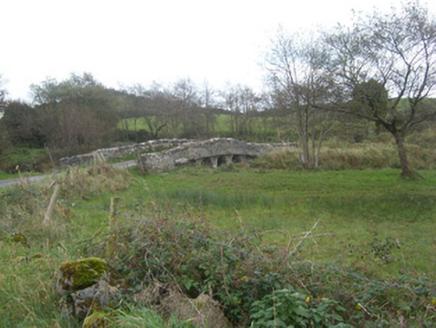
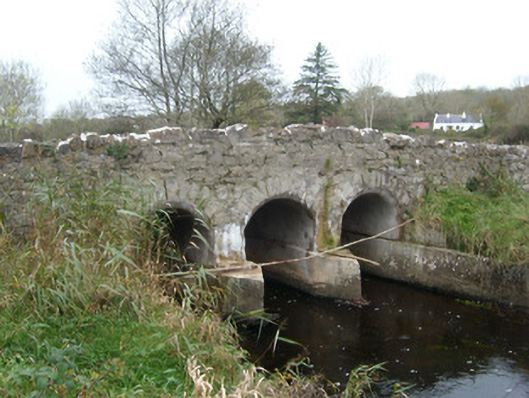
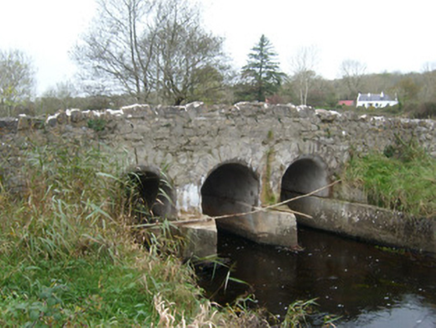
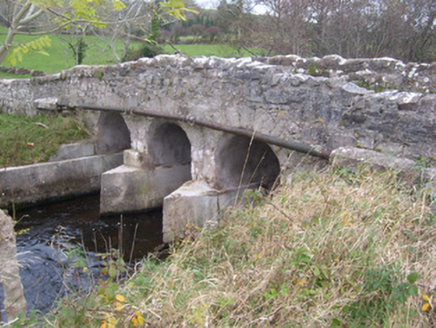
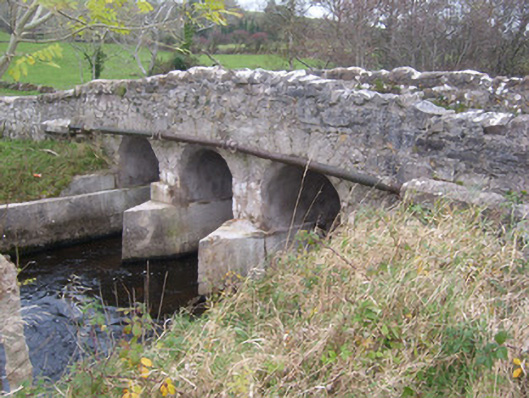
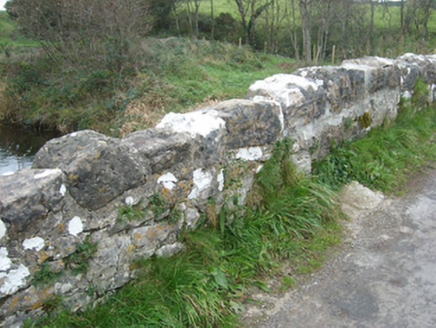
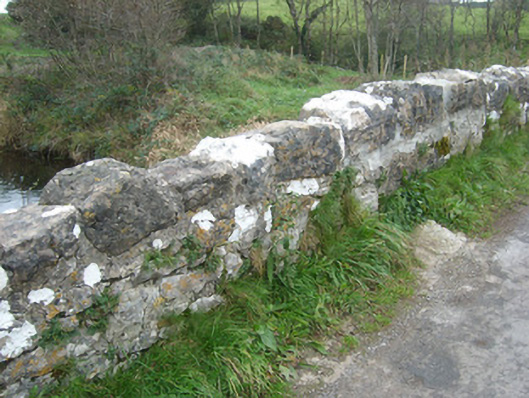
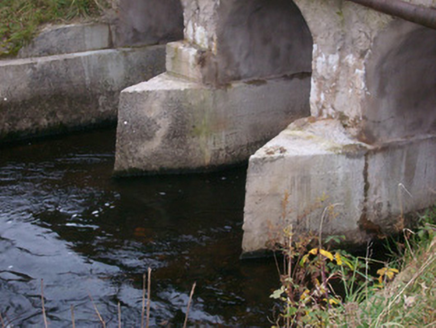
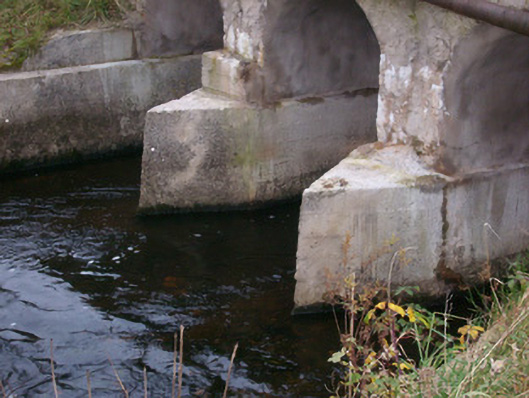
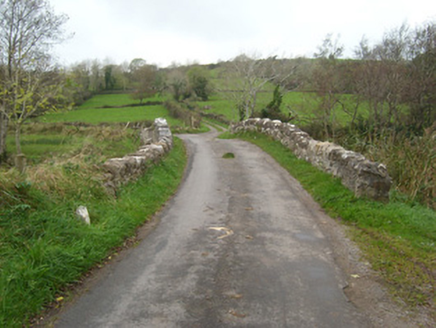
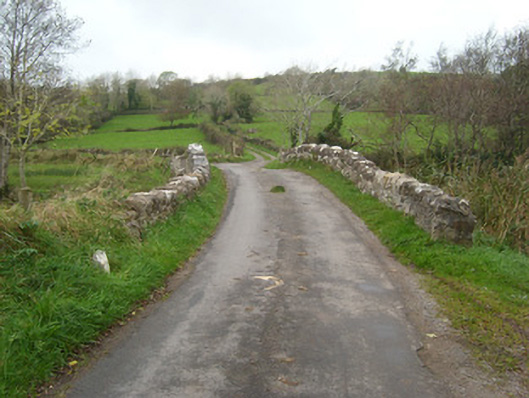
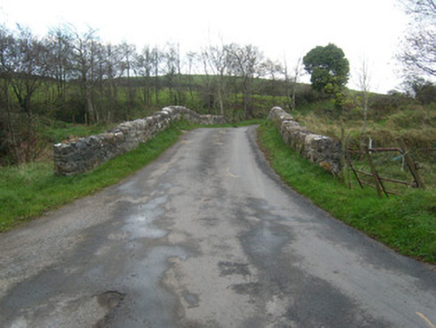
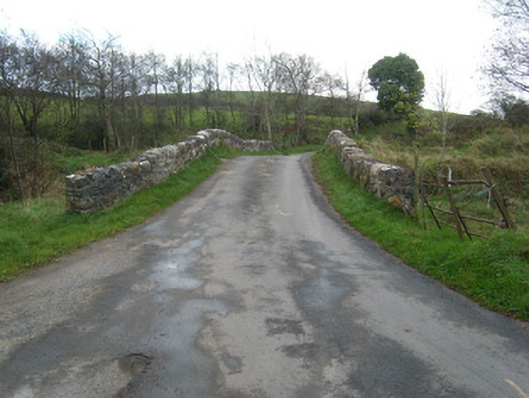
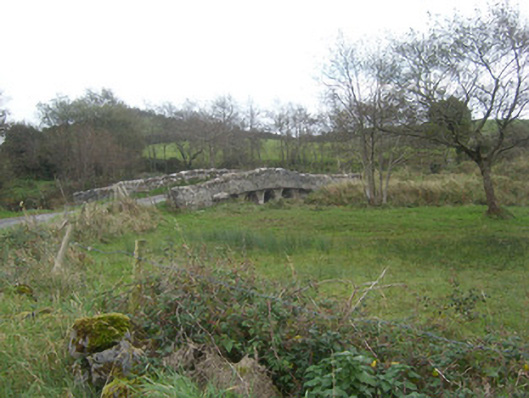
Triple-arch slightly humpbacked bridge carrying road over the Two Mile Water, built c. 1800, having modern V-profile concrete cutwaters to piers. Round-headed arches having roughly dressed stone voussoirs; cement rendered lining to arch barrels. Rubble stone construction to piers, abutments, spandrels and parapets; rubble stone coping to parapets. Modern cement pointing in places; modern water pipe to the west elevation. Rubble stone wing walls to either end of parapets (north and south). Tarmacadam deck with grass verges. Located in the rural countryside to the north-east of Ballyshannon.
Appraisal
Despite some slightly heavy-handed modern repairs, this simple but appealing triple-arched road bridge retains much its early character and form, and is an appealing feature in the rural landscape to the north-east of Ballyshannon. This bridge is robustly-constructed in local rubble stone masonry, and its continued survival and use stands as testament to the quality of its original construction, and of the skill of the masons involved. The form of this bridge and the largely unrefined construction creates rather a picturesque and rustic appearance, while the three small arches, slightly humpbacked form etc. suggests that this bridge is of considerable antiquity, perhaps dating to the second half of the eighteenth century, a period that saw a great deal of road and bridge-building in Ireland, particularly by the Grand Juries (the forerunners of the County Councils). Judging from an 1837 map of the area (Ordnance Survey first edition six-inch map) the modern concrete cutwaters appear to have replaced (or incorporated) early cutwaters. This appealing small-scale bridge is an integral element of the built heritage and transport heritage of the local area, and makes a positive contribution to the landscape.