Survey Data
Reg No
40910336
Rating
Regional
Categories of Special Interest
Architectural
Original Use
House
Date
1830 - 1850
Coordinates
187434, 368474
Date Recorded
13/11/2007
Date Updated
--/--/--
Description
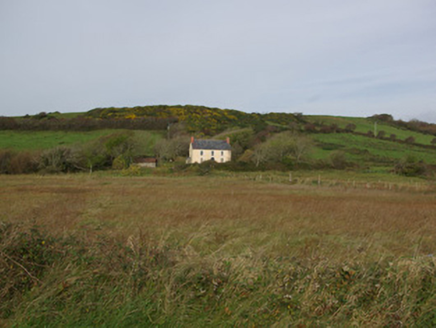
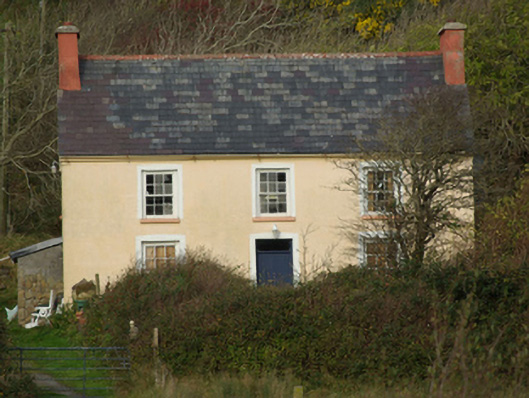
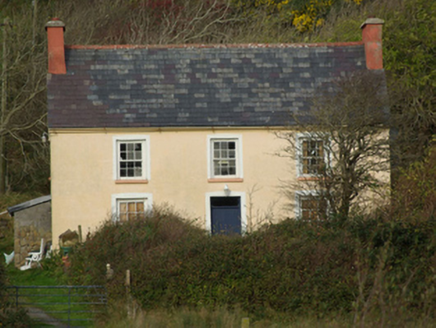
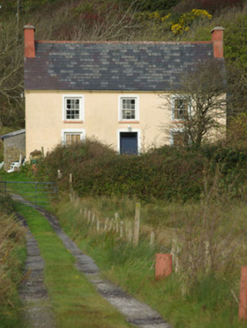
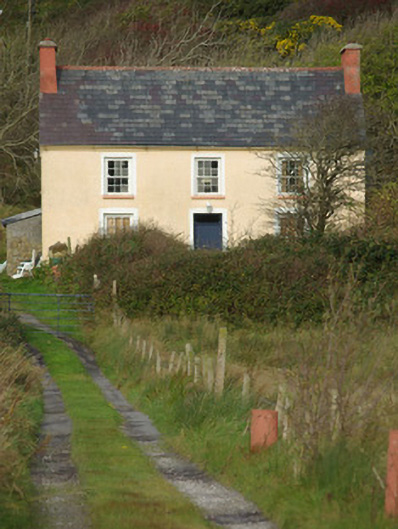
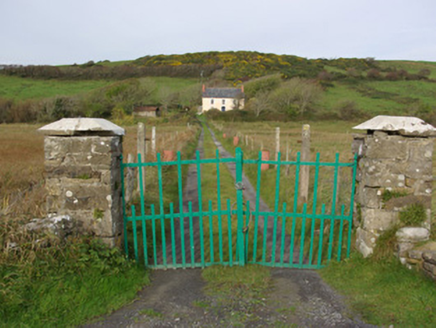
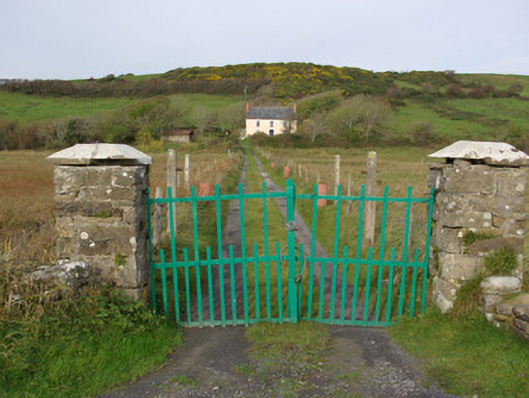
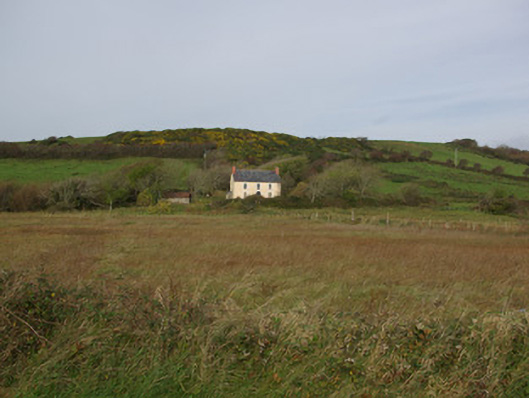
Detached three-bay two-storey house, built c. 1820, with lean-to extension to the west elevation. Pitched natural slate roof with terracotta ridge tiles, smooth rendered chimneystacks to gable ends (east and west), and with cast-iron rainwater goods. Smooth rendered ruled-and-lined walls. Square-headed window openings with plain raised rendered surrounds, stone sills, and with six-over-six pane timber sliding sash windows. Central square-headed door opening with plain raised rendered surrounds, replacement timber battened door and with plain overlight. Set well-back of road in own grounds on the south slope of Durnesh Hill. Long approach avenue across marshy ground from the south. Gateway at start of laneway comprising a pair of squared rubble stone gate piers (on square-plan) having pyramidal capstones and a pair of wrought-iron flat-bar gates. Located to the south-west of Ballintra, and close to the shores of Donegal Bay. Detached single-storey outbuilding to the south-west.
Appraisal
This simple but well-maintained and well-proportioned house, of early-to-mid nineteenth-century appearance, retains its early character and form. Its integrity and visual expression is enhanced by the retention of much of its early fabric including natural slate roof and timber sliding sash windows. It could be viewed as a vernacular interpretation of the typical three-bay two-storey house with central doorway that proliferate the Irish countryside. Buildings of this type were, until recently, a ubiquitous feature of the rural Irish countryside and of small Irish towns and villages. However, it is now becoming increasingly rare to find intact examples due to insensitive alteration and/or demolition, which makes this example at Durnesh an increasingly rare example of its type. The long approach road to the south crosses marshy ground to the south of the house, and the house was probably partially cut off from the land to the south during the Winter. This building is an interesting addition to the built heritage of the Ballintra area, and makes a positive contribution to the rural landscape to the south-west of Ballintra.