Survey Data
Reg No
40909913
Rating
Regional
Categories of Special Interest
Architectural, Artistic
Previous Name
Coxtown
Original Use
Country house
In Use As
Country house
Date
1800 - 1850
Coordinates
193063, 372282
Date Recorded
13/11/2007
Date Updated
--/--/--
Description
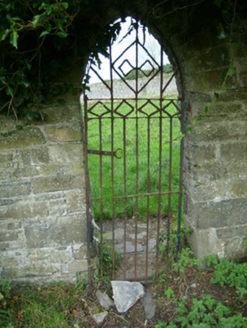
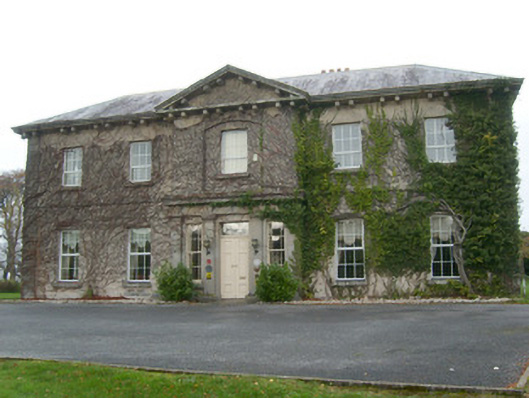
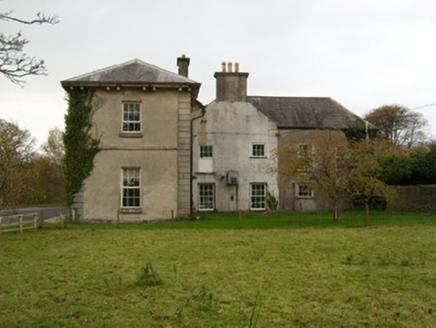
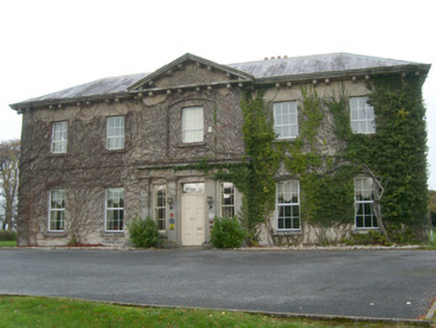
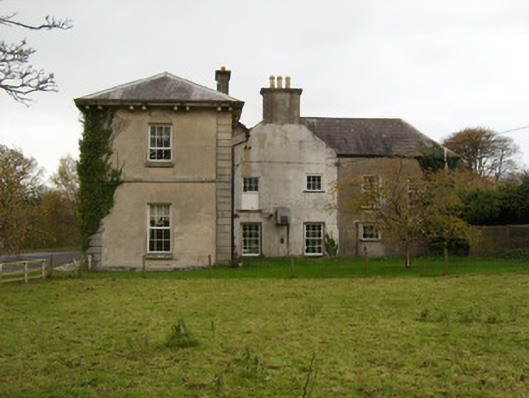
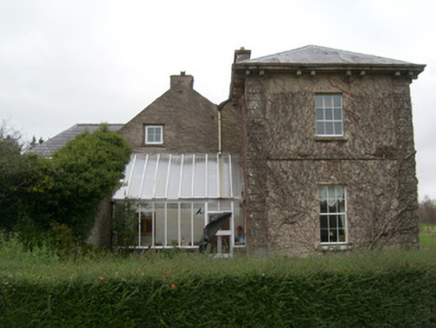
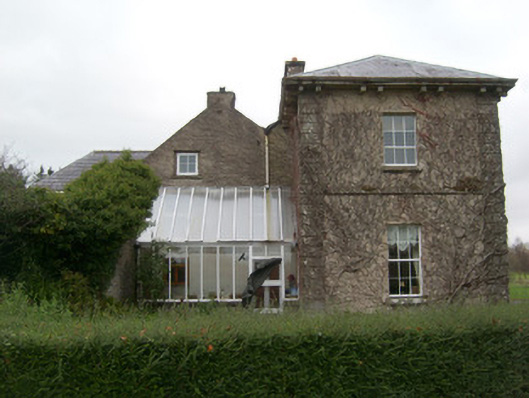
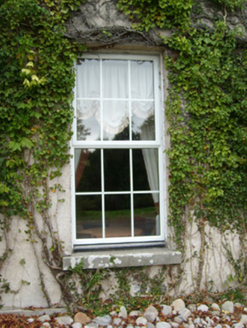
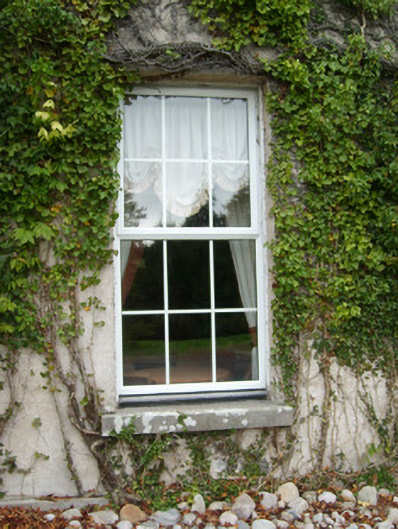
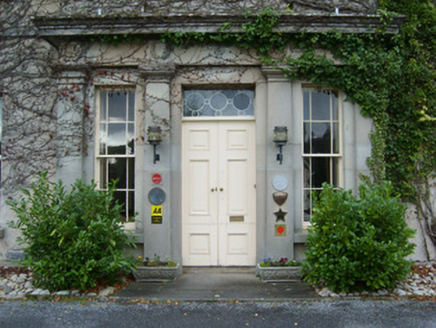
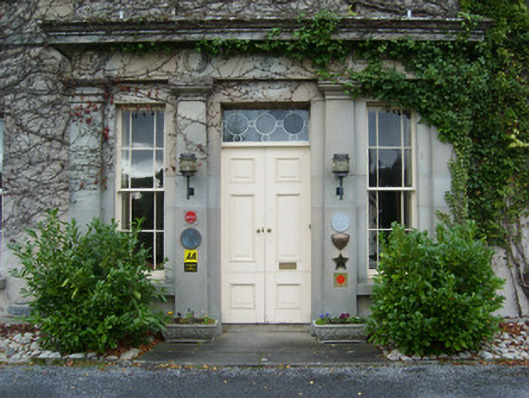
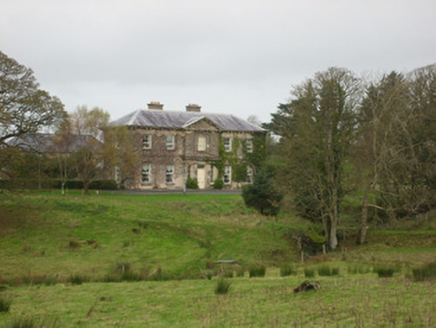
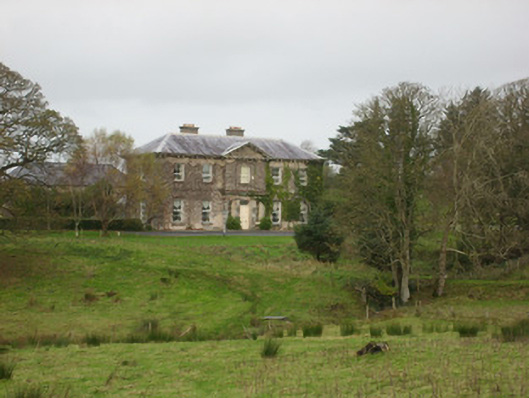
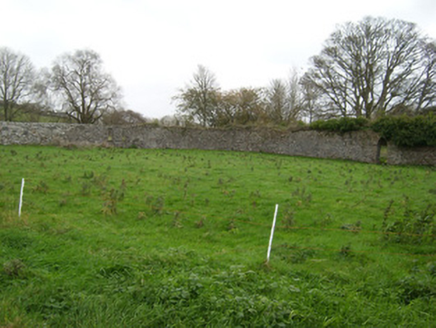
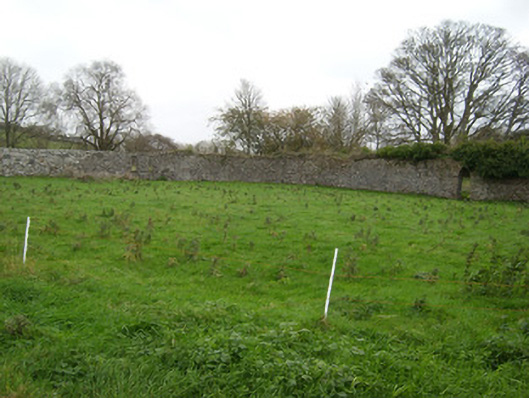
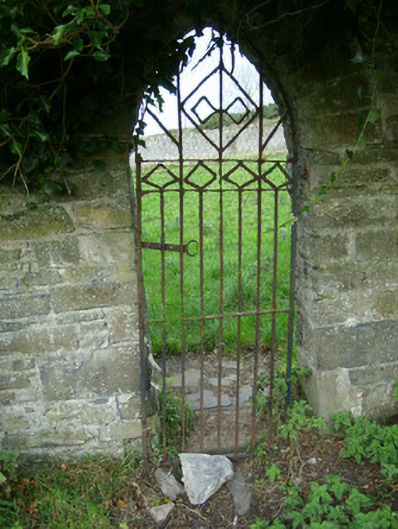
Detached five-bay two-storey country house, built c. 1840 - 45, having central advanced pedimented breakfront to the centre of the main elevation (south-east). Earlier two-storey house and two-storey return to rear (north-west), built c. 1780. Hipped natural slate roof to main entrance block having projecting ashlar eaves course/cornice with paired ashlar brackets, and having a central smooth rendered chimneystacks to the rear pitch (north-west) aligned along with roof ridge. Ashlar coping/cornice over pedimented breakfront with paired ashlar brackets to base. Profiled cast-iron rainwater goods. Pitched natural slate roof to earlier house with hipped natural slate roof to return to the north-west having smooth rendered chimneystacks with terracotta pots over. Smooth rendered ruled-and-lined walls over rubble stone construction with raised (ashlar?) block quoins to the corners and with plain stringcourse at first floor level. Sandstone plinth to base. Walls now largely covered with vegetation. Square-headed window openings with tooled sandstone sills and replacement windows. Central window opening to breakfront at first floor level set in segmental-headed recess. Central square-headed doorway to the main elevation having timber panelled double-doors with brass door furniture, leaded overlight with circular geometric glazing motifs, square-headed sidelights with two-over-two pane timber sliding sash windows with margin glazing bars, and with tripartite ashlar doorcase comprising Tuscan pilasters with laurel wreath motifs over in bas relief to frieze, and supporting moulded ashlar cornice over. Set well back from road in extensive mature landscaped grounds and parkland. Ponds to the south-east and west of the house. Main entrance gateway (see 40909932) and attendant gate lodge (see 40909931) to the east, converted former outbuilding (see 40909930) and walled garden (see 40909952) to the rear (north-west). Located to the north of Ballintra.
Appraisal
This fine and well-proportioned mid-nineteenth century country house retains its early form and character despite some alterations to accommodate new uses. The elegant classical entrance front is distinguished by the advanced pedimented breakfront, which provides a strong central focus, and the heavy projecting ashlar eaves course/cornice supported on paired brackets. The elegant ashlar tripartite Tuscan doorcase with delicate laurel wreath motifs to the frieze and the understated by graceful overlight adds further interest to the central bay and is of high artistic merit. The architectural style of this house is Regency/early nineteenth-century in character but the entrance block was added sometime between 1837 and 1846. The architect is not known but Rowan (1979) suggests stylistic similarities with some of the work of the eminent architect John Benjamin Keane (died 1859), who designed St. Patrick’s Catholic church (see 40852044) at nearby Ballyshannon in 1842. This new entrance front was added to the front of an earlier house, which could be quite early in date and which still survives I good condition. The new block was originally built for Alexander Hamilton, a member of a prominent local landlord family who had additional seats at nearby Brown Hall and St. Ernan’s. Hamilton appears to have acted as an ‘estate’ manager for a number of the larger estates around the area, including those owned by Colonel Conolly, Thomas Brooke, Revd. Edward Hamilton, John Hamilton, and Revd. William Foster. Alex Hamilton was noted as an ‘agricultural improver’, and is responsible for the ‘enclosure’ of the traditional and prevalent open field Rundale system that existed in the area prior to c. 1840. This house was the residence of an Alexander Hamilton and an Andrew Hamilton in 1846, and a Mrs Hamilton in 1881 and 1894 (all Slater’s Directory). Alexander Hamilton owned an estate of 2,383 acres in 1876. Set in attractive mature grounds to the north of Ballintra, this fine house forms the centrepiece of a collection of related sites along with the main entrance gateway (see 40909932) and attendant gate lodge (see 40909931) to the east, and the converted former outbuilding (see 40909930) and walled garden (see 40909952) to the rear (north-west), and is an important element of the built heritage of the local area.