Survey Data
Reg No
40909312
Rating
Regional
Categories of Special Interest
Architectural, Technical
Original Use
Bridge
In Use As
Bridge
Date
1850 - 1870
Coordinates
190153, 383234
Date Recorded
03/10/2007
Date Updated
--/--/--
Description
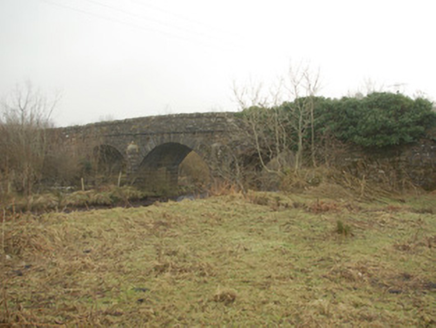
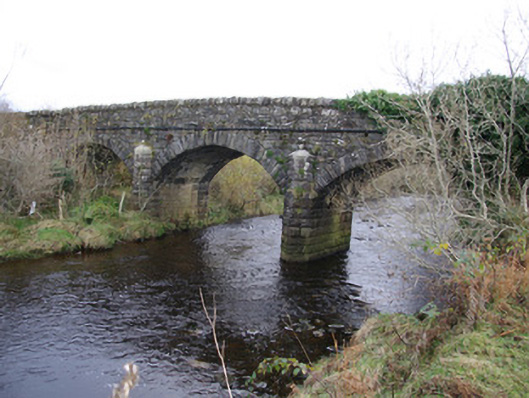
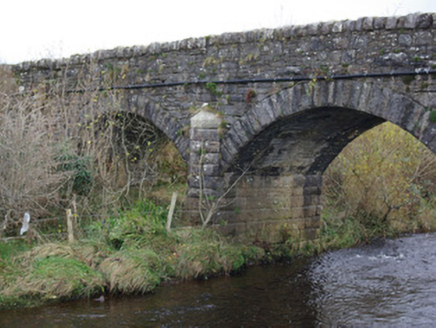
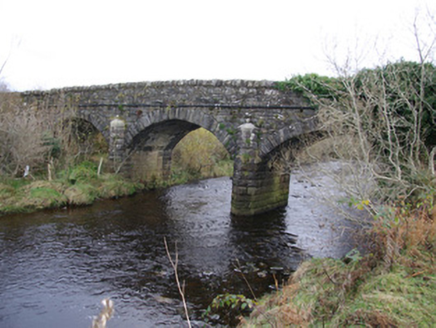
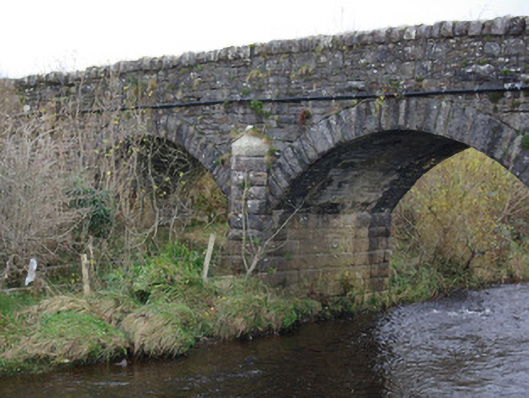
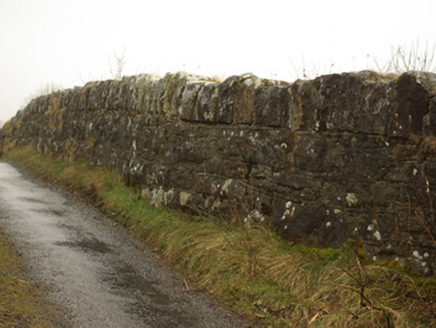
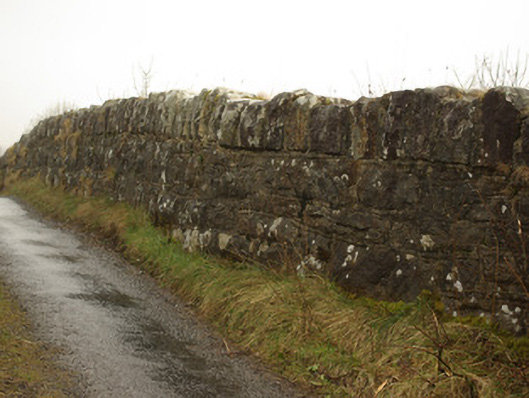
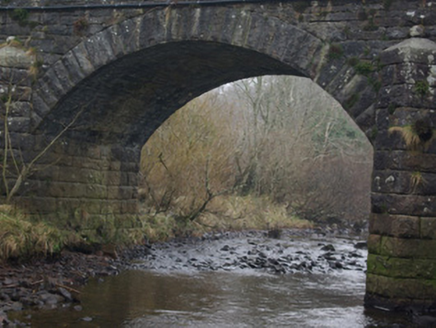
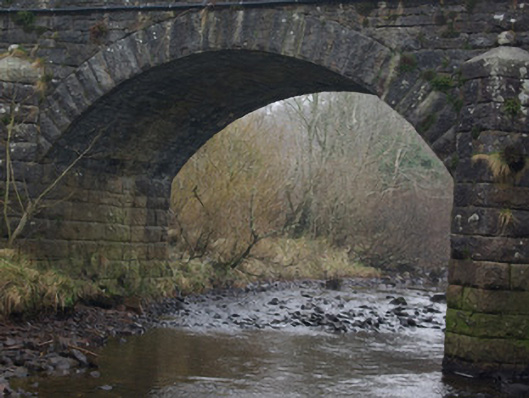
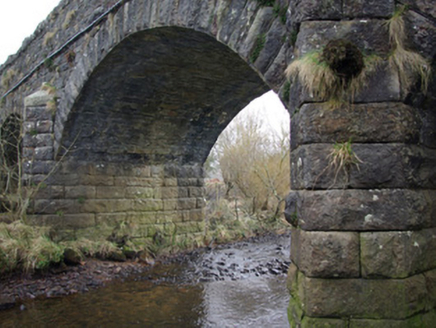
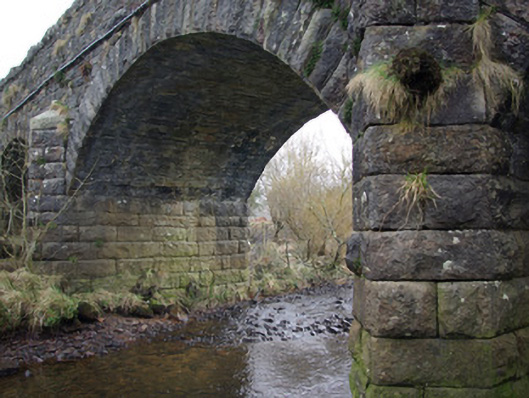
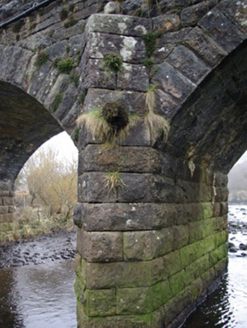
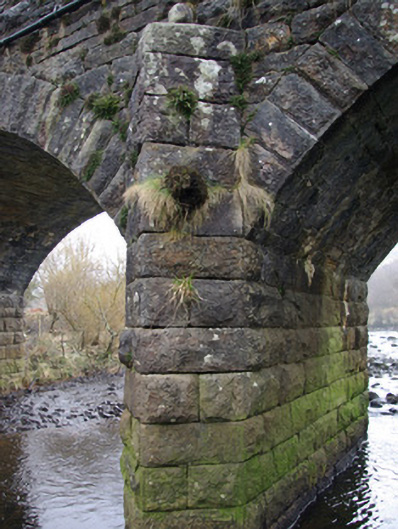
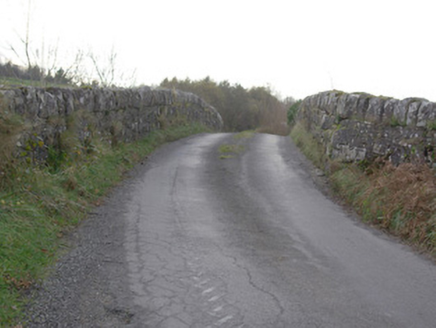
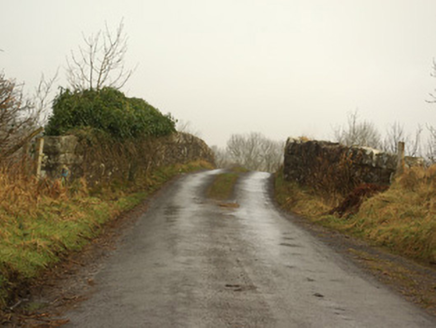
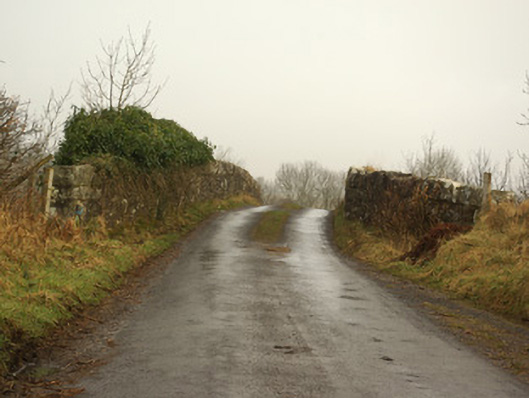
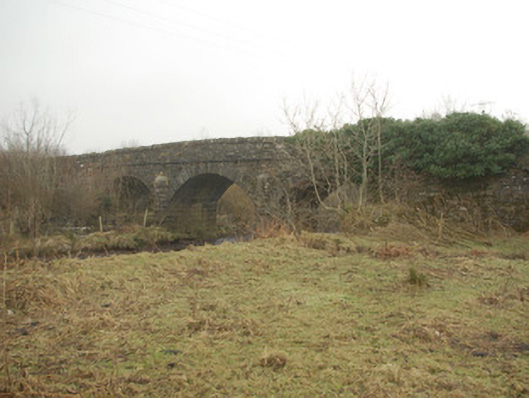
Triple-arch bridge carrying road over the Eanymore Water, built c. 1860, having V-profile rock-faced ashlar cutwaters to central piers. Segmental-headed arches having mildly rock-faced ashlar voussoirs; squared rubble stone construction to arch barrels. Coursed rock-faced masonry to piers below arch springing point. Roughly coursed and squared (occasionally snecked) rubble stone construction to spandrels and abutments. Roughly coursed and squared rubble stone masonry to parapets having rubble stone coping over. Tarmacadam deck with grass verges. Northern arch now spans dry land. Located in the rural landscape to the north-east of Frosses and to the north-west of Donegal Town.
Appraisal
This impressive triple-arched road bridge retains its early character and form and is an appealing feature in the rural landscape to the north-west of Donegal Town. It is robustly-constructed using good quality masonry, and its continued survival and use stands as testament to the quality of its original construction and of the skill of the masons involved. This fine bridge is notable for the quality of the rock-faced ashlar masonry construction to the cutwaters, piers, voussoirs and the squared rubble stone construction to the arch barrels. The good quality dressed stone voussoirs to the arches and the ashlar construction to the cutwaters are of a high standard, which helps to elevate this bridge above many of similar-scaled bridges in Donegal. The use of rock-faced masonry is a feature of the many bridges that were built or altered by the Board of Works during the mid-to-late nineteenth century, and particularly between c.1847 - 60, suggesting that this bridge originally dates to this time. This notable bridge is one of a number of impressive bridges over the Eanybeg Water and the Eanymore Water in this area, and is an integral element of the built heritage and transport history of the local area.