Survey Data
Reg No
40908602
Rating
Regional
Categories of Special Interest
Architectural, Technical
Original Use
Bridge
In Use As
Bridge
Date
1840 - 1860
Coordinates
208157, 387608
Date Recorded
03/10/2007
Date Updated
--/--/--
Description
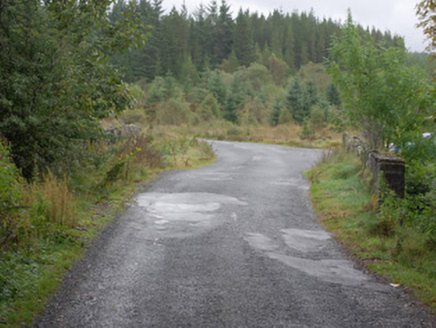
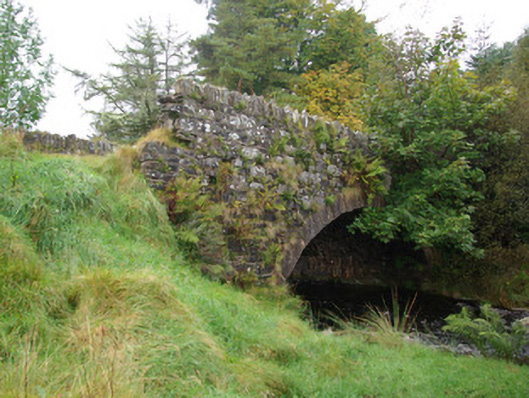
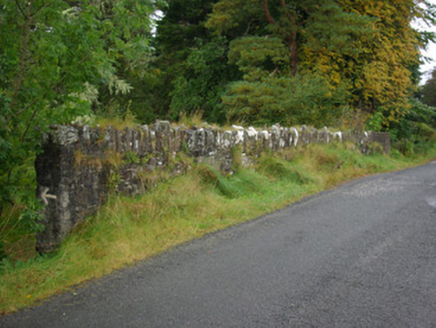
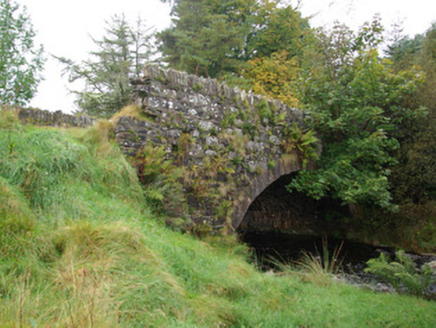
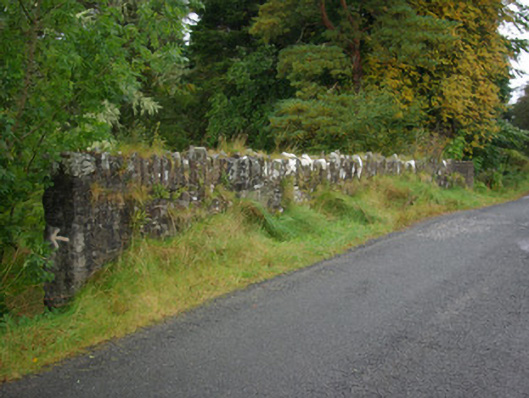
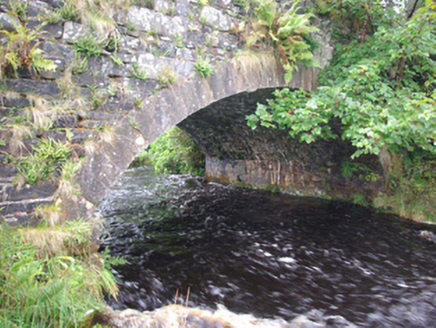
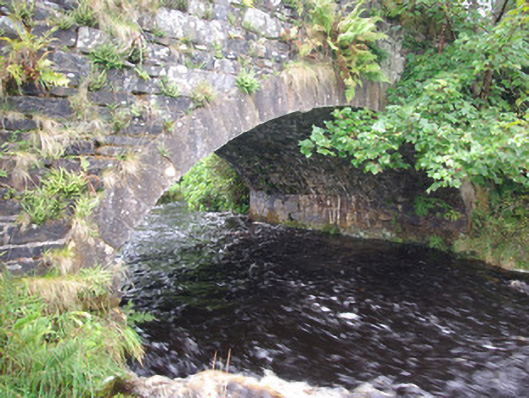
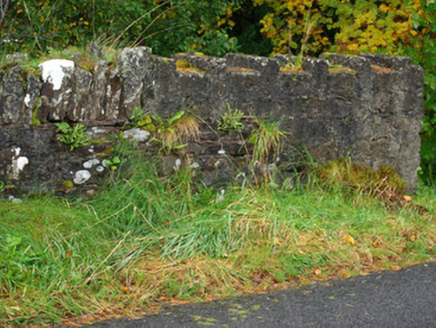
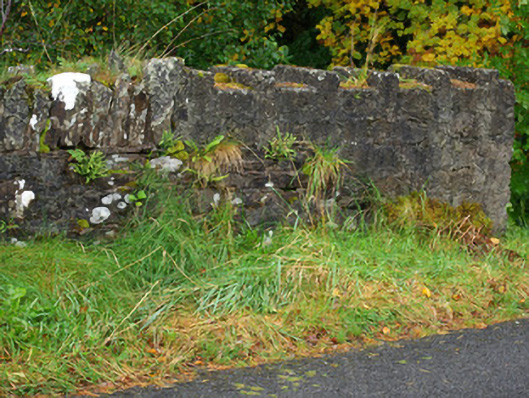
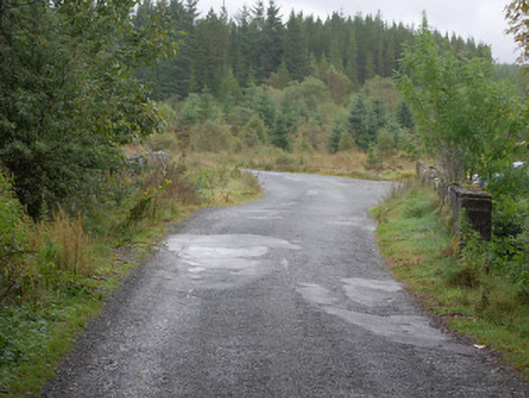
Single-arched bridge carrying road over the Bunadaowen River the north, built c. 1860. Segmental-headed arch with dressed cut stone voussoirs; squared rubble stone construction to arch barrel. Squared rubble stone construction to spandrels and parapets with rubble stone soldier coping over. Modern blockwork repairs to parapets in places, parapets damaged in places. Tarmacadam deck with grass verges. Located in the rural countryside to the south-west of Stranorlar.
Appraisal
This single-arch bridge retains its early form and character, and is a feature of some rustic appeal in the scenic upland rural landscape to the south-west of Ballybofey. It is robustly-constructed in local rubble stone masonry, and its continued survival and use stands as testament to the quality of its original construction, and of the skill of the masons involved. This particular bridge is distinguished by the high quality dressed stone voussoirs to the arch, which helps to elevate this bridge above many of its type in Donegal. It was probably originally constructed during the mid-nineteenth century (not depicted on Ordnance Survey first edition six-inch map sheet of 1837), a period that saw a great deal of road and bridge-building in Ireland, particularly by the Grand Juries (the forerunners of the County Councils), and later by the Board of Works. This bridge is located on a road that leads to the former back entrance to Meenglass Castle (now demolished), a large and complex Tudor Gothic house, built c. 1840, that was sadly demolished c. 1930. This hints that the construction of this bridge, and the road itself, may have been funded by Lord Henry the Fourth of Lifford (later Lord Viscount Lifford) who built and resided at nearby Meenglass Castle a short distance to the north-east. This unassuming rustic bridge is an addition to both the built heritage of the local area and to the extensive transport heritage of County Donegal.