Survey Data
Reg No
40907518
Rating
Regional
Categories of Special Interest
Architectural, Historical, Social
Original Use
House
In Use As
House
Date
1800 - 1930
Coordinates
185354, 394036
Date Recorded
10/10/2016
Date Updated
--/--/--
Description
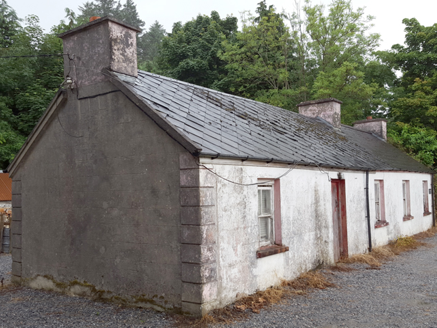
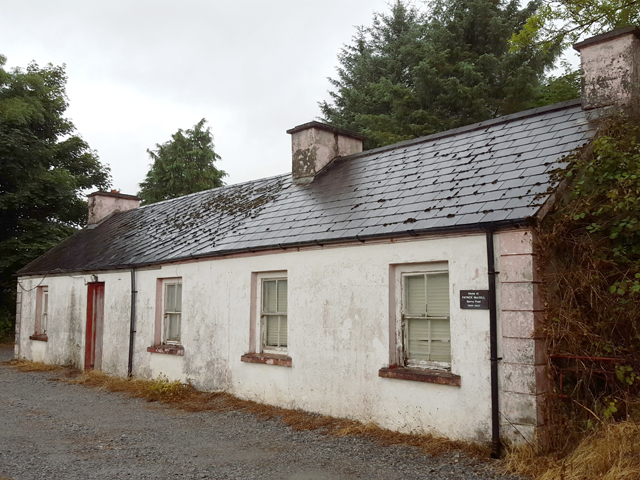
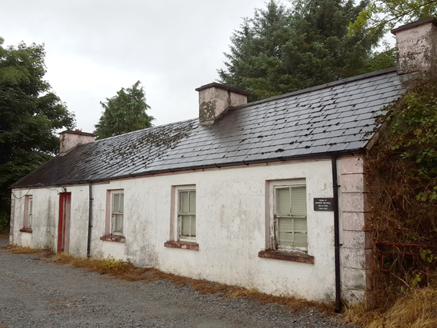
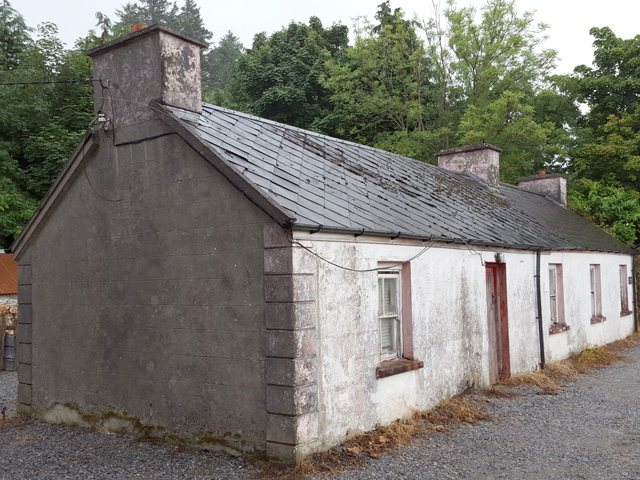
Detached five-bay single-storey vernacular house, built c.1820 and extended and altered c.1920, having single-storey addition (or former bed outshot) to rear (north). Currently out of use (2015). Pitched artificial slate roof with projecting eaves course, some surviving sections of cast-iron rainwater, and with three smooth-rendered chimneystacks (to gable ends and middle). Raised cement-rendered verge to west gable end. Smooth-rendered ruled-and-lined walls with raised smooth-rendered block quoins to corners. Plaque to east end of front elevation (south) with text "Home of Patrick MacGill, Navvy Poet (1889-1963)". Square-headed window openings with smooth-rendered reveals and two-over-two pane timber sliding sash windows. Square-headed doorway with smooth-rendered reveal and battened timber door. Set back from road in own grounds on southern slopes of An Cnoc Mór [Crockmore]. Yard to front (south) and ruinous single-storey outbuilding to rear with having pitched corrugated-iron roof, rubble stone walls, and square-headed openings.
Appraisal
This typical single-storey vernacular house retains much of its early form and character despite some alterations and now being unoccupied. Its visual expression is enhanced by the retention of timber sliding sash windows. The form of the building suggests that it was originally three-bay. It is of direct-entry plan, characteristic of the vernacular tradition in western Ireland (and uplands elsewhere). It was extended eastwards by two bays at a later date (Ordnance Survey twenty-five inch map of about 1906 suggests that this part of the building was in use as an outbuilding at this time and later converted or rebuilt for use as accommodation), perhaps about 1920. The house is notable as the birthplace and home of Patrick MacGill (1889-1962), a journalist, poet and novelist who wrote extensively on social conditions in Donegal and the plight of migrant Irish workers in Britain around the turn of the twentieth century, and later the horrors of the 'Great War' in which he served as a soldier in the London Irish Rifles. He is popularly known as 'The Navvy Poet' as he worked as a navvy in Britain before he began writing.