Survey Data
Reg No
40404203
Rating
Regional
Categories of Special Interest
Architectural, Artistic, Historical, Social
Previous Name
Bobsgrove
Original Use
Country house
In Use As
Country house
Date
1740 - 1780
Coordinates
248008, 282443
Date Recorded
15/07/2012
Date Updated
--/--/--
Description
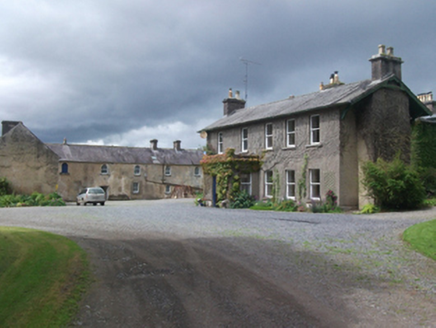
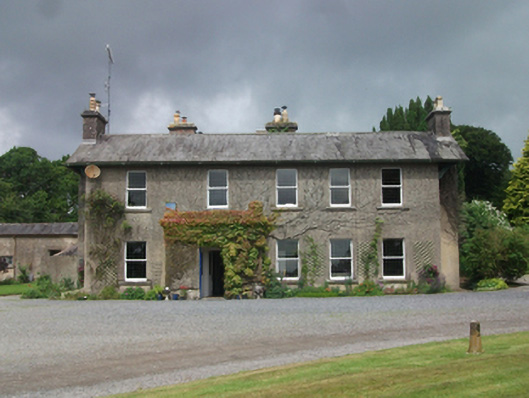
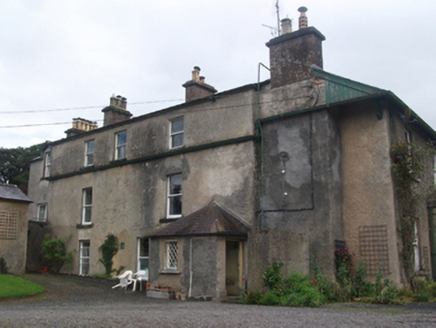
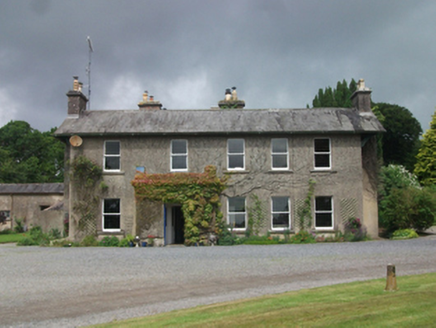
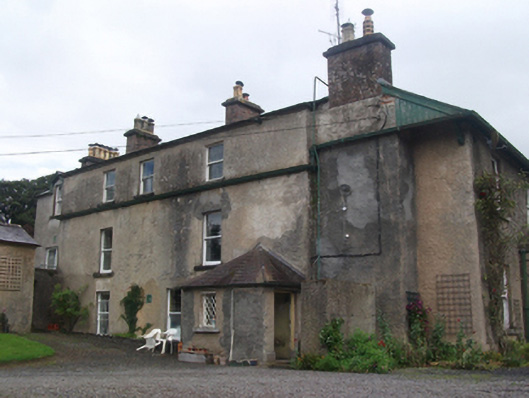
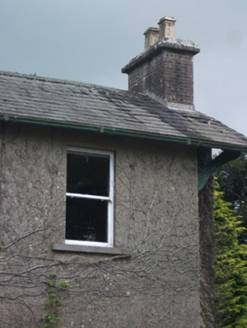
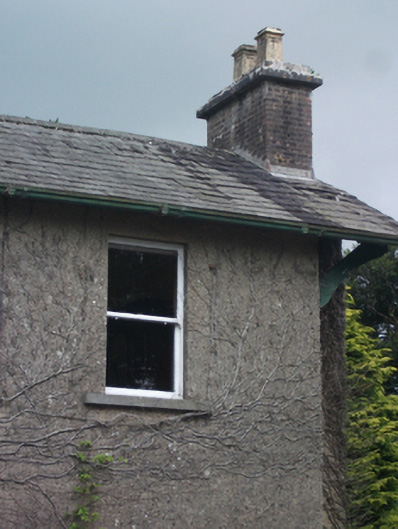
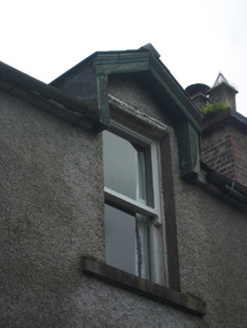
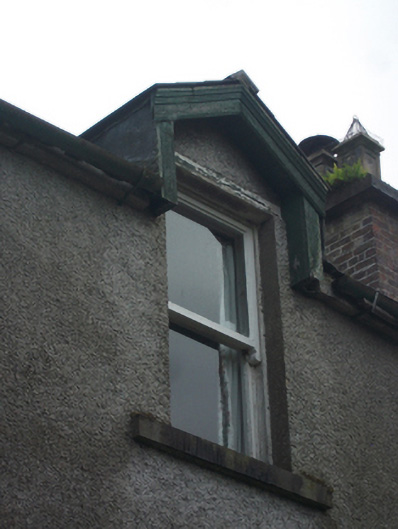
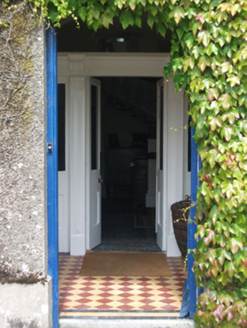
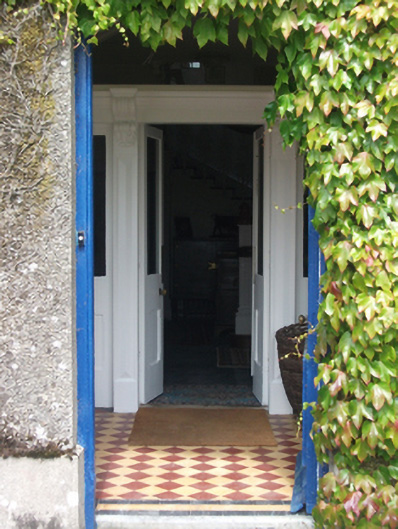
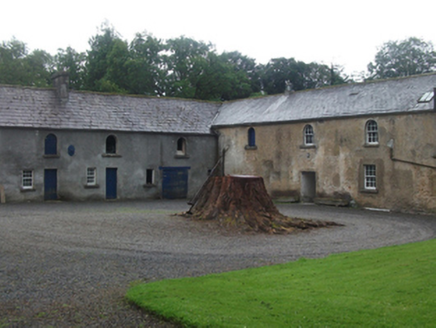
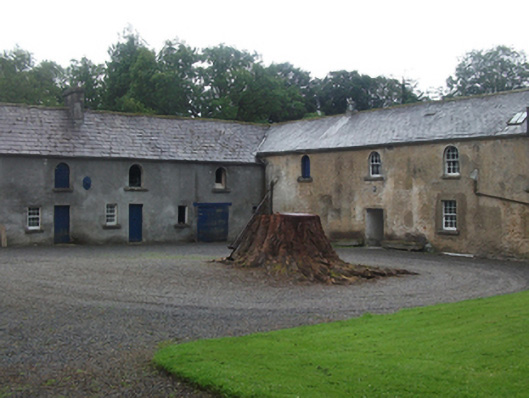
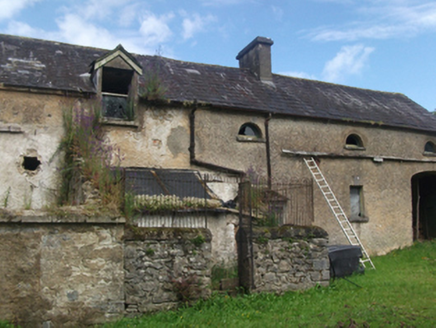
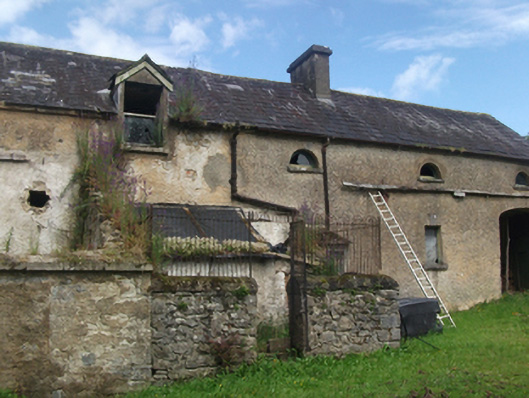
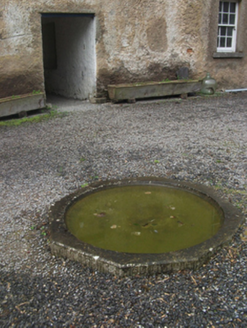
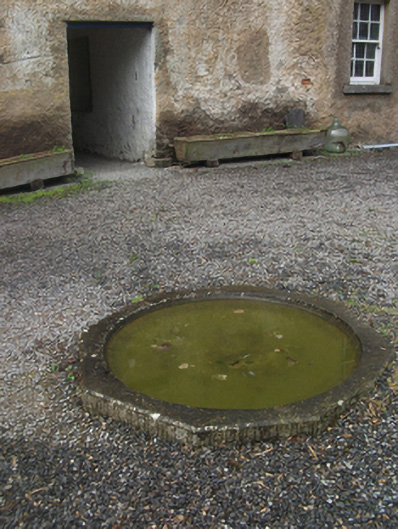
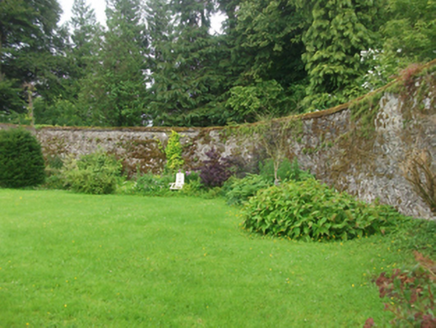
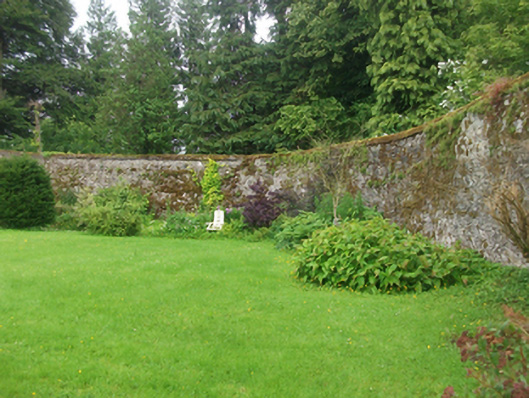
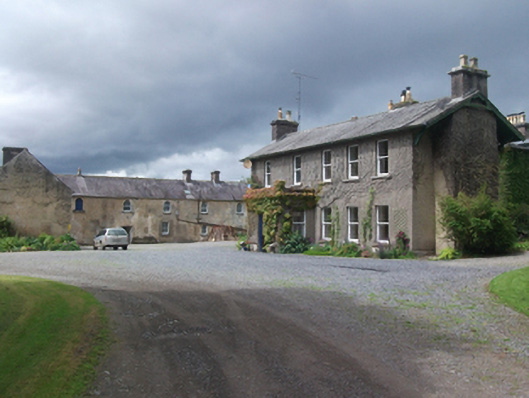
Detached L-plan five-bay two-storey over basement country house, built c.1760, with mid-nineteenth century front elevation having off centre single-storey porch, substantial multiple-bay wing facing stableyard, returns and glazed conservatory to rear. Pitched slate roof to front block with oversailing eaves on timber brackets, wide oversailing verges extending over large gable chimneystacks with truss-motif bargeboard to east, smaller stacks over roof level. Limestone parapet to flat-roofed porch with eaves cornice. Hipped slate roof to wing and to single-storey west porch. Clay ridge tiles and cast-iron rainwater goods throughout. Brick chimneystacks with projecting capstones to gables and rear eaves of front block and to ridge of wing, many having square-profile clay pots, some with panelled motif. Cast-iron water tank to projection on rear wing. Roughcast rendered walls. One-over-one timber sash windows to front with convex horns, in asymmetrical arrangement to accommodate stair hall. Lucarne windows to rear with timber barge boards. Varying casement and timber sash windows of various sizes to rear. Limestone sills throughout. Timber panelled and glazed door to porch, inner double-leaf panelled doors with aproned sidelights flanked by pilasters with carved corbel brackets and cornice. Gothic Revival conservatory on concrete piers with pointed arch mullions. Interior having bolection mouldings, limestone flags, and heavily moulded cast-iron staircase. U-plan farmyard to west. Former walled garden to rear with rounded rubble stone walls, segmental arches having irregular voussoirs and red brick surrounds. Rubble stone boundary walls.
Appraisal
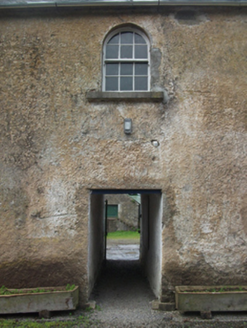
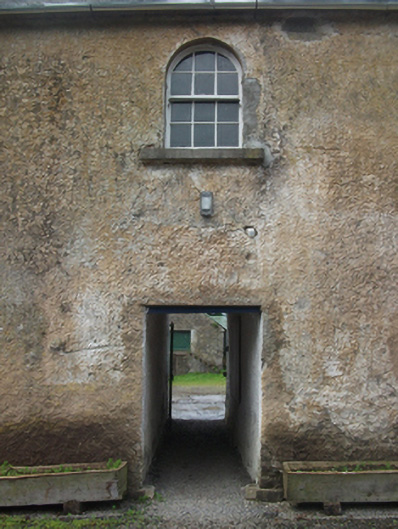
The seat of the Nugent family of Ulster since the late seventeenth century, Farren Connell occupies the site of an earlier house, the Manor of Carrick, and may incorporate some of its fabric. Once encompassing thousands of acres, the estate was the home of Major-General Sir Oliver Nugent, distinguished commander of the 36th (Ulster) Division during the First World War, notably at the Battle of the Somme. The house has remained in the hands of Nugent descendants to the present day and played a significant role in the local economy and community in the past. Two distinct periods may be seen within the house, with architectural details in the rear wing indicate an eighteenth-century date, while the front elevation is nineteenth-century. A varied and rambling house, it is replete with original fabric of high quality that demonstrates a range of architectural styles and historic building techniques. The expansive walled garden distinguished by curved walls and the handsome outbuildings add to its setting and context.