Survey Data
Reg No
40403916
Rating
Regional
Categories of Special Interest
Architectural
Original Use
Worker's house
Date
1870 - 1890
Coordinates
259369, 287983
Date Recorded
18/06/2012
Date Updated
--/--/--
Description
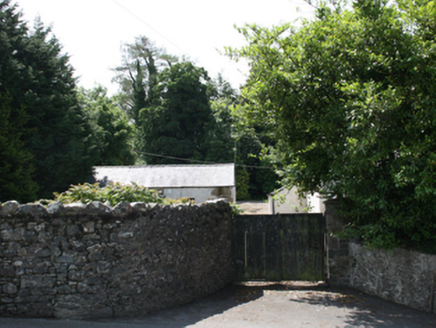
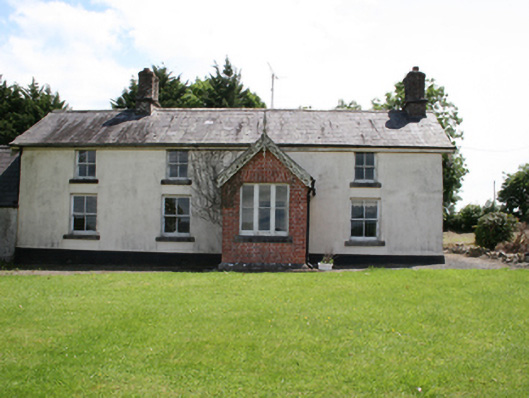
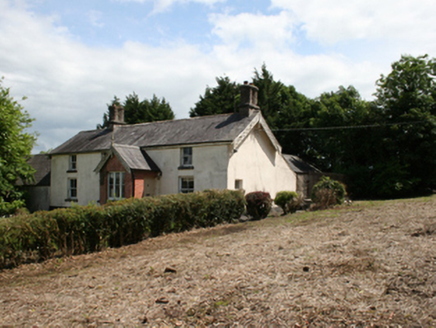
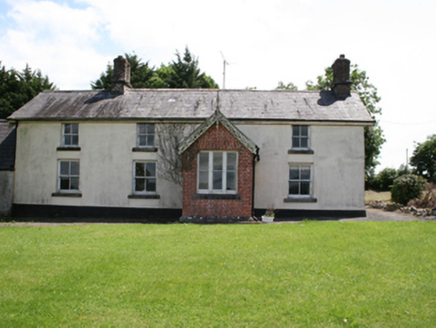
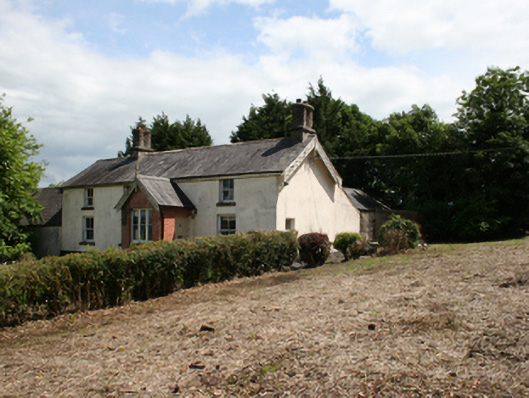
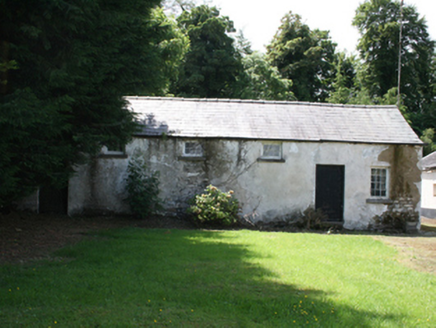
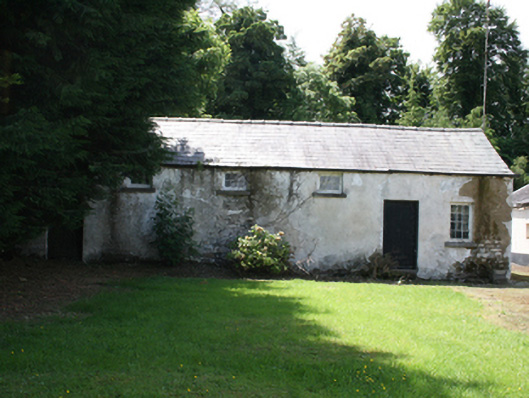
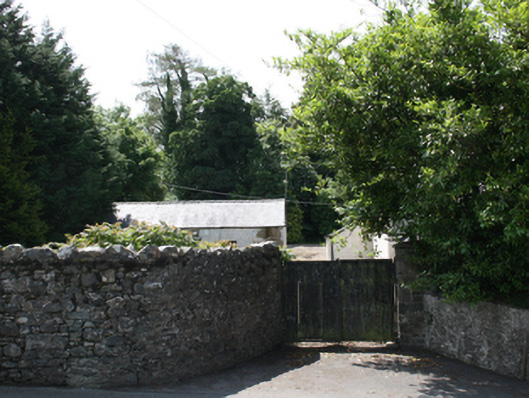
Detached four-bay two-storey former estate worker's house, built c.1880, with gabled porch, and single-storey rear return. Now disused. Pitched slate roof with clay ridge tiles, red brick chimneystacks comprising paired octagonal-profile shafts over south gable end and second bay from north. Overhanging eaves with ornamental latticework bargeboards to gable end and porch, terminating timber finial to porch. Cast-iron rainwater goods. Smooth rendered walls. Red brick walls to porch. Square-headed two-over-two timber sash windows to ground and first floor, one-over-one timber sliding sash window to side elevation, all with stone sills. Tripartite one-over-one sash windows to front elevation of porch, having timber sheeted door to side. Six-bay single-storey addition attached to north, having pitched slate roof, roughcast rendered walls to first section with exposed rubble stone walls to northern section. Blocked windows, carriage arch and recent door. Earlier six-bay two-storey outbuilding, c.1820, having pitched slate roof, smooth render to rubble stone walls, six-pane timber casement windows to upper level of north elevation, six-over-six timber sash window to ground floor, stone sills, timber sheeted doors with stone thresholds. Dog-yard to rear enclosed by high wrought-iron railings on plinth walls. Yard entrance comprising random rubble stone wall to east with Scotch coping curving into square-profile pier and ramped western wall rising to square-profile rubble stone pier, with pedestrian gate to west.
Appraisal
A decorative estate dwelling attributed to the Kerry architect James Franklin Fuller (1835-1924). The house retains its original setting and architectural features and finishes. The distinctive style of the chimneystacks link it stylistically to the Marquess of Headfort's hunting lodge at the core of the demesne. The house and working yard would have been occupied by a senior staff member probably associated with the hunt. The historic layered quality of the site is enhanced by an earlier outbuilding with a distinctive railed dog-yard to the rear, that was a significant part of the hunting function of the demesne. The house, outbuildings, and boundary treatment contribute to the architectural character of the demesne.