




Survey Data
Reg No
40403206
Rating
Regional
Categories of Special Interest
Architectural, Artistic, Historical, Social
Original Use
Church/chapel
In Use As
Church/chapel
Date
1885 - 1890
Coordinates
246888, 292141
Date Recorded
27/07/2012
Date Updated
--/--/--
Description
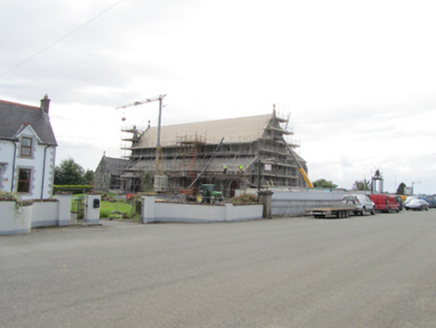
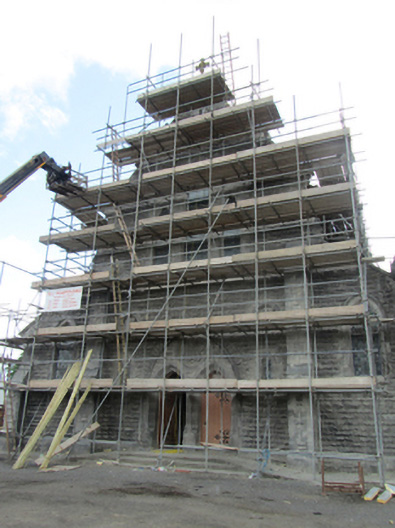
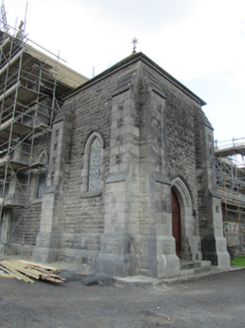
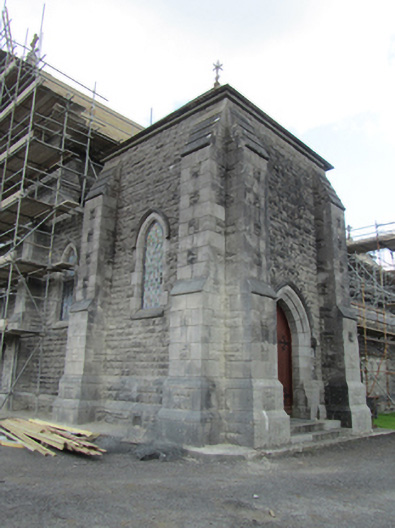
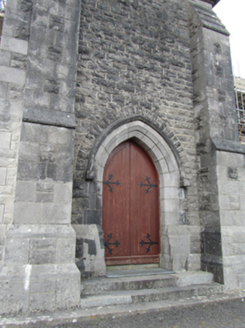
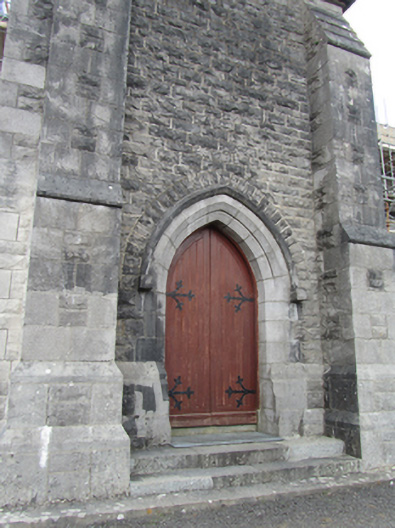
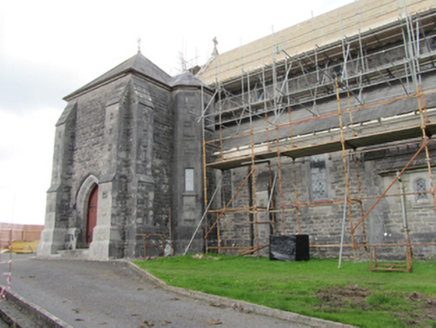
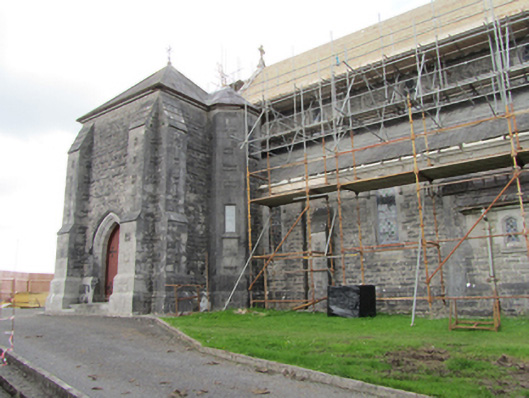
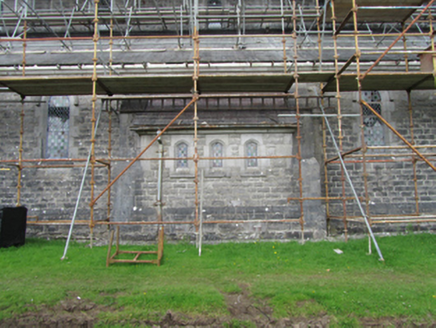
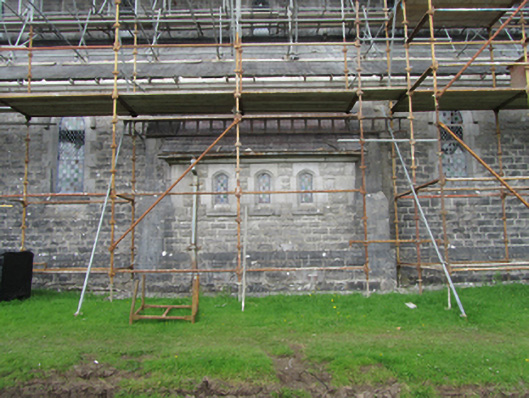
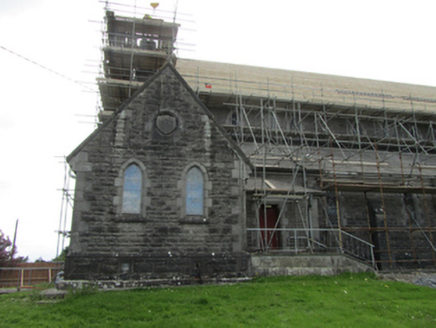
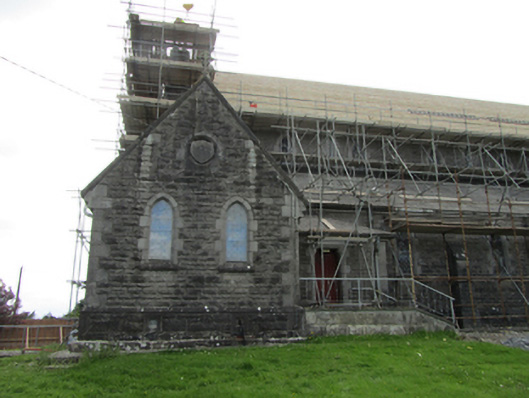
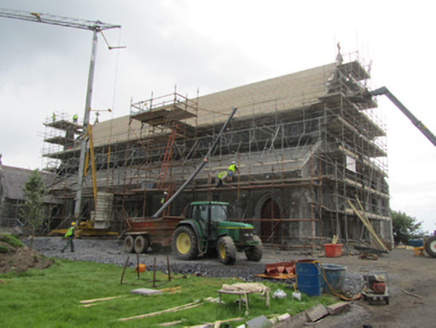
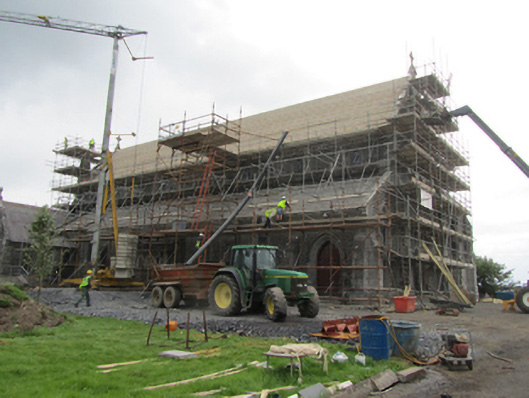
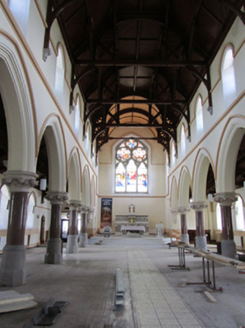
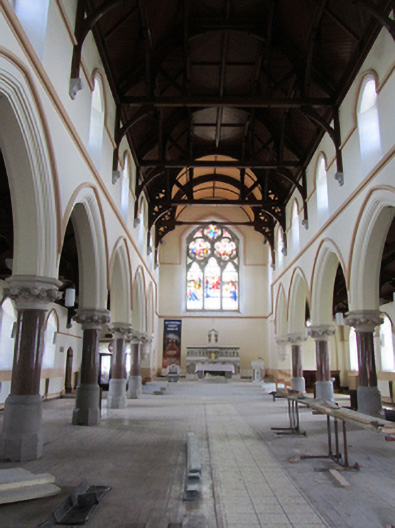
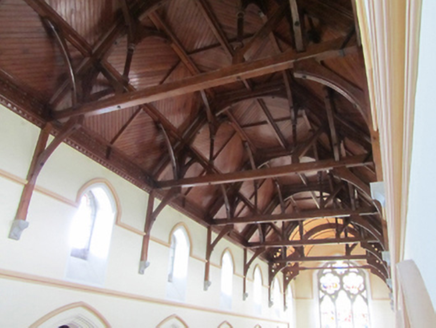
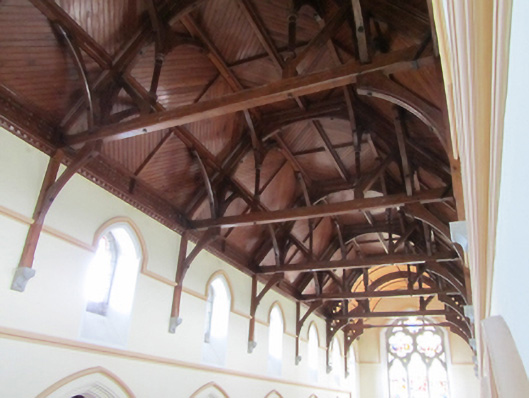
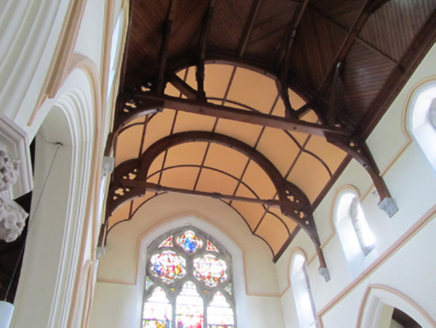
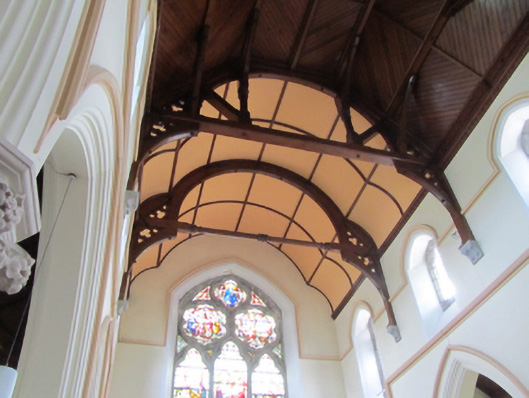
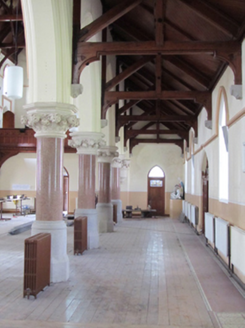
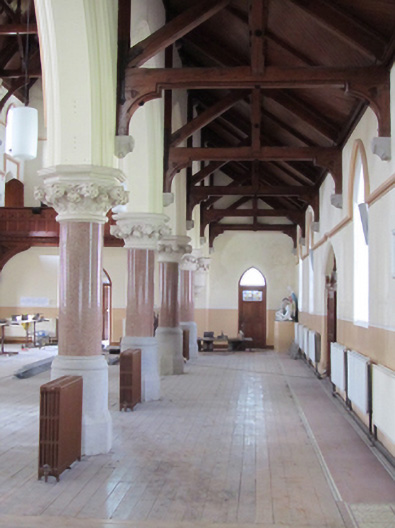
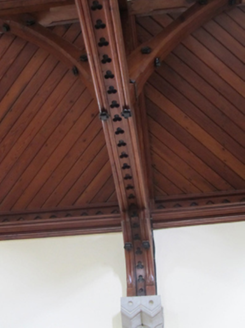
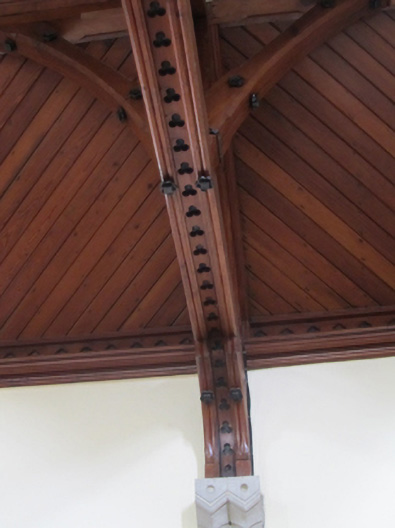
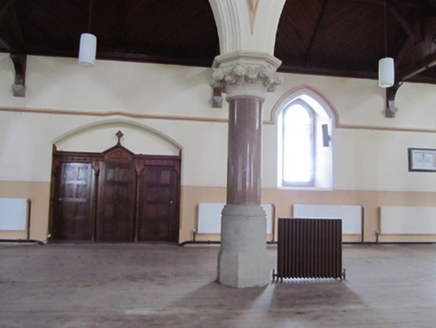
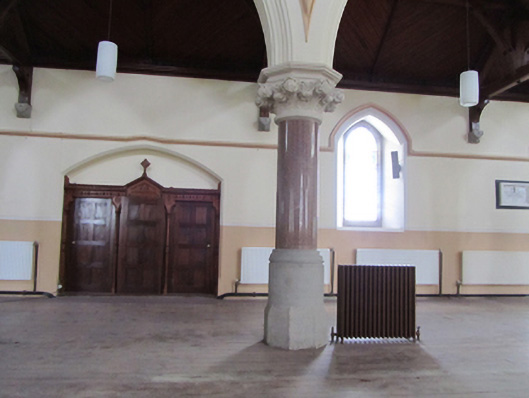
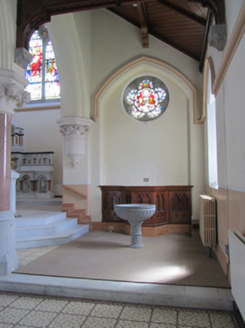
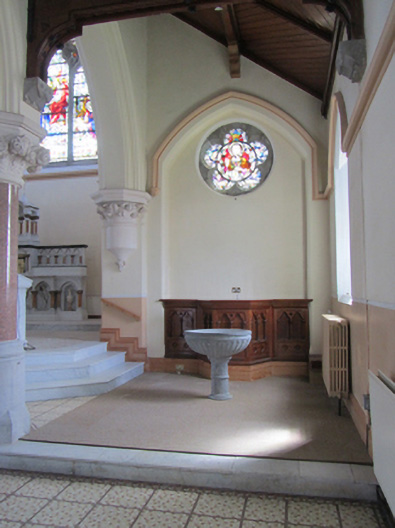
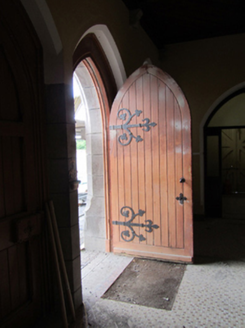
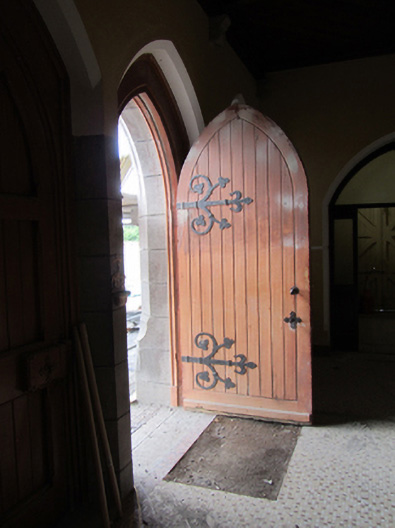
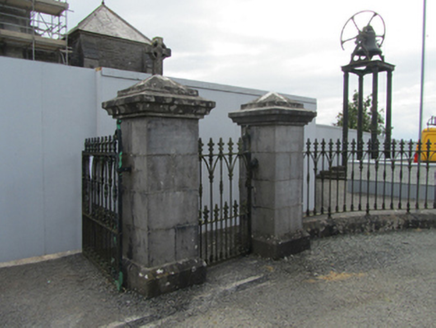
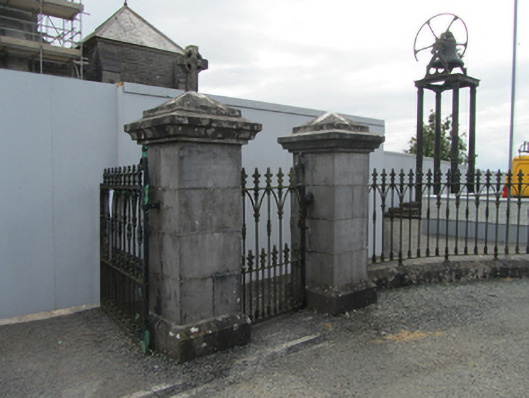
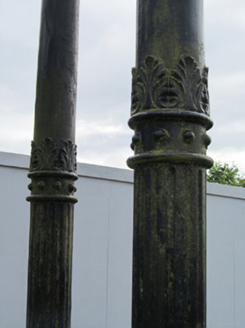
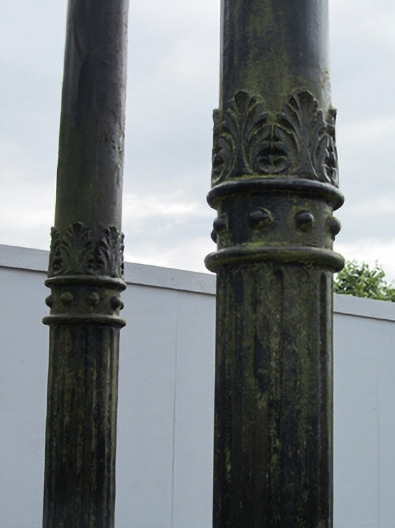
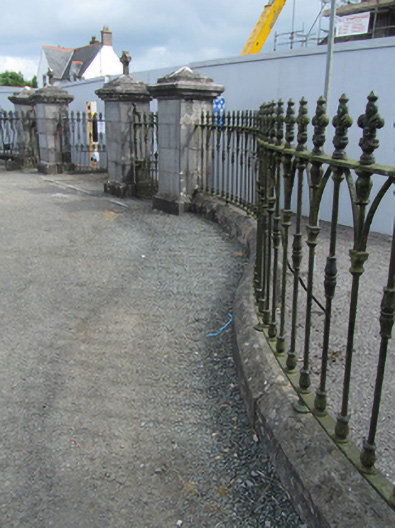
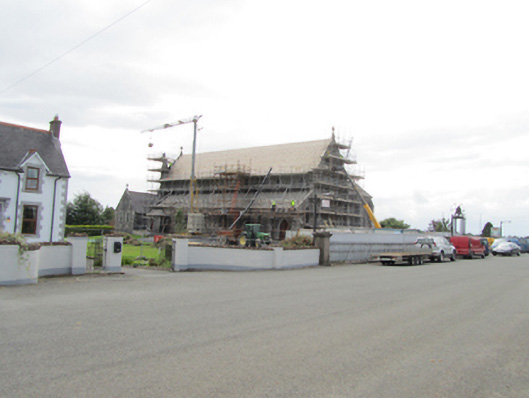
Freestanding Gothic-Revival gable-fronted church, built 1888, having eight-bay nave with side aisles, unfinished single-stage tower attached to north-west with engaged semi-octagonal stair turret, sacristy to south-east. Undergoing restoration in 2012. Pitched slate roof with trefoil clay ridge cresting, barge stones to gables with corbelled kneelers, decorative cross to apex of both main gables, cast-iron rainwater goods. Lean-to roof to aisles, pyramid slate roof to tower. Coursed rock-faced stone walls, stepped buttresses to end of nave walls at gables, angle buttresses to corners of side aisles and tower with buttresses to side bays. Cut-stone dressing to triple lancets to front gable with trefoil heads and continuous sill, pointed relieving arch over. Double entrance portal under pointed relieving arch with hood profile comprising pair of dressed pointed arch doorways with decorative circular motif above. Entrance flanked by small lancets, circular reliefs above with shield inlays. Dressed lancets to end of aisles in main gable. Side doors in base of tower and to first bay to east of aisle. Pointed arch windows with hoods to clerestorey and to aisle elevationss, confessional outcrop between butresses midway to aisles with three small windows. Pointed stone tracery window to south gable with triple trefoil headed lights and quatrefoils above. Bevelled plinth to sacristy, shouldered lintels to south elevation, double lancets to east gable with circular recess and inlay shield above. Stained glass windows and timber sheeted doors. Nave interior with exposed timber truss roof structure having arched braces, round carved queen-posts supporting lateral arcades beneath purlins, timber uprights and arched supports below tie beams rising from decorative stone corbels in clerestorey walls. Timber sheeting to ceiling with flat upper section. Compartmented plaster barrel vault in trefoil profile above chancel bays with arched trusses having trefoil-punched spandrels and turned tie beam. King-post trusses in side aisles. Nave arcade having profiled pointed arches on marble columns having capitals with vegetal decoration resting on stone barrel bases with octagonal footings. Gallery above entrance and ancillary spaces with decorative timber balustrade resting on timber corner supports on stone corbels. Cantilevered timber stairs to gallery in double height space west of entrance. Timber sheeted ceilings to ancillary spaces and sacristy. Internal doors of timber, panelled doors to confessionals doors with glazing to entrance and sacristy. Stone steps to altar area, stone font west of altar, decorative stone reredos and altar. Square-profile ashlar gate piers flanking double cast-iron entrance gates, having stepped pyramidal copings with crosses to apexes and bevelled plinths. Further stone piers flanking entrances with cast-iron gates to both sides of main entrance. Serpentine wing of cast-iron railings on stone plinth forming setback to either side of gates. Recent rendered boundary walls and metal gates setback from road west of main gates. Cast-iron belfry west of entrance. Graveyard further to west.
Appraisal
A large and elaborate church by the prolific church architect William Hague (1836-1899), a native of Co Cavan, and designer of many churches in the county, distinguished by an inventive interpretation of Gothic architecture in the period after Pugin. The church replaced an earlier structure that stood to the west and was destroyed in a fire at the start of the 1880s. It is characterised by a rich level of detail in all its features both inside and out and retains a wealth of original fittings and materials. The tower remains unfinished, and the bell is housed in a cast-iron belfry which may survive from the earlier church. The church stands in a prominent roadside location and with its graveyard and boundary railings it makes a valuable contribution to the character of its surroundings. As a work by a leading architect of the county it is a significant building in the architectural heritage of Co Cavan.