Survey Data
Reg No
40402318
Rating
Regional
Categories of Special Interest
Architectural, Social
Previous Name
Glebe House
Original Use
Rectory/glebe/vicarage/curate's house
In Use As
House
Date
1840 - 1860
Coordinates
266069, 304957
Date Recorded
01/08/2012
Date Updated
--/--/--
Description
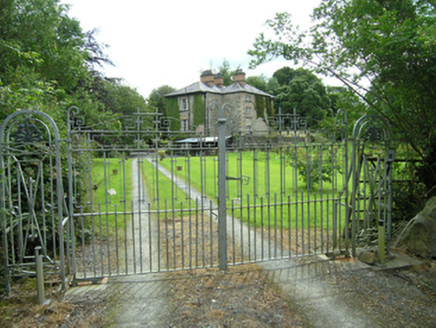
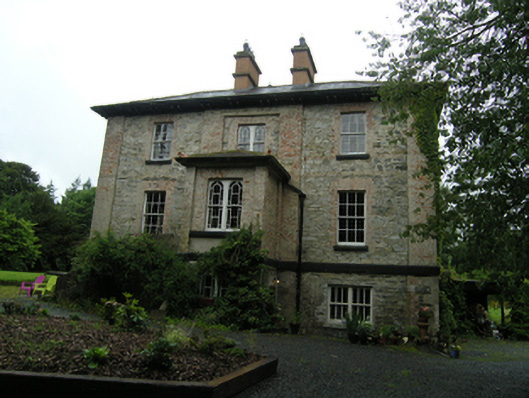
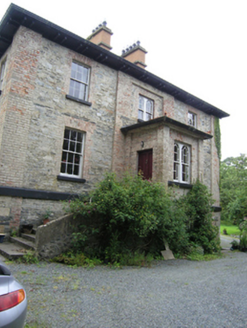
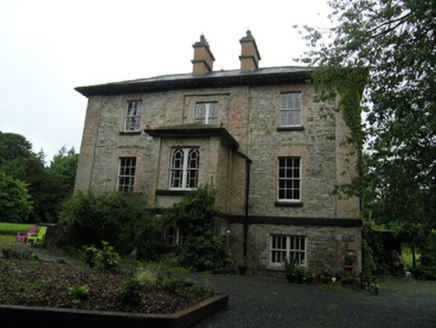
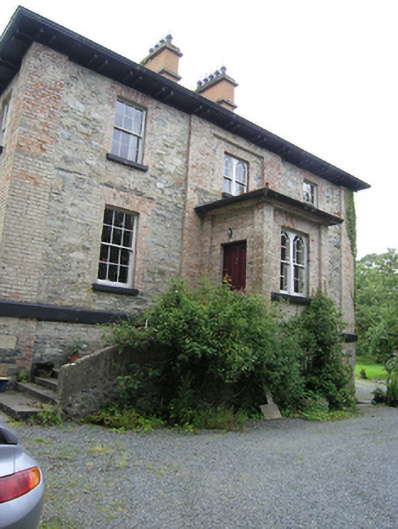
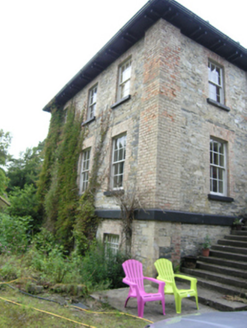
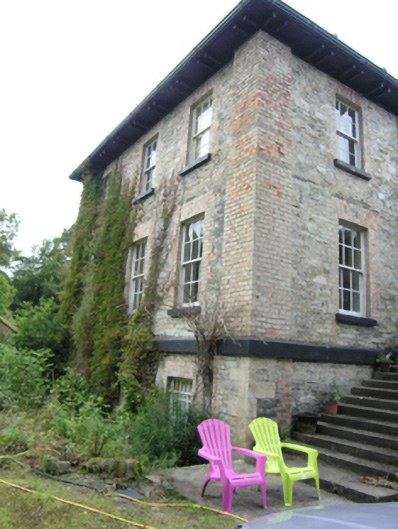
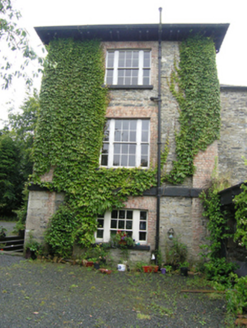
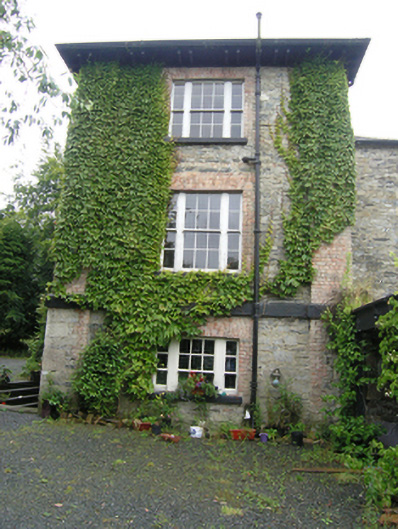
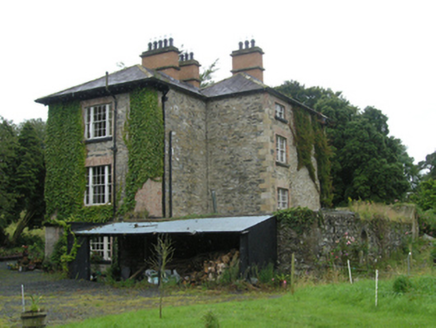
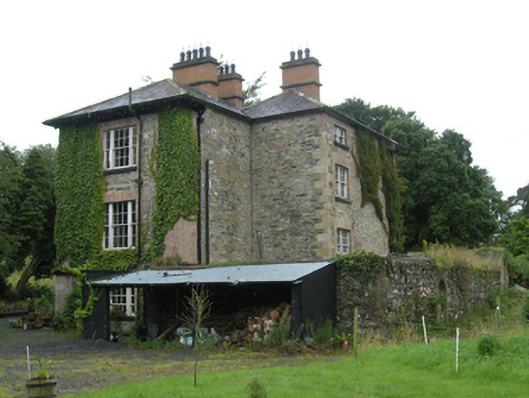
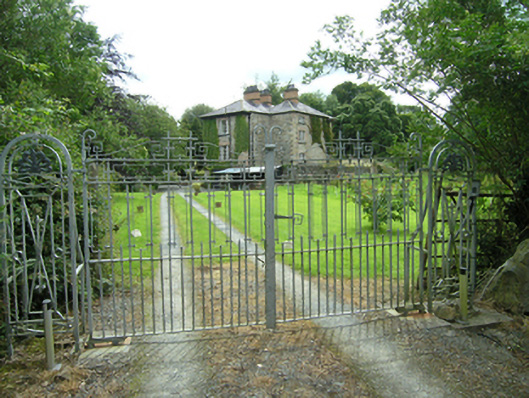
Detached L-plan three-bay two-storey over raised basement former glebe house, built c.1850, with advanced single-storey entrance porch also over raised basement level. Now a private dwelling. Hipped slate roof with clay ridge tiles, oversailing eaves supported on paired decorative timber brackets, more pronounced on main block, cast iron rainwater goods. Tall brick chimneystacks having masonry plat bands, cornices and chimney pots, positions indicating tripartite internal plan. Hipped roof to porch with clay ridge tiles and terracotta finials. Roughly coursed stone walls with extensive use of brick as window and door surrounds, as wide corner pilasters, and framing centre bay. Pilasters also frame entrance porch having brick upper stage over masonry basement level. Raised basement having heavy stone platband dividing floors. Pilasters at basement level a mixture of large masonry quoins and brick. Windows having stone sills, east entrance elevation and south garden elevation having six-over-six timber sash windows to ground and first floor with paired three-over-three windows at basement level. Wyatt windows to north-facing elevation. Porch and upper stair hall having round-headed sliding sash windows with margin panes. Timber four-panelled door approched by flight of steps. Small walled garden to north-west. Recent decorative steel gates and gate piers to north-west, reusing anthemion castings from earlier gates.
Appraisal
The glebe house is set within its own grounds and was formerly associated 323 acre glebe. This is most likely a second glebe house built in Knockbride, the 1836 Ordnance Survey map shows a glebe house near the stable block, some distance to the south and accessed from a road further south. The original glebe house was built in 1821 at a cost of £600, with a further £184 spent before 1836. It house was described as being in bad but habitable order in 1836 and seems that at some later date the glebe house was rebuilt, coinciding with the considerable extensions to the Church of Ireland church in the 1850 and 1860s. It is a substantial house having a number of distinguishing features including oversailing eaves with decorative brackets, tall brick chimneystacks, and wide pilasters framing the entrance elevation. These lend it a strong architectural expression and with its mature landscape grounds, it makes a significant contribution to the character of its setting.