Survey Data
Reg No
40402203
Rating
Regional
Categories of Special Interest
Architectural, Artistic, Historical, Social
Original Use
Church/chapel
In Use As
Church/chapel
Date
1850 - 1860
Coordinates
258169, 310021
Date Recorded
20/07/2012
Date Updated
--/--/--
Description
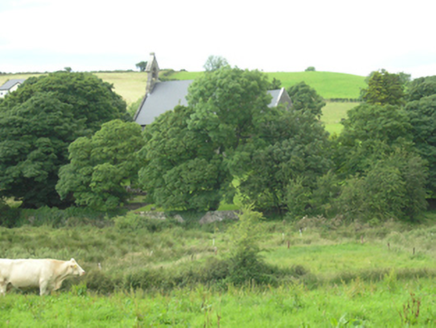
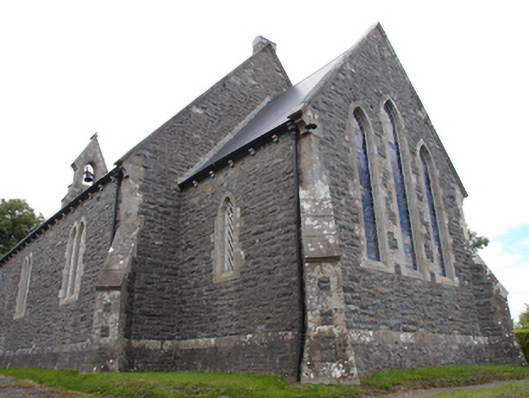
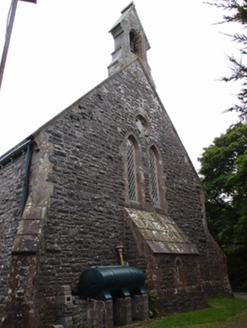
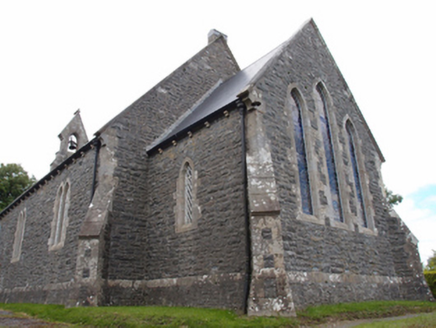
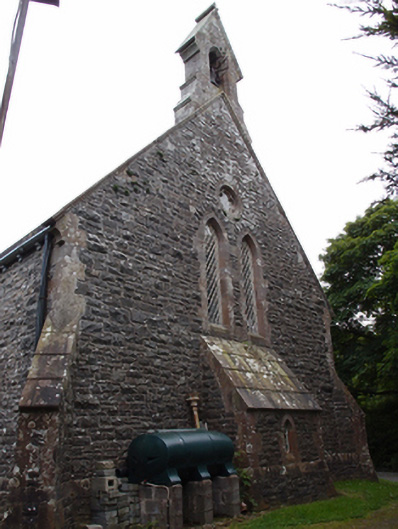
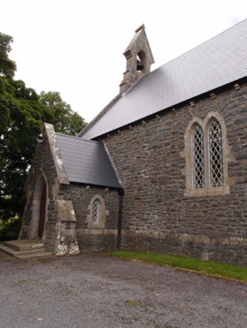
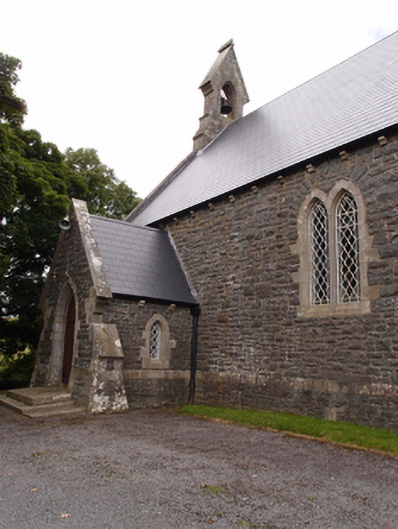
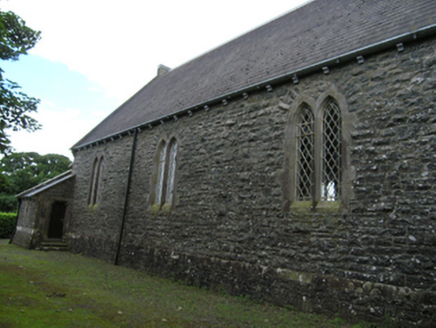
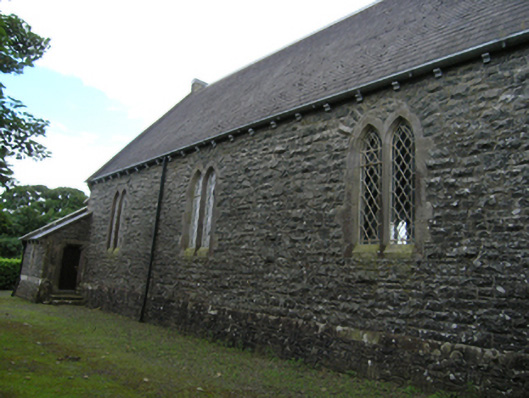
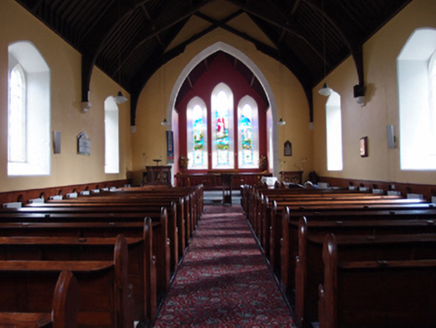
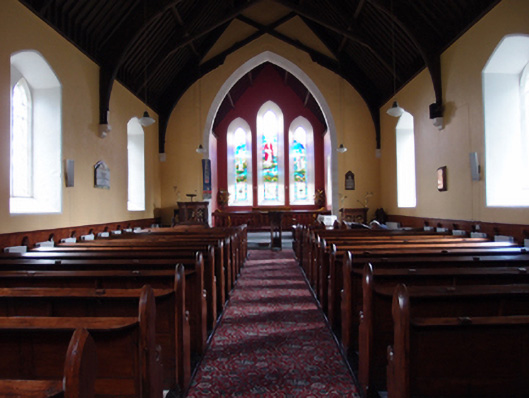
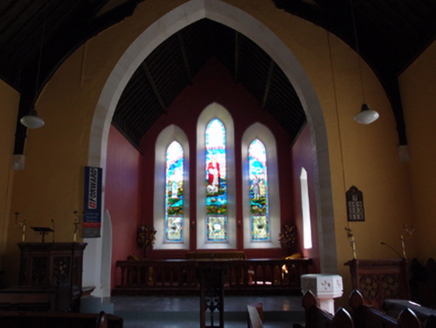
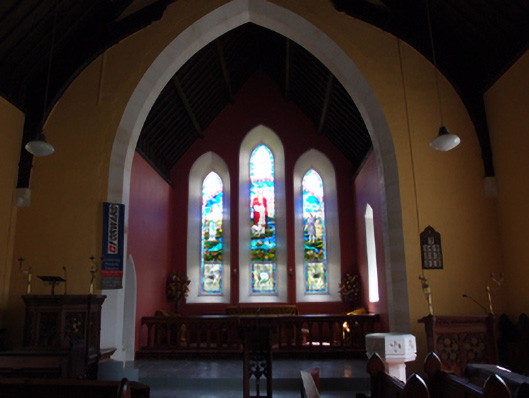
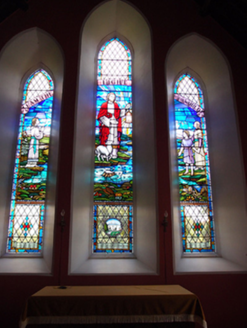
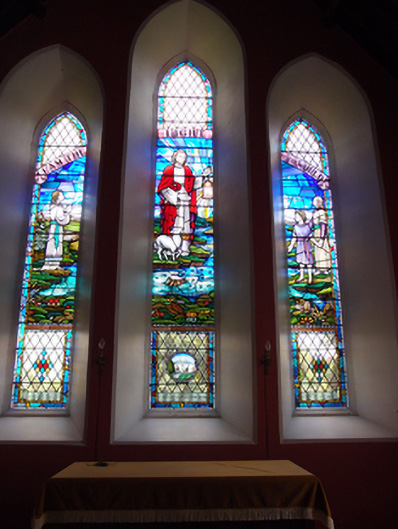
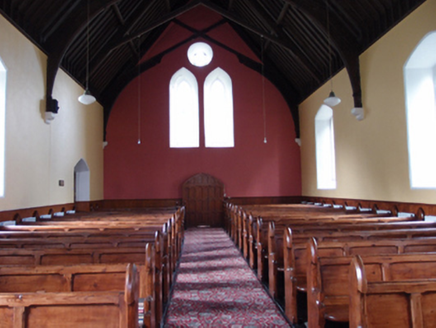
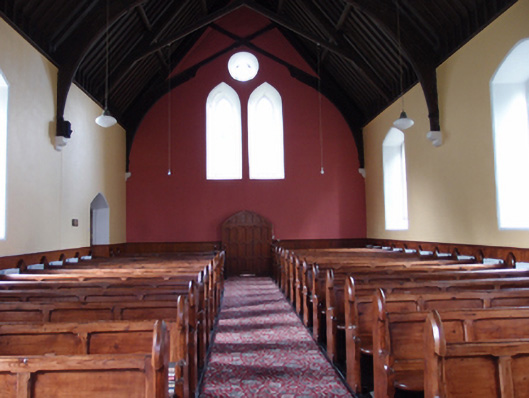
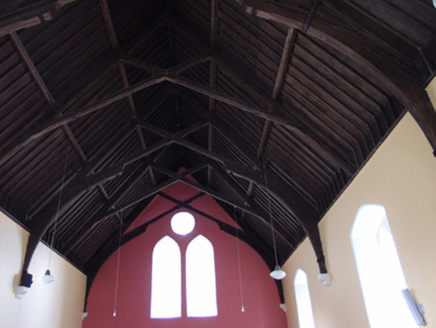
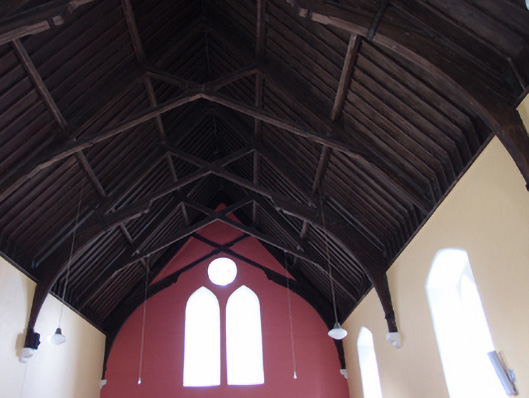
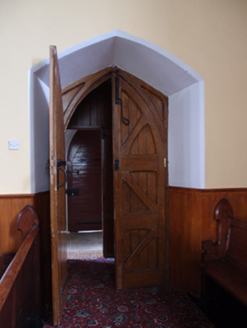
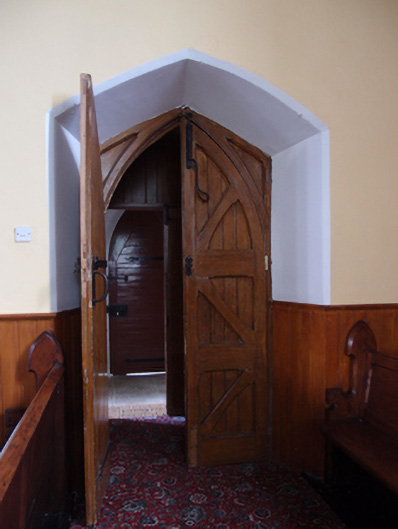
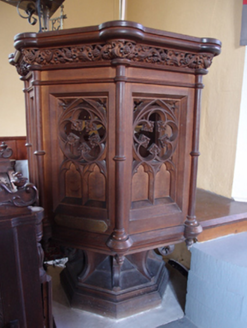
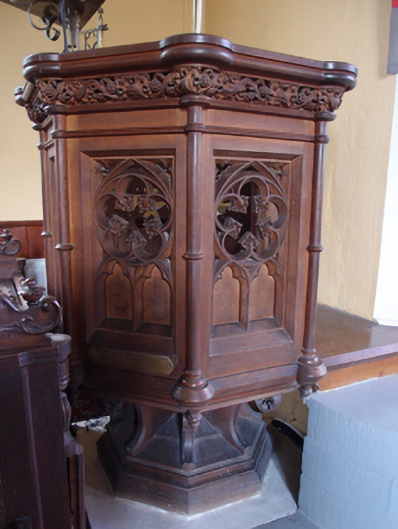
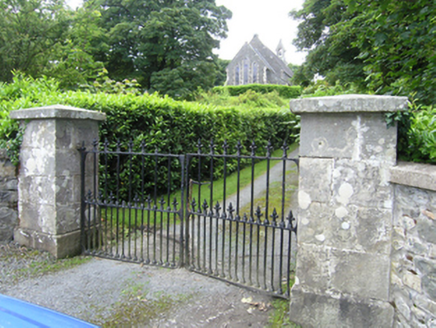
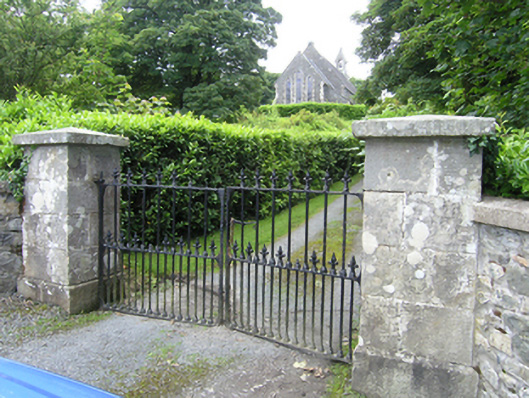
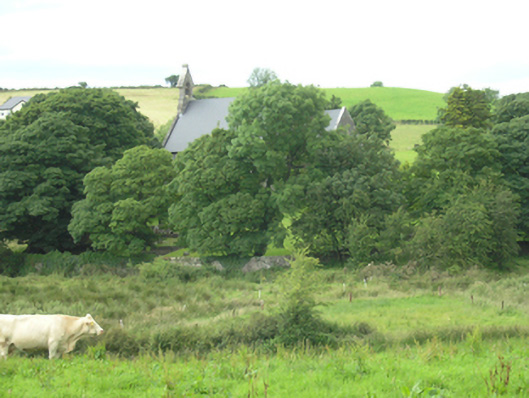
Freestanding Gothic-Revival Church of Ireland church, built 1855, with three-bay nave, projecting porch to west end of south side, single-bay chancel to east, and vestry to north-east. Steeply pitched replacement slate roof, dressed stone bell-cote over west gable with fractable on ogee kneelers and weatherings to shoulders, cut-stone stack on east gable of nave, oversailing barges with ogee kneelers, cast-iron rainwater goods, gutters supported on stone corbel table. Rock-faced squared and random-coursed limestone walls, battered base courses below a dressed stone plinth course. Smooth sandsone ashlar cornerstones above low diagonal corner buttresses with steeply angled sandstone weatherings, south-west entrance porch flanked by battered buttresses with weatherings, side light windows and battered lower walls to entrance gable. Pointed arch entrance with slatted panelled door having historic ironwork hinges and nail studding. Paired lancets to nave in dressed sandsstone surround under rock-faced limestone relieving arch. West gable having lancet pair with a cusped quinfoil window over, bell-ringer’s chamber below extends out below with stone lean-to roof, dressed stone quoins, small lancet window with diamond pattern latticework and receptacle in roof slope for bell chain. East gable to chancel having graduated triple lancet, single lancet to south side. Vestry having flat-headed entrance doorway with cusped shoulders and pronounced lower batter. Interior with scissor-braced timber roof with additional bracing in alternate trusses resting on wall corbels, end braces unusually placed against east and west nave gables. Chamfered chancel arch. Original bench seats, altar rails, steps to pulpit, and baptismal font remain in situ; pulpit, reader’s desk and communion table being later replacements. Woodwork designs for inner and outer doors to porch and bell-ringer’s chamber also original. Stained glass to eastern triplet. Graveyard to south. Double cast-iron entrance gates with ashlar piers and flanking rubble stone wing walls.
Appraisal
The church was built to the design of the diocesan architect Joseph Welland, replacing an earlier Board of First Fruits church of 1795 located some distance to the south-west in a separate graveyard enclosure. It is a very carefully detailed and the breaking up of its massing into separate porch, vestry, and chancel are very typical of Welland’s later style, following the theories and preferences of Pugin and the Ecclesiologists. The very pronounced base batter below a string course and the bell-ringers chamber structure extending from the west gable add further interest to the ensemble. Welland designed a very similar church at Killinagh, comparisons between the two, especially the interiors, provide a valuable illustration of later nineteenth and early twentieth-century changes in the design of church furnishings. The church exhibits a very high standard of exectution throughout and constitues a valuable feature of the architectural landscape of the area.