Survey Data
Reg No
40402112
Rating
Regional
Categories of Special Interest
Architectural, Social
Original Use
Church/chapel
In Use As
Church/chapel
Date
1980 - 1985
Coordinates
251578, 305096
Date Recorded
20/07/2012
Date Updated
--/--/--
Description
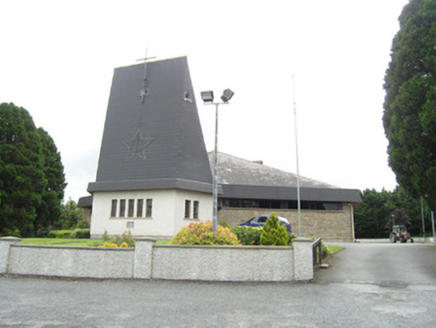
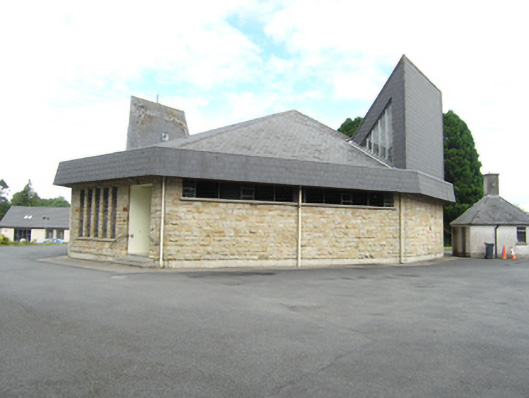
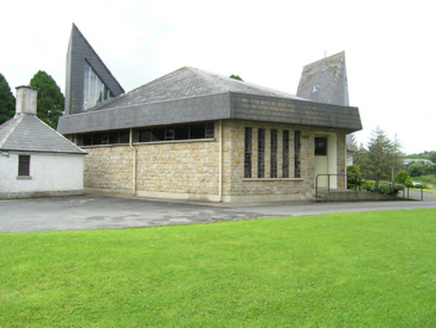
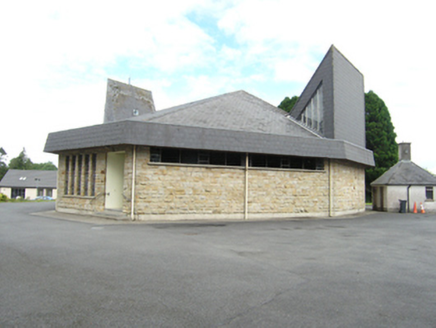
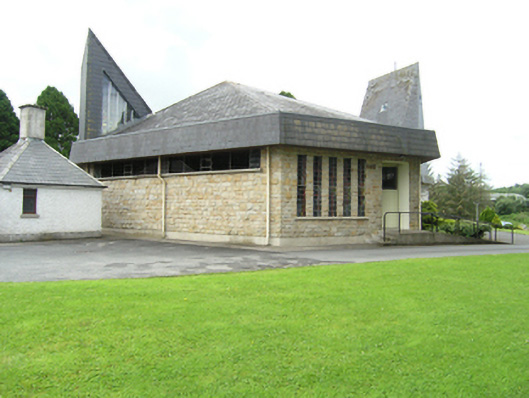
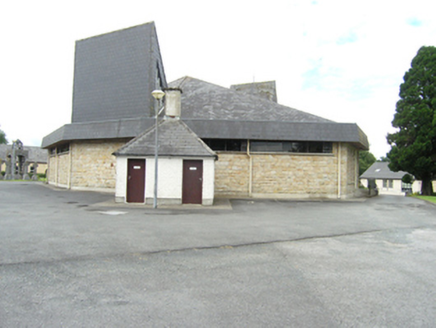
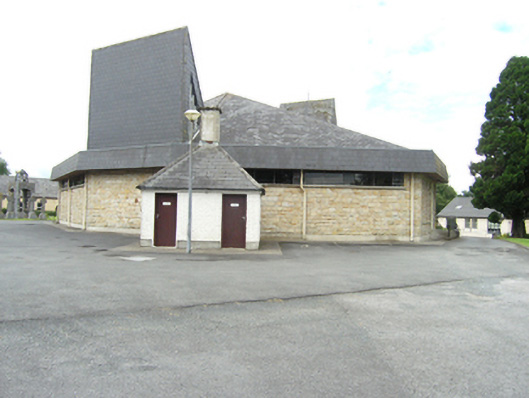
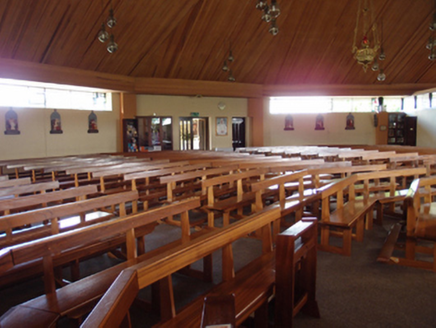
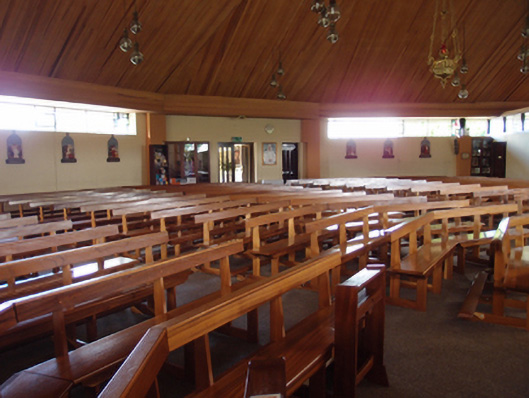
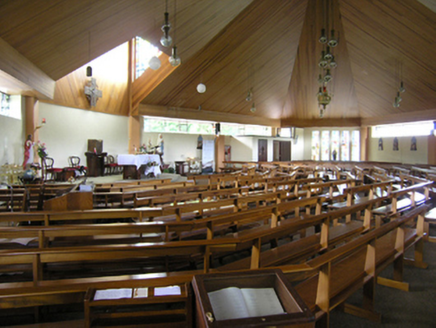
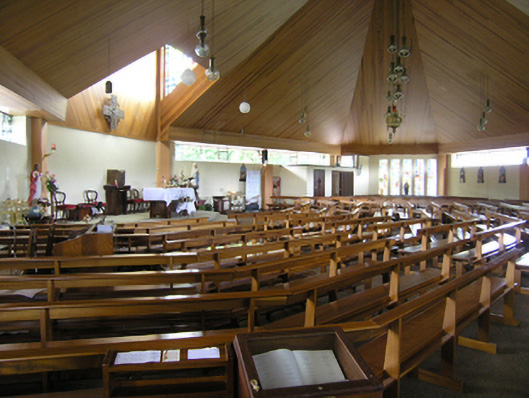
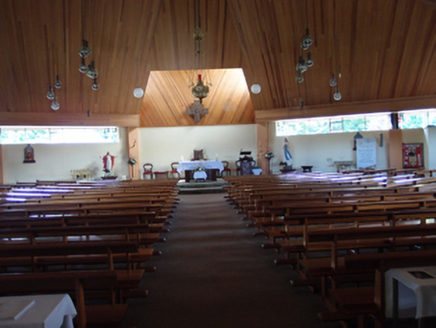
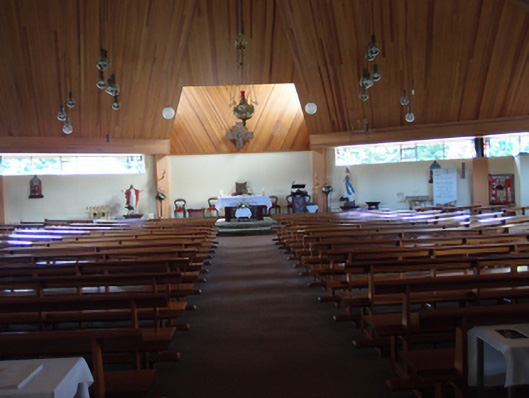
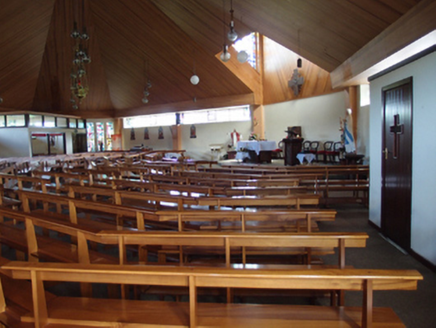
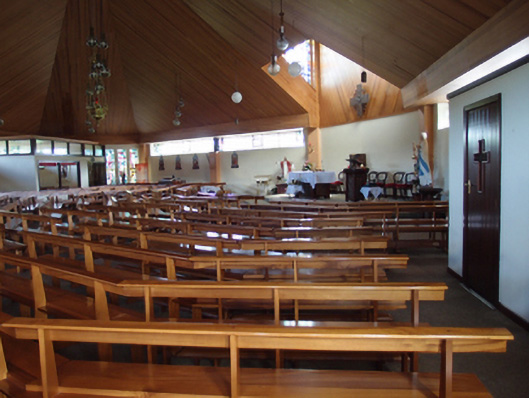
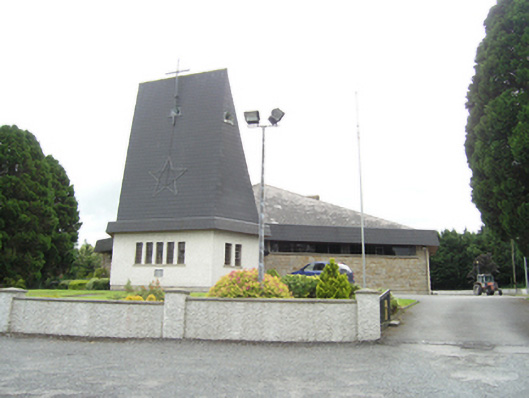
Freestanding Modern Roman Catholic church on elongated hexagonal-plan, built 1983, arranged symmetrically with tall triangular lantern elements over altar on long east side and in larger canted version on opposite side over separate sacristy and entrance block to front. Shallow multiple pitched slate roof rising to apex with continuous projecting slate-hung parapet band, metal rainwater goods. Slate clad vertical wedge-shaped lanterns with side glazing. Rock-faced dressed sandstone wall cladding, roughly coursed over a plain rendered plinth. Band of clerestory windows below roof to four faces, tall narrow lights over continuous sills with stained glass on short faces beside side entrances. Roughcast rendered walls to entrance block having rows of vertical format windows over continuous sills. Interior space arranged to focus on altar on long east wall. Multiple-faceted sloping polished timber ceiling resting on square-profile wall columns. Large diagonally-sheeted timber-clad light well over altar. Cry chapel to north and confessional to south end. Timber bench seating canted and focussed on altar area. Steps to raised altar area. Boiler house with hipped slate roof and rendered stack and rendered walls to site. Freestanding stone clad belfry to south-west. Roughcast rendered boundary walls with piers.
Appraisal
An example of a post-Vatican II church built to designs by Gaffney and Cullivan architects, located on the site of an earlier church of similar size and orientation. The irregular plan lends an air of informality and allows close proximity of the congregation to the centrally placed altar. Traditional motifs are recalled in the use of slate for the roofs and the vertical lantern elements recall church towers. The lantern over the entrance faces a Y-junction to the east of Larah and thereby achieves a strong presence for the church. The interior is well lit, the horizontal clerestory windows emphasise the horizontal in preference to the vertical, typical of Modern architecture. This is one of several Modern churches in County Cavan and is distinctive in its expression and use of materials. It bears witness to developments in late Modernism and makes an important contribution to the variety of architectural heritage in the county.