Survey Data
Reg No
40401724
Rating
Regional
Categories of Special Interest
Architectural, Artistic, Historical, Social
Original Use
Church/chapel
In Use As
Church/chapel
Date
1860 - 1865
Coordinates
256724, 312843
Date Recorded
19/06/2012
Date Updated
--/--/--
Description
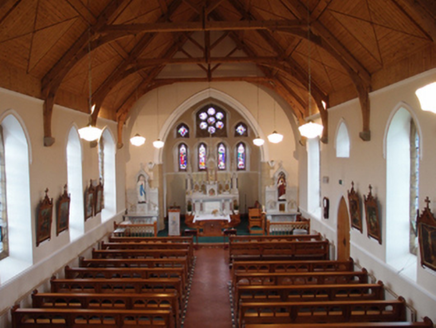
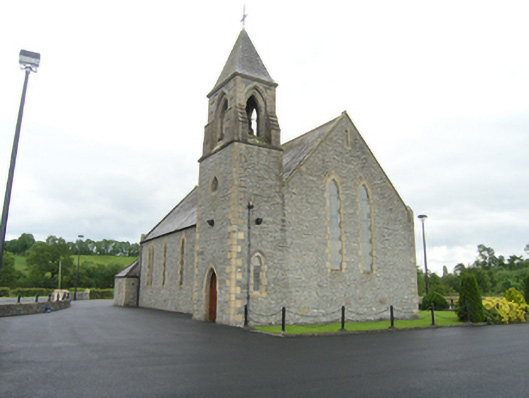
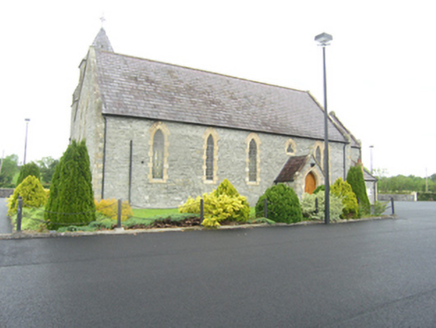
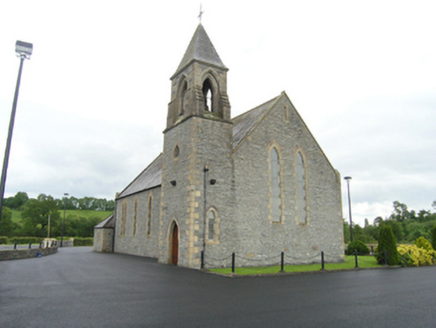
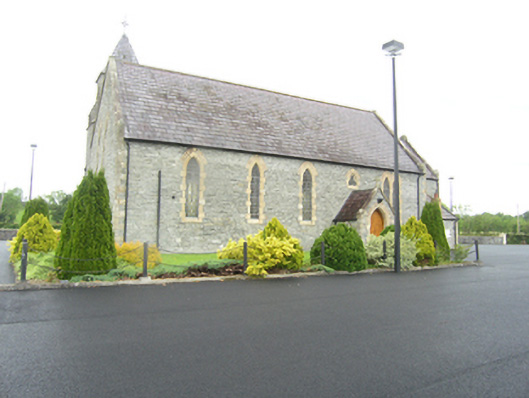
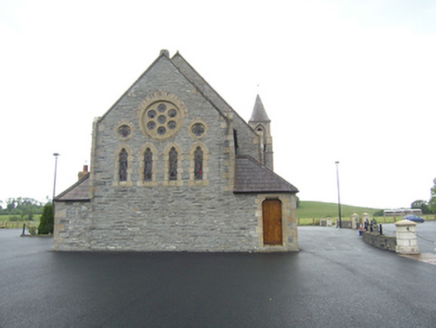
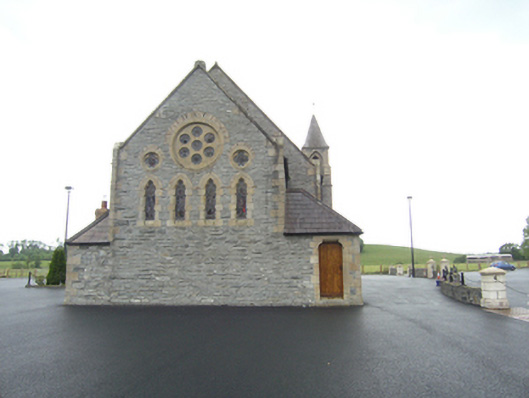
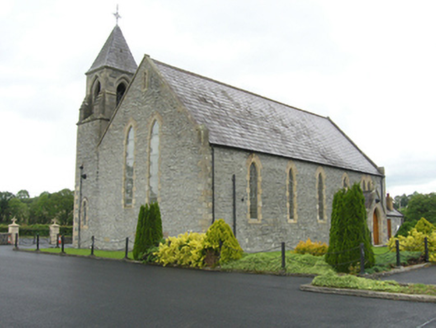
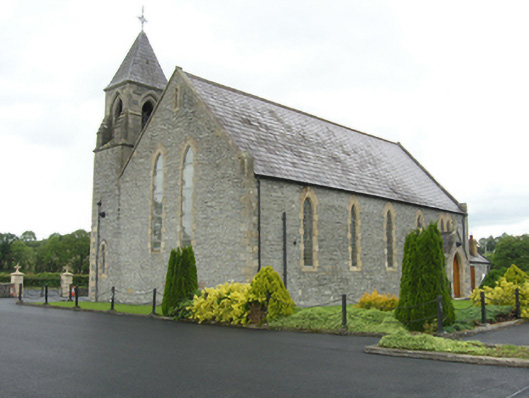
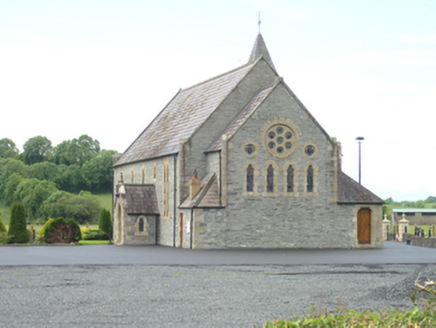
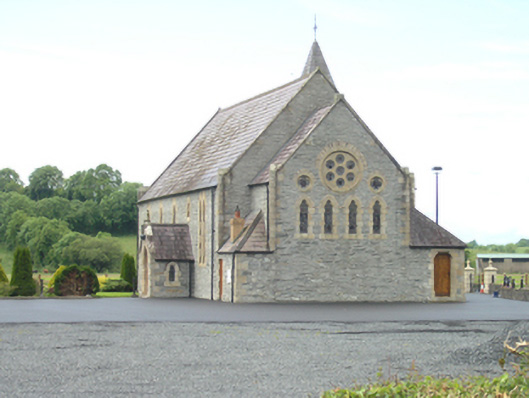
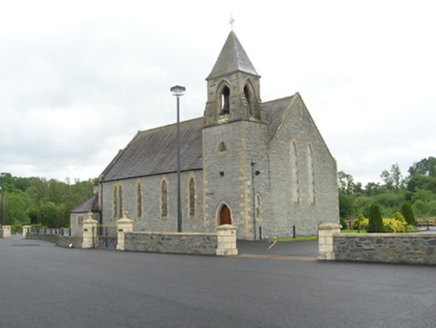
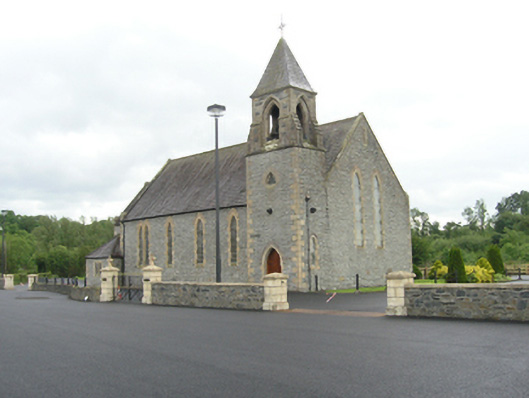
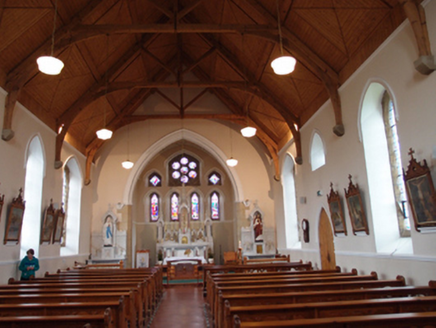
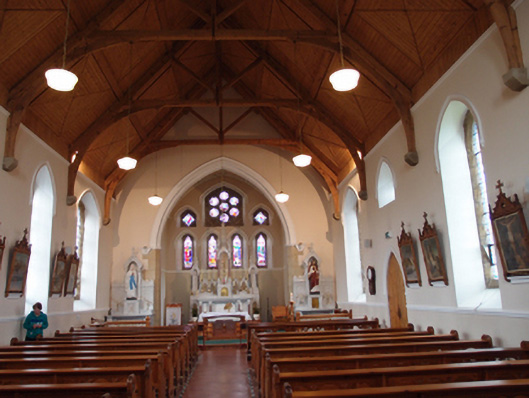
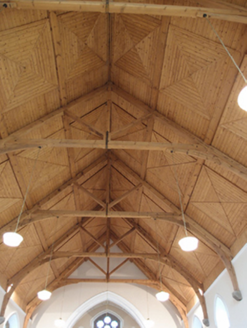
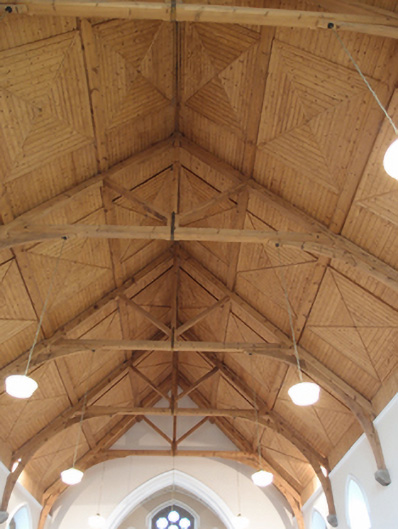
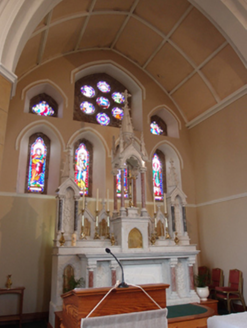
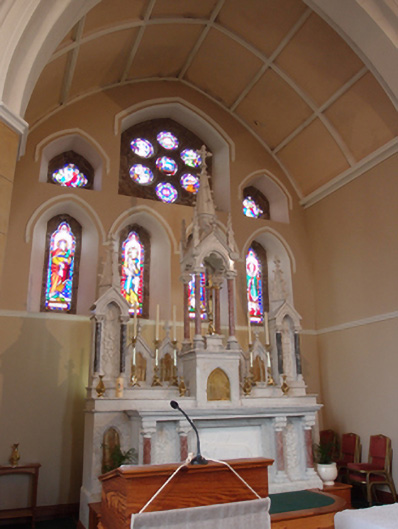
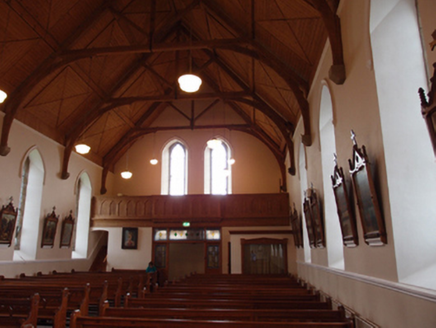
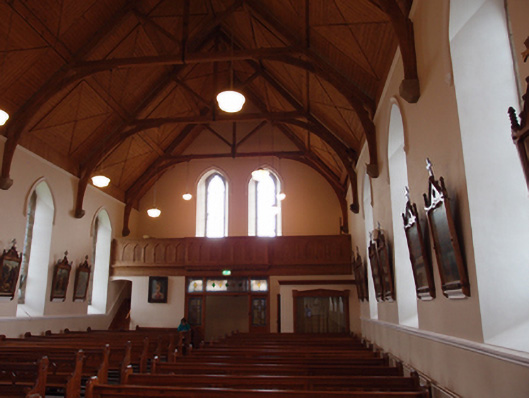
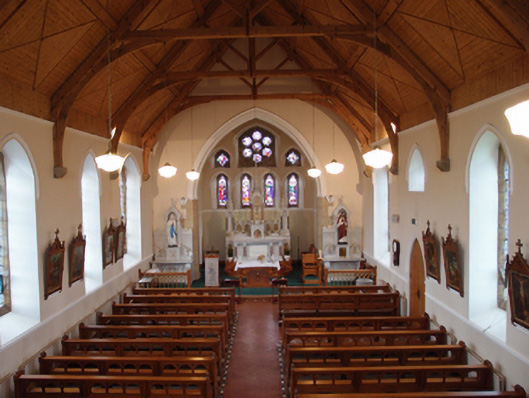
Freestanding Gothic-Revival Roman Catholic church, built 1863, with five-bay nave, chancel to west, rectangular-plan three-stage entrance bell tower to north-west end of nave, porch to south elevation, sacristies flanking chancel. Pitched slate roof, clay ridge tiles, gable copings with roll-mould apex and flush gablets as kneelers, pyramidal slate roof to bell tower with scalloped slates and metal cross finial, and replacement rainwater goods. Hipped slated roofs to sacristies, porch on south elevation with a cross finial on gable. Random-coursed sandstone walls with cut yellow sandstone quoins. Yellow sandstone surrounds to lancet windows with block-and-start jambs and yellow polychromatic brick relieving arches over. Single lancets to the nave, with paired lancets in the eastern bay, and a pair of tall lancets to west gable. Four short lancets in wide east gable of chancel with plate tracery rose window over central pair and glazed quatrefoils over lower outer lights. Pointed arch windows to sides of south porch. Rock-faced upper stage of tower with recessed open pointed belfry arches with sloped sill flanked on side faces of belfry by weathered buttresses over moulded string course. Plain lower stages without divisions having trefoil window to second stage with brick relieving arch, pointed arch door opening to ground stage with timber sheeted doors. Timber sheeted doors also to porch on south elevation and to sacristy doors. Interior with exposed timber truss roof having king posts and panelled coffers. Low relief hood moulds to lancet windows. String course at sill height runs around interior. Lower single-bay chancel behind a pointed chancel arch with half-octagonal pier responds. Freestanding historic altar and reredos behind which are two tiers of stained glass windows with row of four lancets at triforium level, over this a rose window with four-centred rear-arch and flanked by quatrefoils with similar smaller rear arches. Timber gallery at west end over entrance porches. Timber pews. Recent rubble-stone boundary wall to roadside to north with ashlar piers and metal gates.
Appraisal
A prominently located church built on a site donate by Colenel Clements in 1863 to the designs of William Hague (1836-1899) in an inventive Gothic-Revival style. The church has a simple form that contrasts with fine modelling of the tower, chancel, and porch, as well as with colourful and inventive detailing. This is typical of church designs by William Hague as is his choice of the east-west orientation. An early work in Hague’s career the church exhibits his energetic approach to church design.