Survey Data
Reg No
40401708
Rating
Regional
Categories of Special Interest
Architectural, Artistic, Historical, Social
Original Use
Gate lodge
In Use As
Gate lodge
Date
1930 - 1935
Coordinates
257912, 313284
Date Recorded
27/06/2012
Date Updated
--/--/--
Description
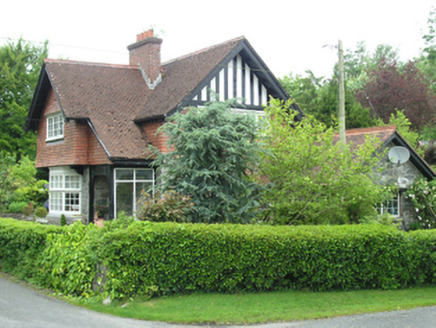
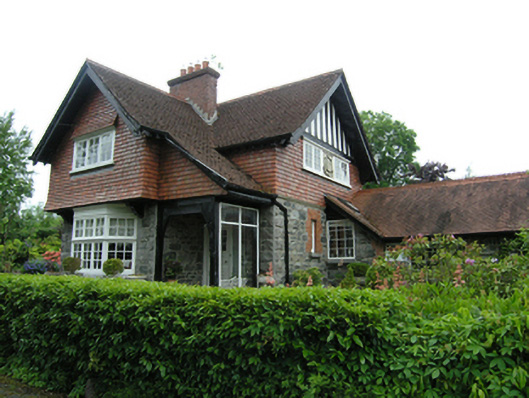
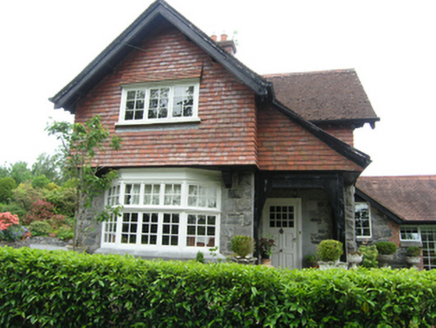
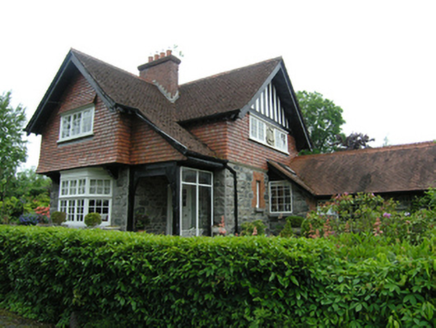
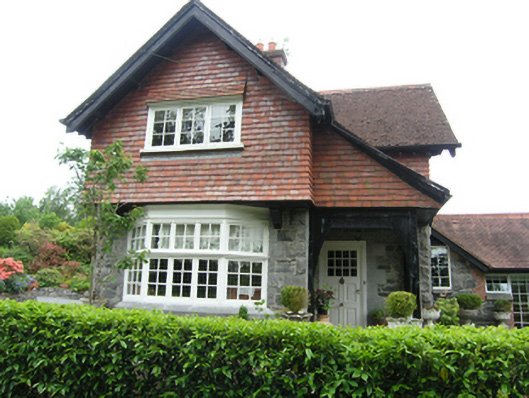
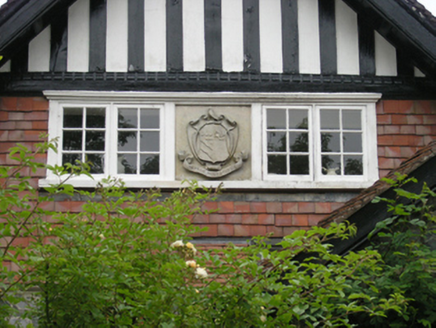
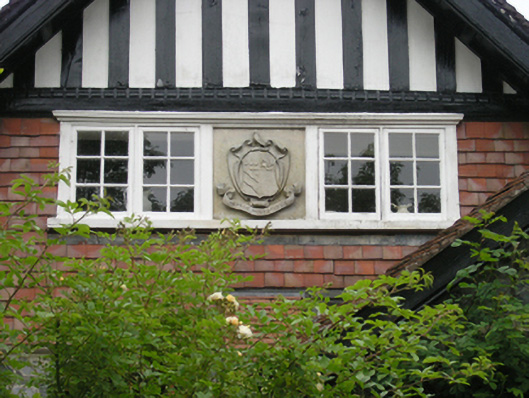
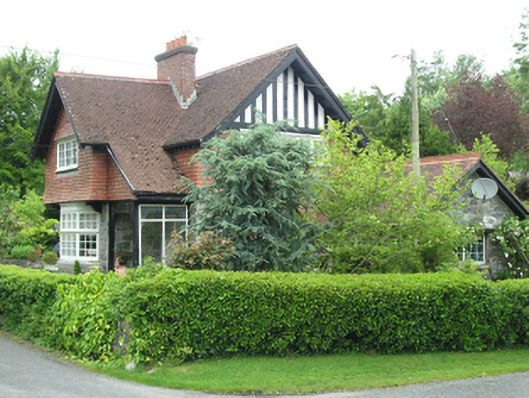
Detached Arts-and-Crafts style L-plan two-storey gabled gate lodge, built 1932, main gable to entrance drive jettied out at upper floor over canted bay window, open porch to inner corner under catslide roof, single-storey wing adjoining side gable. Pitched clay-tile roofs with clay ridge tiles and overhanging eaves with exposed rafter ends and plain bargeboards. Tall brick chimeystack at junction of gables with moulded cornice. First floor hung with clay tiles bellcast above tripartite first-floor window in front gable. Upper part of side gable and rear gables half-timbered. Two bipartite casement windows flanking sculpted stone cartouche of the Clements family bearings to form horizontal band to first floor of side gable. Bipartite casement window to upper level of rear gable. Ground floor of squared roughly coursed rubble limestone with rock-faced quoins. Canted timber bay window at ground level of main gable with tripartite front, cornice, and frieze over multiple-pane casements with moulded transom division and cut-limestone sill. Smaller casement windows to ground floor having red brick dressings and chamfered limestone sills. Timber posts and beams to porch, recessed timber front door having four panels to lower half of door and glazed upper section.
Appraisal
A very fine example of a well built and detailed two-storey gate lodge by the well known Dublin architectural practice of Mitchell & McCurdy. It is an interesting combination of suburban domesticity and demesne identifier, located within the well maintained former demesne landscape of Ashfield Lodge. The lodge is characterised by the first floor earthenware tiles hanging, casement windows, and carved stone cartouche. It survives almost intact, retaining a wealth of original details. It forms part of a significant group of demesne related structures, which provides insight into the running and scale of what was once one the largest estates in the county.