

Survey Data
Reg No
40401502
Rating
Regional
Categories of Special Interest
Architectural, Artistic, Historical, Social
Original Use
Church/chapel
In Use As
Church/chapel
Date
1845 - 1855
Coordinates
235281, 316533
Date Recorded
12/06/2012
Date Updated
--/--/--
Description
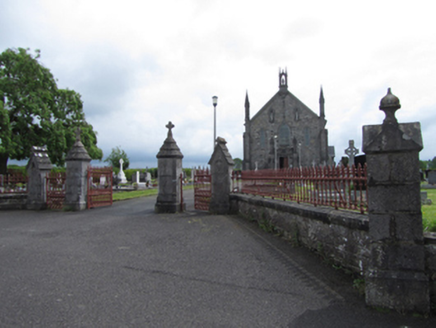
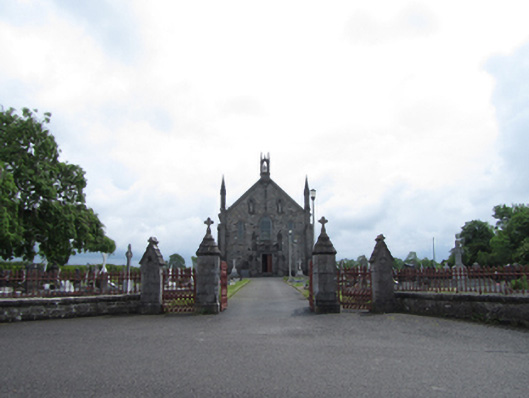
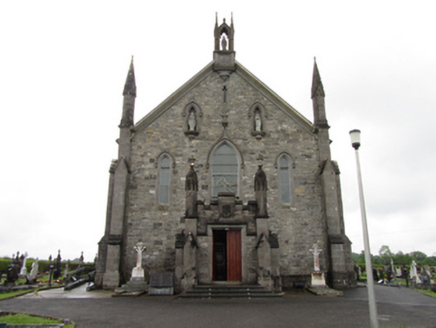
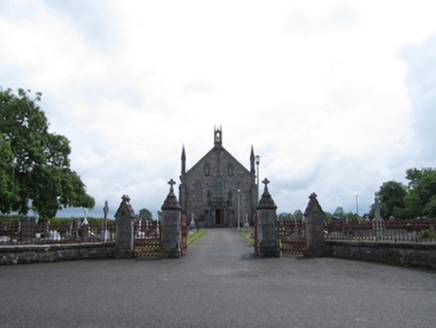
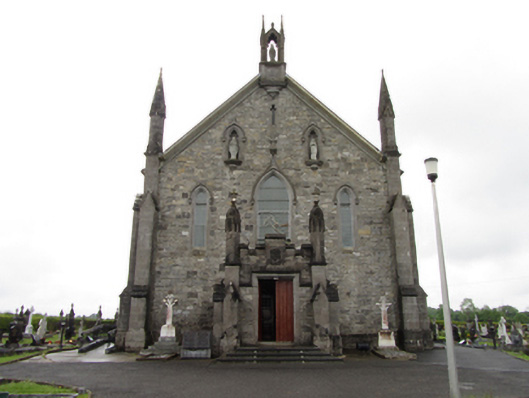
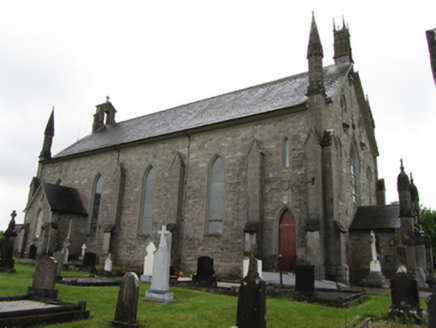
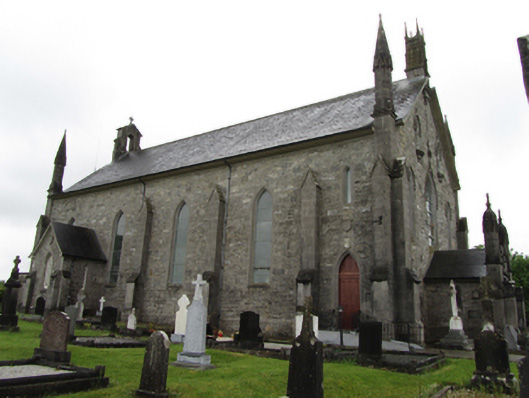
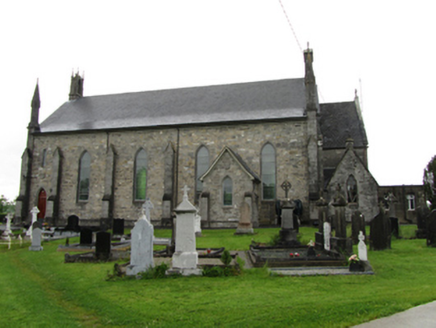
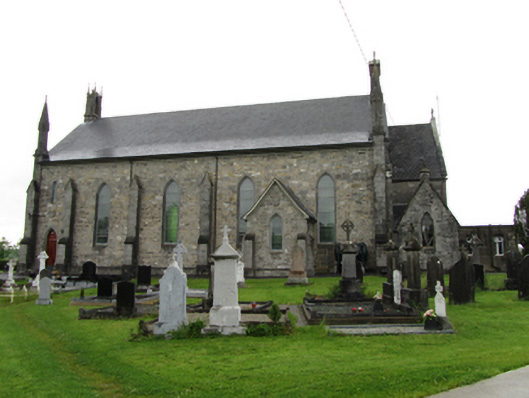
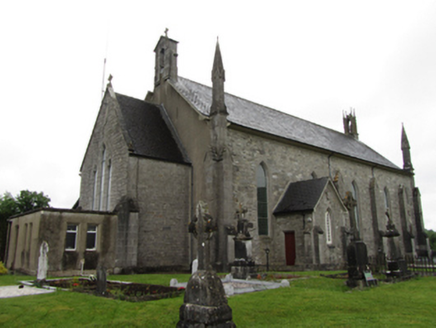
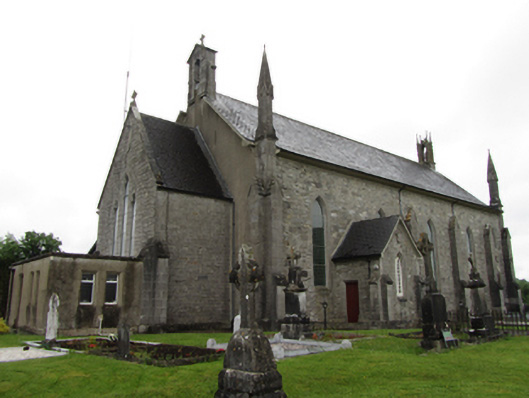
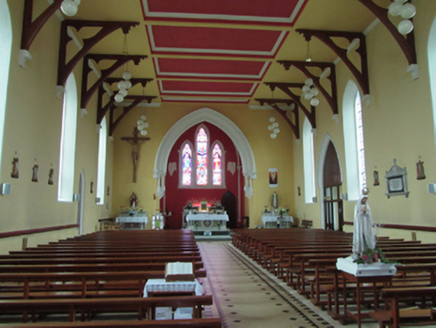
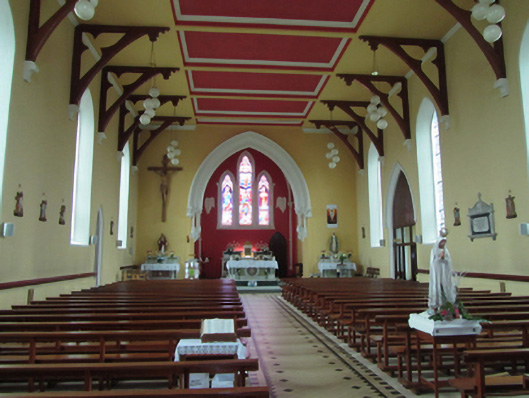
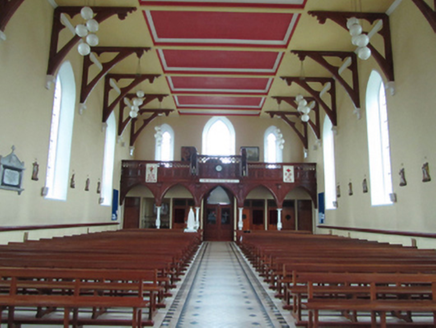
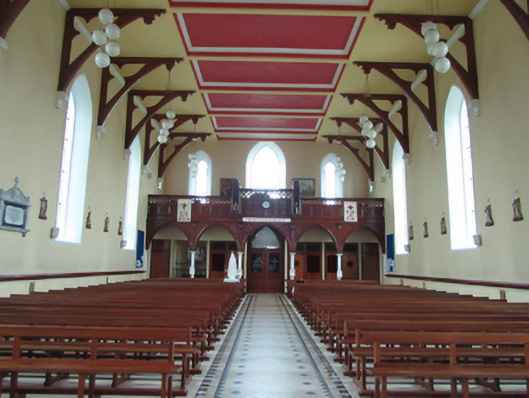
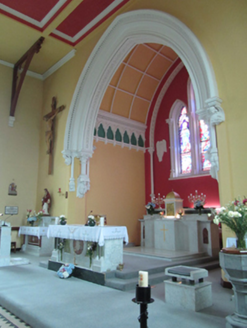
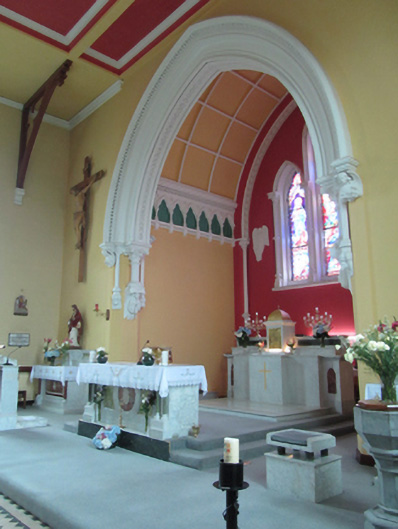
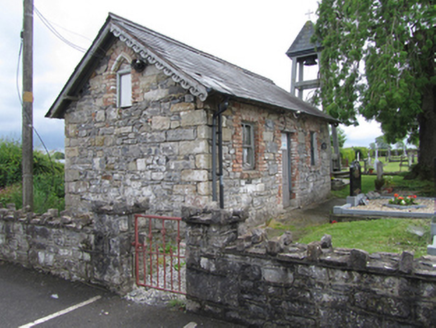
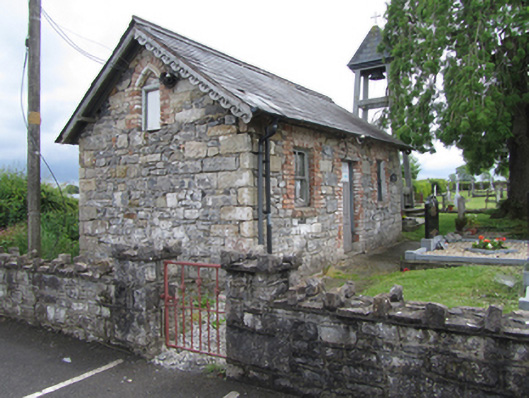
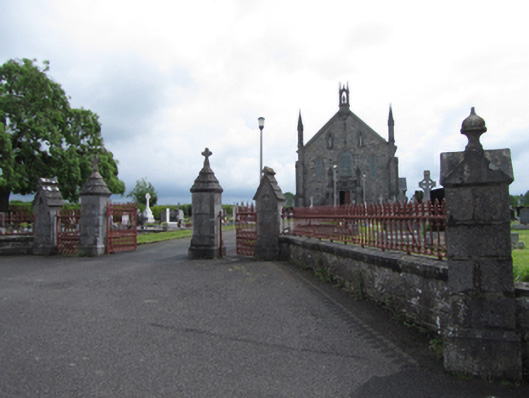
Freestanding Gothic Revival Roman Catholic church, built c.1850, with crenellated entrance porch, five-bay nave with gabled side chapel and lobby on either side, chancel added c.1870 with gabled sacristy to side having flat-roofed twentieth-century extension. Pitched slate roofs altered to have oversailing concrete eaves and verge, pressed metal rainwater goods. Ashlar bellcote to chancel gable. Coursed squared rubble sandstone walls, render to nave gable adjoining chancel. Ashlar piers to nave corners surmounted by octagonal-profile pinnacles, rising from gabled and stepped angle buttresses. Gabled and stepped buttresses with weatherings between nave bays. Decorative gabled canopy with corner pinnacles hsving statue of the Blessed Virgin Mary, panelled plinth on console surmounting main gable. Pair of pointed statue niches with hood mouldings on projecting consoles flanking engaged cross finial over ogee hood moulding to central pointed arch window, with flanking lancet windows. Projecting porch with stepped crenellated parapet having corner piers and buttresses reflecting nave corners, but surmounted by domed pinnacles with Greek cross finials. Square-headed doors with stepped hood moulding and timber doors with full height panels. Nave interior with flat plaster ceiling on triangular timber brackets with trefoil detail resting on wall consoles, centre of ceiling compartmented with acoustic panels, compartmented vaulted ceiling to chancel. Decorative plaster chancel arch springing from colonettes on decorative consoles. Blind clerestory arcade of decorative plaster to chancel walls, plaster colonettes and hoods to chancel windows. Richly carved timber gallery screen with open interlacing arch motif supported on arcade of pointed arches with fluted columns and carved spandrels, central bay raised and flanked by elaborately carved statues niches. Plain recessed confessionals, c.1940, beneath having octagonal vision panels. Leaded windows to nave and entrance gable. Stained glass to chancel windows. Timber doors with leaded light above. White marble central and side altars with coloured marble columns and inlays. Recent marble tabernacle, octagonal stone font, recent timber pews. Opens to stone entrance steps at main and side entrances. Graveyard to site. Detached three-bay single-storey outbuilding to site with pitched slate roof, two-over-two timber sash windows, and replacement timber panelled door. Recent steel framed bell-tower, c.1990, with slated pyramid roof. Double leaf decorative cast-iron gates flanked by square-profile ashlar limesonte piers with pyramidal copings capped by crucifixes, having flanking decorative cast-iron pedestrian gates, set in wing railings with stone plinth walls.
Appraisal
An imposing landmark in a rural setting, and built on a site donated by Lord Lanesborough, this church is a significant addition to the historic character of this area to the south-west of Belturbet. The simple form with striking pinnacles is intricately decorated with carved stone detail and rich wall articulation, while the interior is equally embellished, with a timber gallery of exceptional design. The church forms part of a group, with the surrouding graveyard, ornate entrance screen, and former parochial house, that has plays a significant role in the social history of the surrounding area. The church construction began at the onset of the Great Famine and consquently could not be completed until the early 1850s; its ambitious design and detailing testify to the strength of the Catholic faith during this period.