Survey Data
Reg No
40401420
Rating
Regional
Categories of Special Interest
Architectural, Social
Original Use
Rectory/glebe/vicarage/curate's house
Date
1815 - 1825
Coordinates
233242, 311046
Date Recorded
12/07/2012
Date Updated
--/--/--
Description
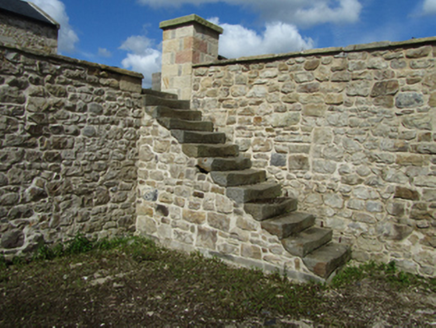
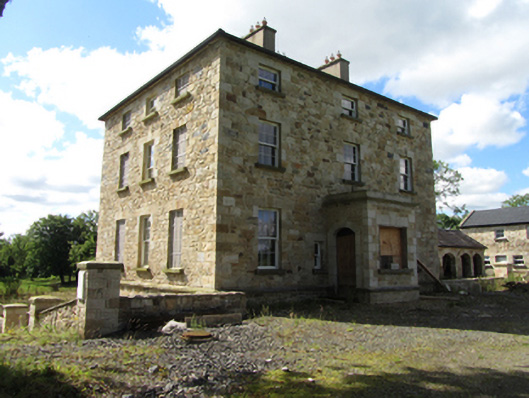
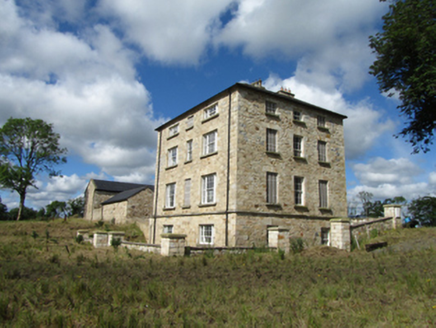
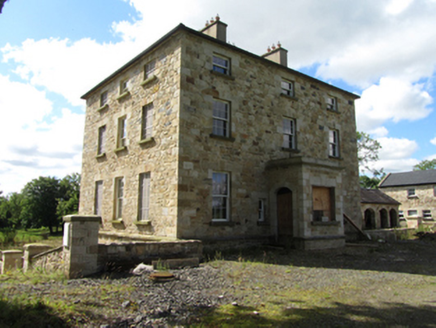
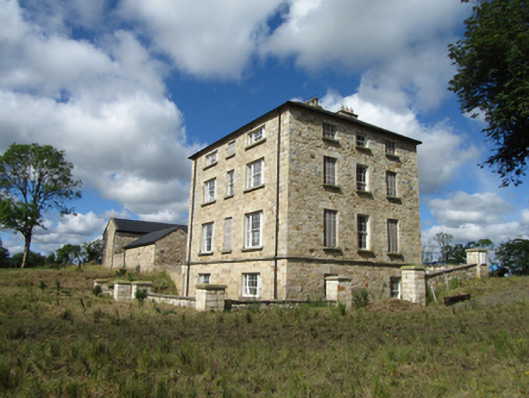
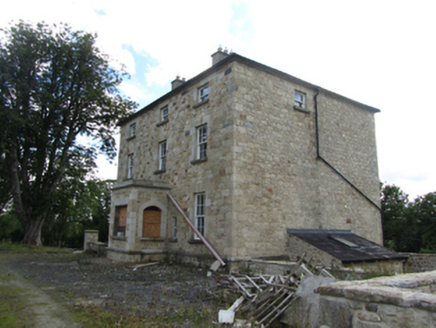
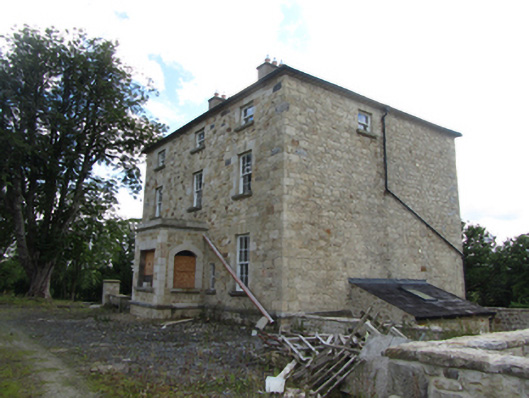
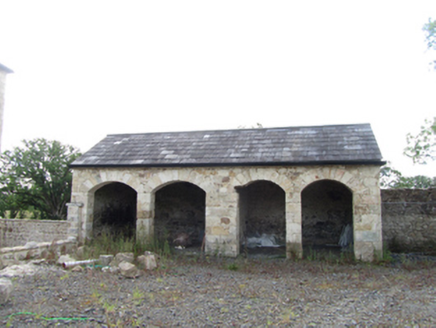
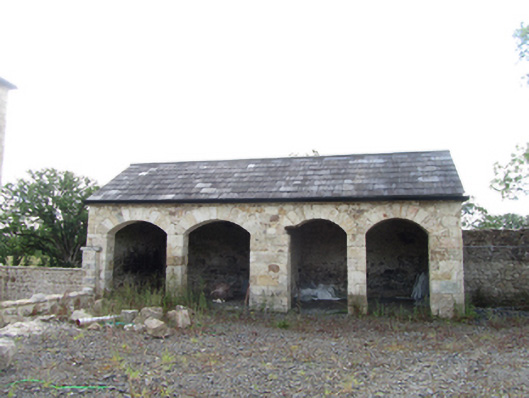
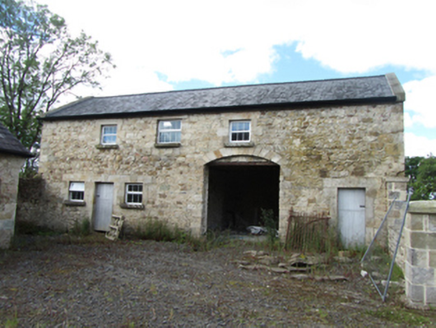
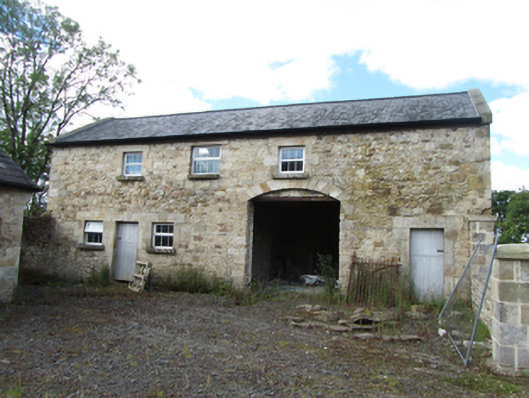
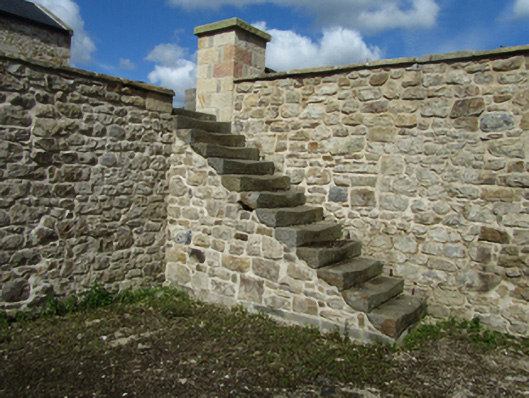
Detached square-plan three-bay three-storey over basement former glebe house, built c.1820, with single-storey entrance porch, and three-bay rear and east side elevation employing blind windows for symmetry, sloping site exposing basement on rear and sides. Currently undergoing renovation. Hipped slate roof around central valley, rendered chimneystacks flanking central bay, pressed metal rainwater goods. Historic render removed to expose squared rubble-stone walls laid to courses with dressed corner stones, bevelled plinth course above basement. Window openings with dressed stone lintels and keystones, voussoirs to blind windows, block-and-start jambs, and stone sills. Graduated window heights with replacement six-over-six and three-over-three timber sash windows, tripartite Wyatt formats to outer bays of rear garden elevation at all levels. Central entrance porch, recently raised, with profiled cornice, segmental arches to door and side window opening. Basement well between house and outbuildings to west side with single-storey lean-to entrance porch at basement and stone access steps to front area. Detached single-storey sandstone coach house to south side of yard with pitched slate roof and arcade of four segmental arches with voussoirs. Detached four-bay two-storey outbuilding to west side of yard having pitched slate roof with stone barges, stone lintels with keystones to openings, voussoirs to segmental arch opening, timber sheeted doors, and uPVC windows. Wall to yard with ashlar piers, recently reduced in height. Recent setback stone entrance with metal gates to road.
Appraisal
A substantial glebe house dating to the Regency period, with an imposing cubic volume, that is visible from the road. Drumlane was a 'rectory with cure', subject to episcopal jurisdiction, with glebe lands of 340 statue acres. Lewis’s Topographical Dictionary of 1837 records a building date of 1819, however the record of the Ecclesiastical Commission of Ireland states that it was built in 1824, with aid from the Board of First Fruits, and expanded by a later owner. An early pond and a planted enclosure to the garden south of the house are no longer extant. Although some historic features have been replaced, the house retains its historic form and grandeur, reflecting the high social staus of the rector in this parish.