Survey Data
Reg No
40303027
Rating
Regional
Categories of Special Interest
Architectural, Historical, Social
Original Use
Steward's house
Date
1840 - 1850
Coordinates
267531, 296401
Date Recorded
31/07/2012
Date Updated
--/--/--
Description
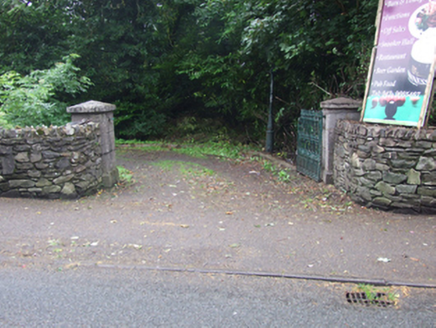
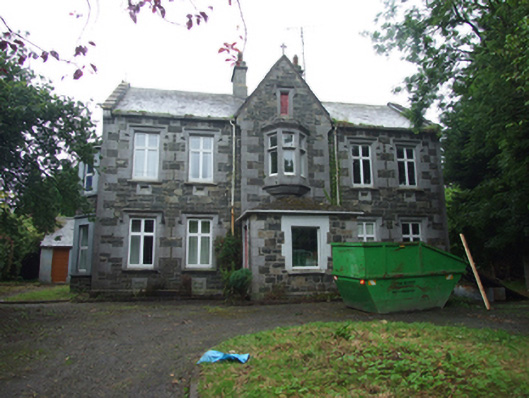
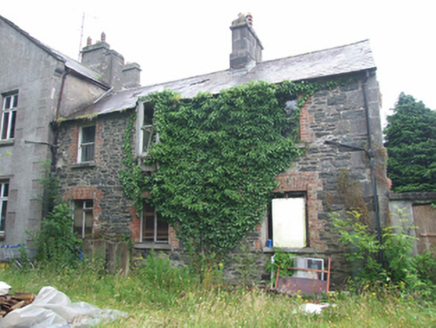
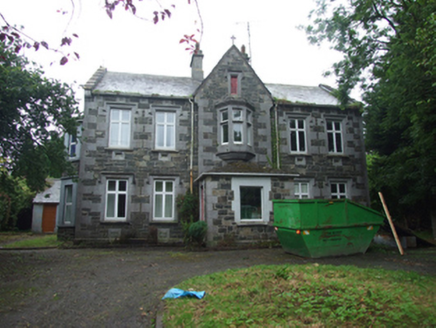
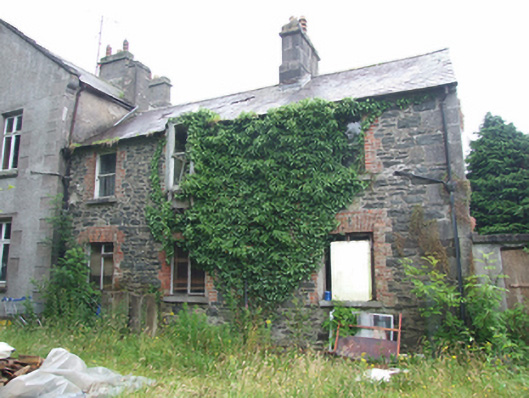
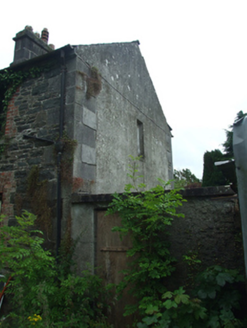
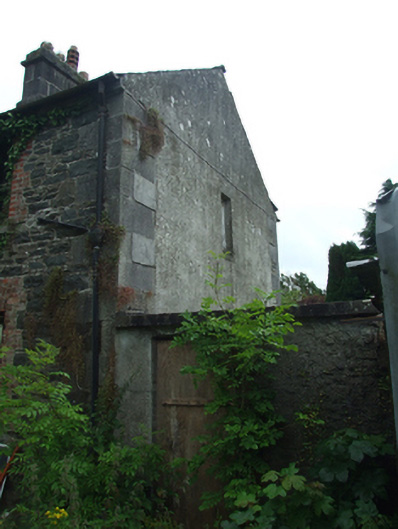
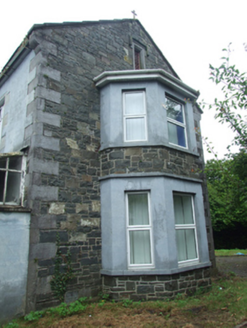
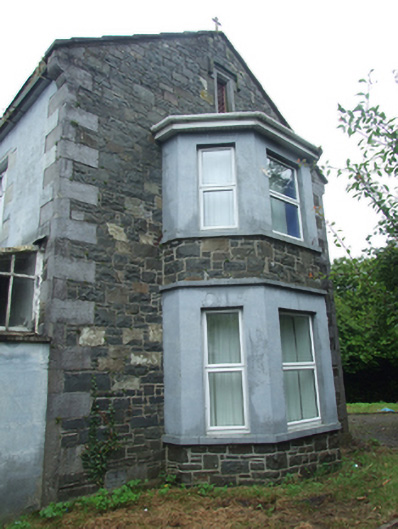
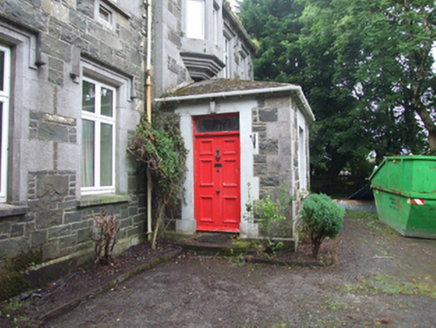
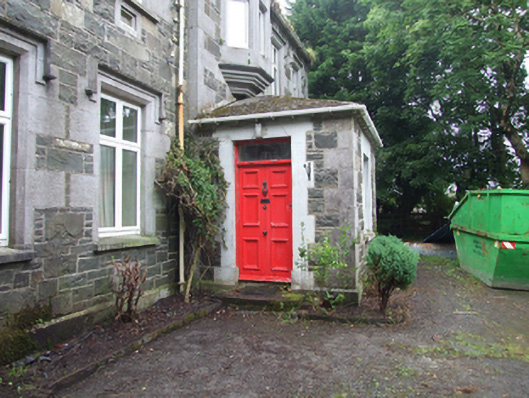
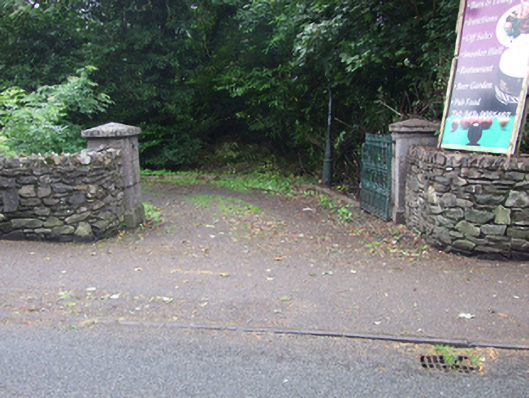
Detached Tudor-Gothic five-bay two-storey house, built c.1845, having central gabled breakfront with canted oriel window and later porch addition, three-bay two-storey return and single storey conservatory to rear, two-storey canted bay windows added to east gable. Now disused. Pitched slate roof with weathered limestone barge copings, cross finial to breakfront, hipped roof to porch with exposed rafter ends to eaves, pitched slate roof to return, uPVC rainwater goods. Ashlar limestone chimneystacks flanking central bay and over return having bevelled plinth and collar course. Random coursed squared and snecked rubblestone elevations with cut-stone punch-dressed quoins and bevelled stone plinth course. Smooth rendered walls to rear elevation and bay window, recent roughcast rendered walls to west gable, coursed rubblestone walling to return with brick dressings. Square-headed window openings with smooth bevelled cut-limestone block-and-start surrounds with Tudor hoods and tooled stone sills, replacement uPVC windows. Bevelled cut-stone surround and Tudor hood to louvred vent to gable. Bevelled mullions and transoms to oriel window with cut stone weathering and corbel. One-over-one timber sashes and timber casement windows to return, having central hip-roofed lucarne. Square-headed six-panelled entrance door with bolection mouldings to side of porch with plain overlight in smooth block-and start surround. Separate servant’s dwelling to southern rear corner having pitched slate roof, gable chimneystack, ruled-and-lined walls, punch-dressed quoins, and replacement windows and doors. Setback from road with wrought-iron gates in low ashlar limestone piers between rubblestone boundary walls. Cast-iron lanterns to driveway.
Appraisal
A handsome house built by Sir John Young, the ground landlord of Bailieborough, for Thomas Chamber, who administered his estate. A later resident, Issac Broom, donated the land for the Holy Trinity Presbyterian Church and developed Broomfield House, a pair of semi-detached houses adjacent to it. The house is a well-executed example of mid nineteenth-century Tudor-Gothic architecture, and retains much of its historic fabric and character intact. It makes a valuable contribution to the historic character of the town.