Survey Data
Reg No
40000454
Rating
Regional
Categories of Special Interest
Architectural, Historical
Original Use
House
In Use As
House
Date
1870 - 1875
Coordinates
242741, 305041
Date Recorded
06/08/2012
Date Updated
--/--/--
Description
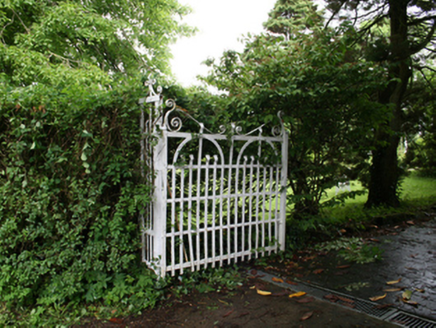
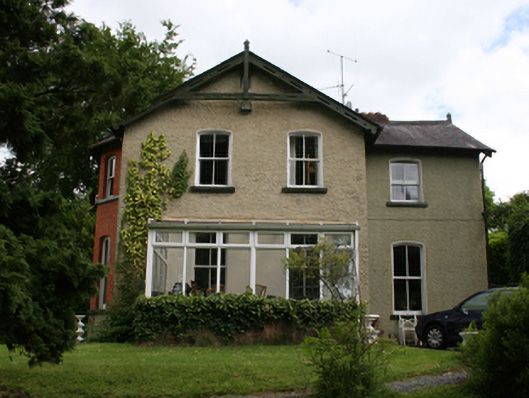
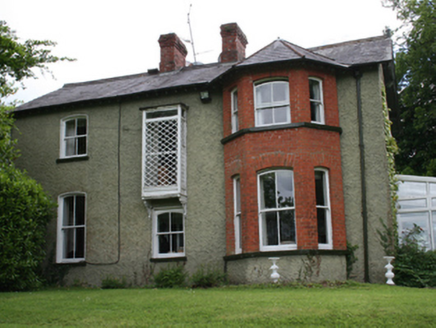
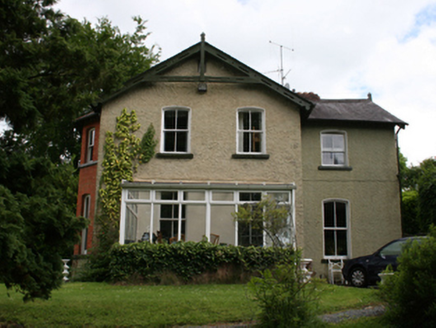
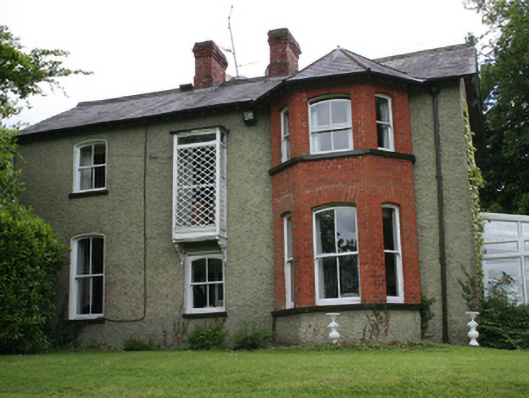
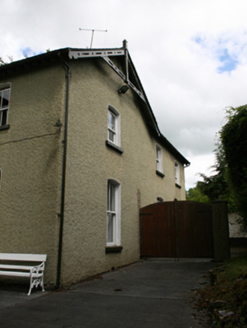
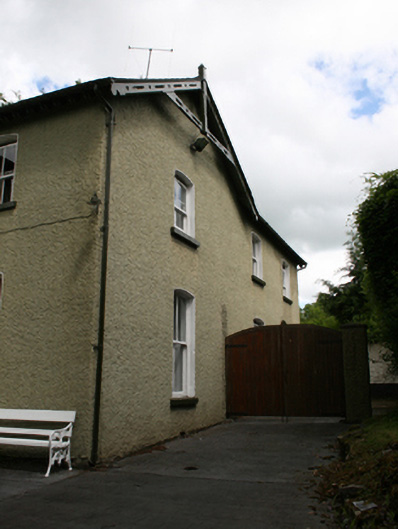
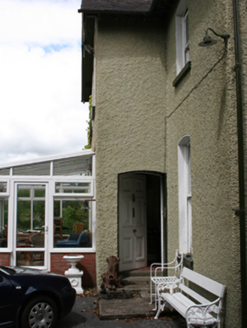
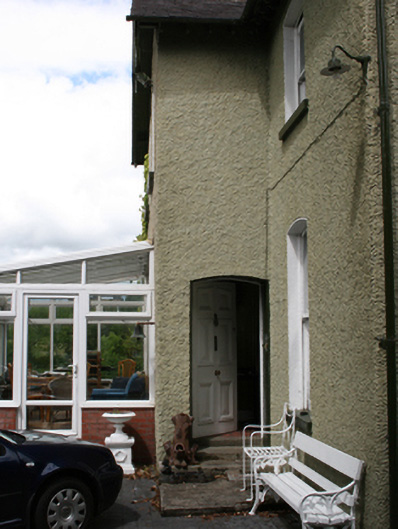
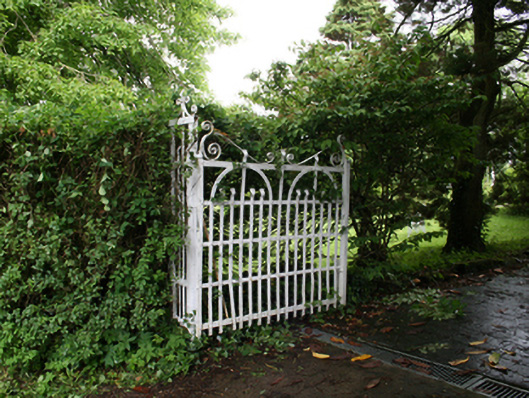
Detached three-bay two-storey house, built 1874, with advanced two-bay gable-front,canted bay of brick to garden front, four-bay two-storey return to rear and recent conservatory. Pitched slate roof with overhanging eaves having timber brackets and decorative punched barge board in truss form to gables, roof hipped over canted bay, cast-iron rainwater goods. Roughcast rendered walls, with red brick to canted bay, having cut-stone string courses at ground and first floor cills over rendered plinth. Segmental-headed window openings with limestone cills and two-over-two sliding sash windows. One-over-one sash windows to angled side-lights in canted bay. Trellised oriel window to second bay of first floor on carved timber brackets. Segmental-headed door in return side of projecting gable with six raised panels having bolection mouldings, opening onto sandstone threshold steps. Double-leaf decorative wrought-iron gates entrance gates.
Appraisal
A Victorian country house of modest scale retaining most of its original exterior features. The house is characteristic of a house type normally found in suburban locations typified by a blend of materials, in this case brick and roughcast render, with decorative timber details including an unusual oriel window to the stairs. The setting of the house on a rise of ground adds to its picturesque character. According to the current owner, the house was built by Thomas Lough who was involved in the establishment of Killeshandra Co-Op and was also an MP for the county. It was subsequently owned by the Finlays, also involved in the co-op, and family of the Fr. Finlay who was given Caravaggio's Supper at Emmaus in Milltown, Co. Dublin.