Survey Data
Reg No
31312139
Rating
Regional
Categories of Special Interest
Architectural, Artistic, Historical, Social
Original Use
Church/chapel
In Use As
Church/chapel
Date
1950 - 1960
Coordinates
123564, 256041
Date Recorded
17/12/2010
Date Updated
--/--/--
Description
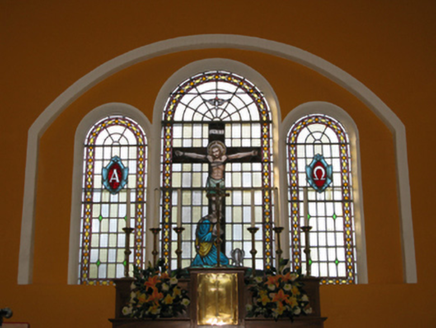
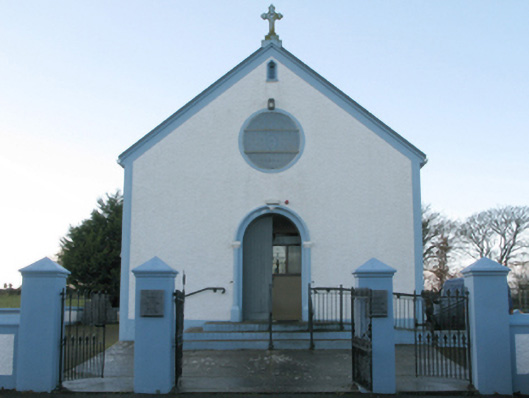
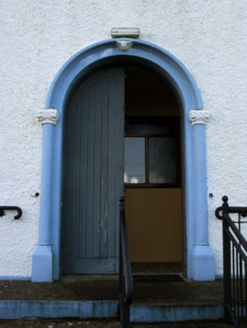
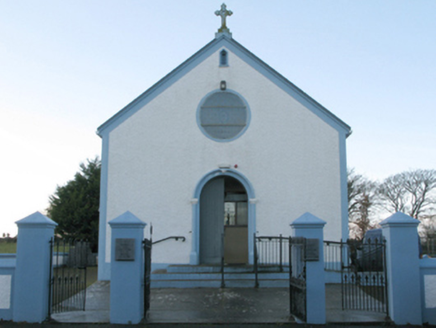
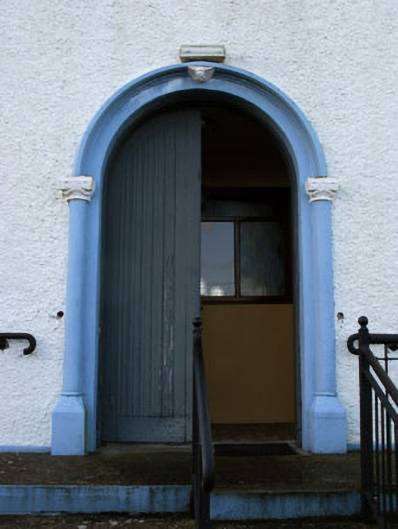
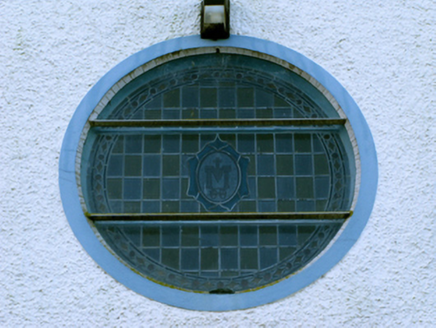
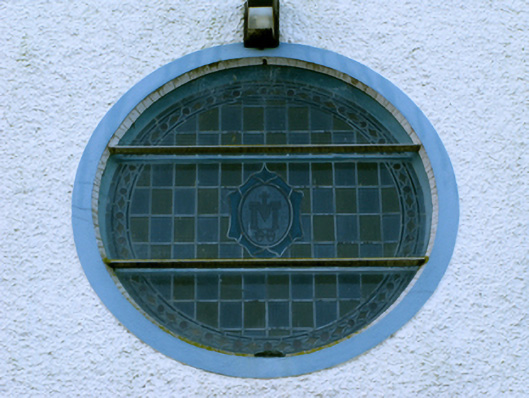
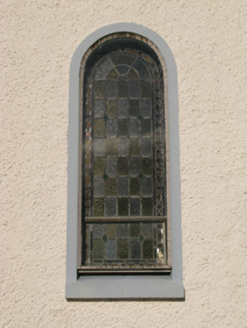
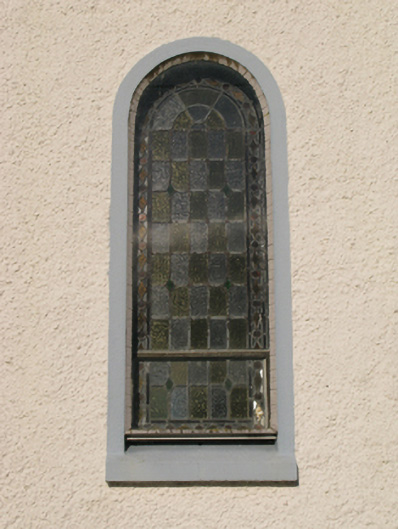
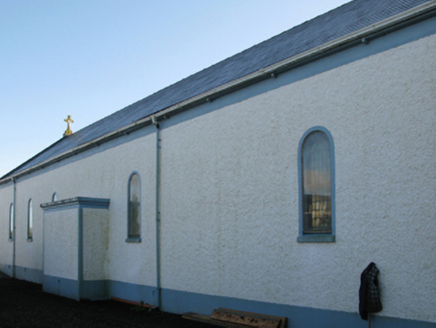
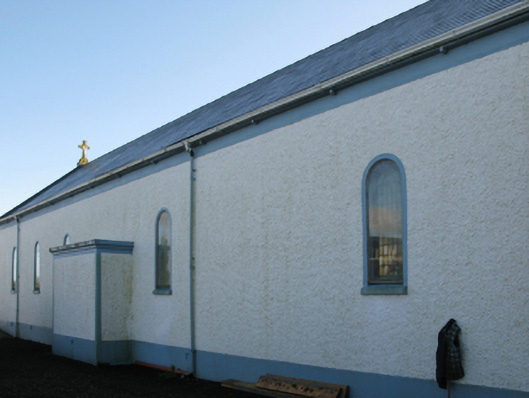
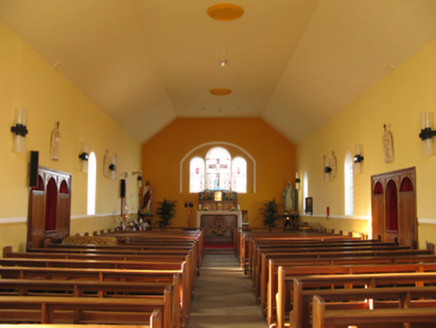
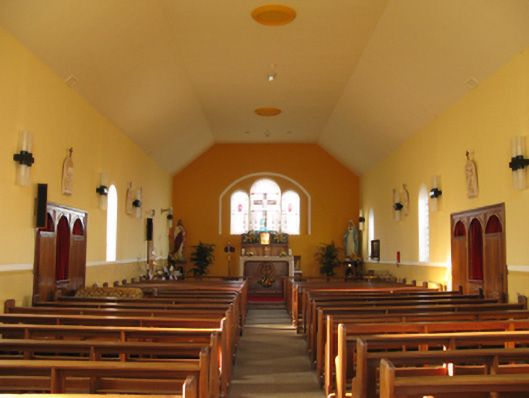
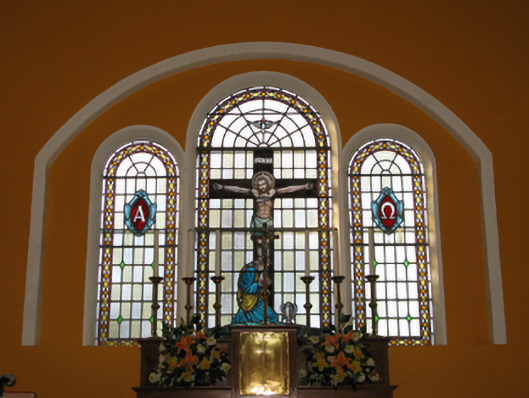
Detached six-bay double-height single-cell Catholic church, dated 1955. Reroofed. Replacement pitched slate roof with ridge tiles, iron-covered concrete "Cavetto" coping to gables with Cross finials to apexes, and uPVC rainwater goods on rendered eaves on dentil consoles retaining cast-iron downpipes. Roughcast walls on rendered plinth with rendered strips to corners supporting rendered band to eaves. Round-headed window openings with concrete sills, and rendered surrounds framing storm glazing over fixed-pane fittings having leaded stained glass margins centred on square leaded glazing bars. Round-headed "Trinity Window" to chancel (west) with concrete sill, and rendered surround framing storm glazing over fixed-pane fittings having leaded stained glass margins centred on leaded stained glass panels. Round-headed door opening to entrance (east) front approached by flight of three concrete steps, doorcase with three quarter-engaged Romanesque colonettes on plinths supporting archivolt framing timber boarded or tongue-and-groove timber panelled double doors. "Rose Window" to gable with rendered surround framing storm glazing over fixed-pane fitting having leaded stained glass margins centred on leaded stained glass "lozenge". Interior including vestibule (east); full-height interior with stained glass "Rose Window" (east), carpeted central aisle between timber pews, frosted glass windows centred on timber confessionals, carpeted stepped dais to sanctuary (west) retaining timber communion railings centred on stepped "predella" supporting inlaid timber altar below stained glass "Trinity Window" (undated), and vaulted ceiling with moulded plasterwork roundels. Set in own grounds with rendered piers to perimeter having pyramidal capping supporting "Fleur-de-Lys"-detailed wrought iron double gates.
Appraisal
A church representing an integral component of the mid twentieth-century ecclesiastical heritage of south County Mayo with the architectural value of the composition suggested by such attributes as the rectilinear "barn" plan form, aligned along an inverted liturgically-correct axis; and the slender profile of the openings underpinning a streamlined Romanesque theme with the chancel defined by an elegant "Trinity Window". Having been well maintained, the elementary form and massing survive intact together with substantial quantities of the original fabric, both to the exterior and to the restrained interior, thereby upholding the character or integrity of a church making a pleasing visual statement in a rural street scene.