Survey Data
Reg No
31311813
Rating
Regional
Categories of Special Interest
Architectural, Historical, Social
Original Use
Farm house
Date
1700 - 1838
Coordinates
126505, 263761
Date Recorded
24/11/2010
Date Updated
--/--/--
Description
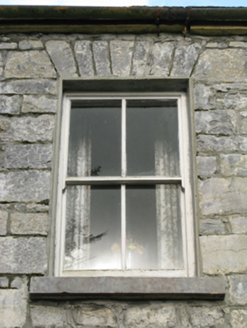
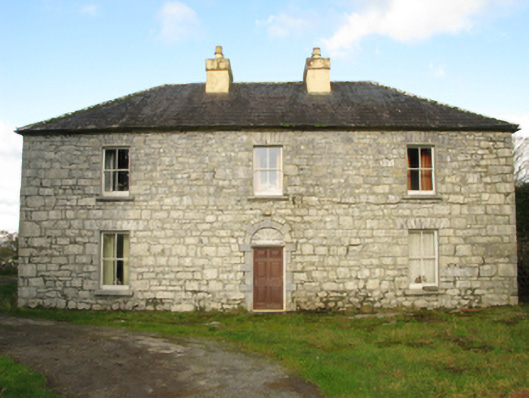
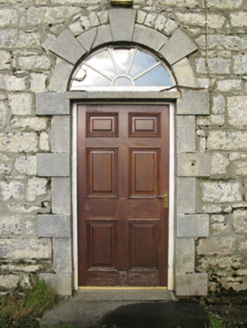
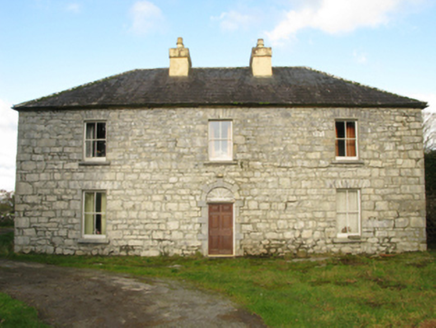
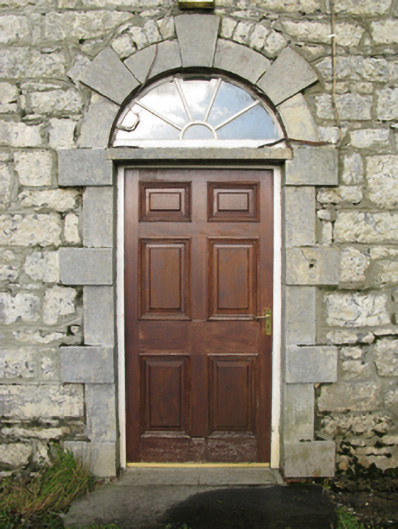
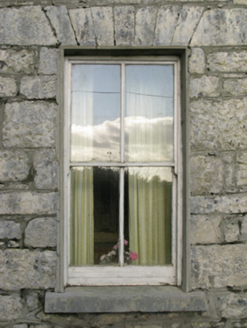
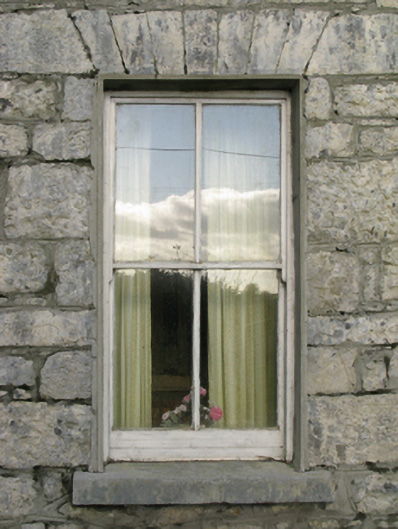
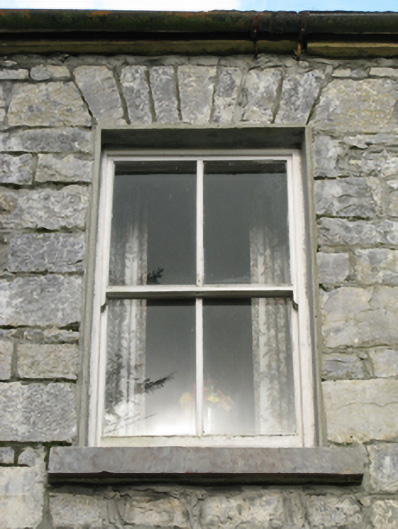
Detached three-bay two-storey farmhouse, extant 1838, on a rectangular plan. Renovated. Now disused[?]. Hipped slate roof with lichen-covered clay ridge tiles, paired rendered central chimney stacks having rendered capping supporting yellow terracotta tapered pots, and cast-iron rainwater goods on cut-limestone eaves. Repointed coursed rubble limestone battered wall to front (south) elevation originally fine roughcast with tooled hammered limestone flush quoins to corners; part creeper- or ivy-covered fine roughcast surface finish (remainder). Segmental-headed central door opening with cut-limestone threshold, and drag edged dragged cut-limestone block-and-start surround centred on keystone framing replacement timber panelled door having fanlight. Square-headed window openings with drag edged dragged cut-limestone sills, and cut- or hammered limestone voussoirs framing two-over-two timber sash windows. Set in unkempt grounds.
Appraisal
A farmhouse representing an integral component of the domestic built heritage of south County Mayo with the architectural value of the composition, one sometimes known as "Carravilla" (Parliamentary Gazetteer 1846 III, 193) or "Carraville" (Lewis 1837 II, 67), confirmed by such attributes as the compact rectilinear plan form centred on a restrained doorcase not only demonstrating good quality workmanship, but also retaining a pretty radial fanlight; and the disproportionate bias of solid to void in the massing compounded by the slight diminishing in scale of the openings on each floor producing a feint graduated visual impression. Having been reasonably well maintained, the elementary form and massing survive intact together with substantial quantities of the original fabric, both to the exterior and to the interior: the recent removal of the surface finish, however, has not had a beneficial impact on the character or integrity of a farmhouse having historic connections with the Fair family including Robert Fair (ibid., 67); and the Ruttledge family including William Edward Ruttledge JP (d. 1940), 'Farmer' (NA 1911).