Survey Data
Reg No
31311119
Rating
Regional
Categories of Special Interest
Architectural, Artistic, Historical, Social
Original Use
Church/chapel
In Use As
Church/chapel
Date
1825 - 1830
Coordinates
133863, 270996
Date Recorded
10/12/2010
Date Updated
--/--/--
Description
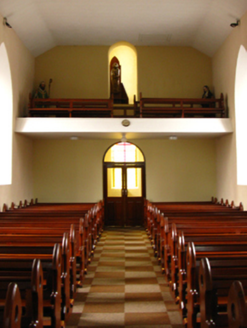
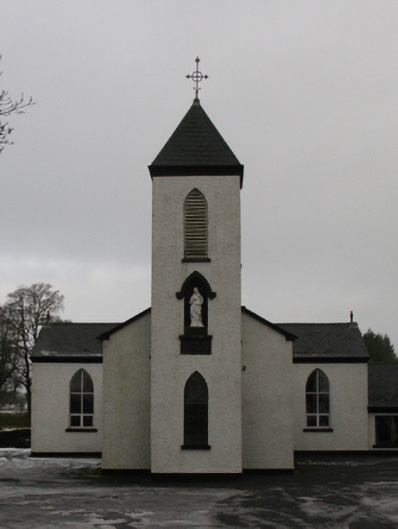
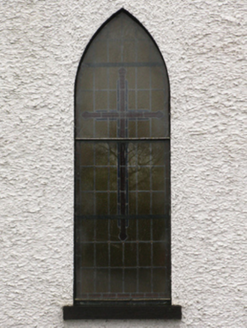
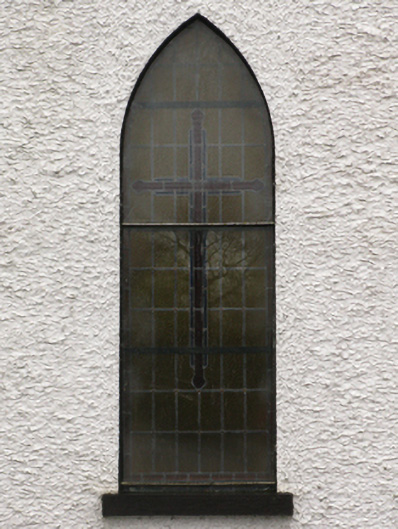
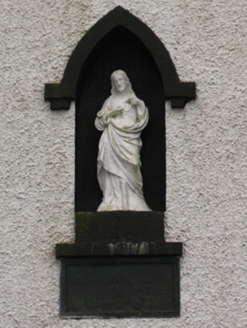
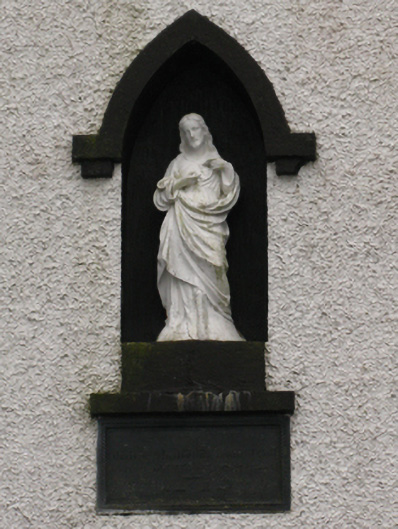
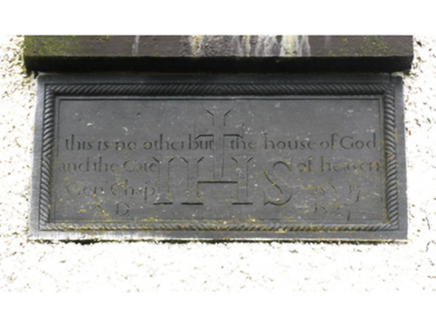
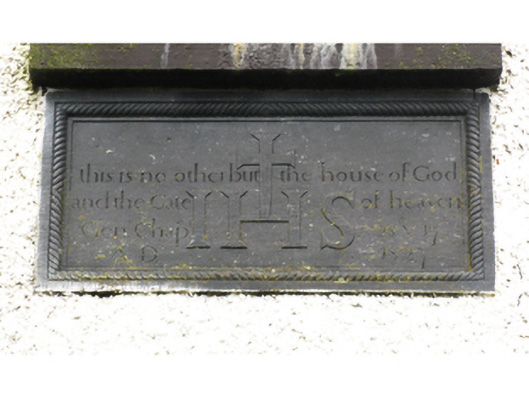
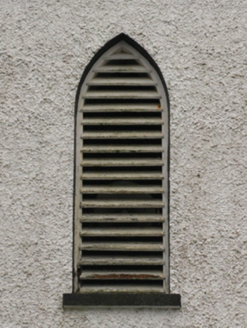
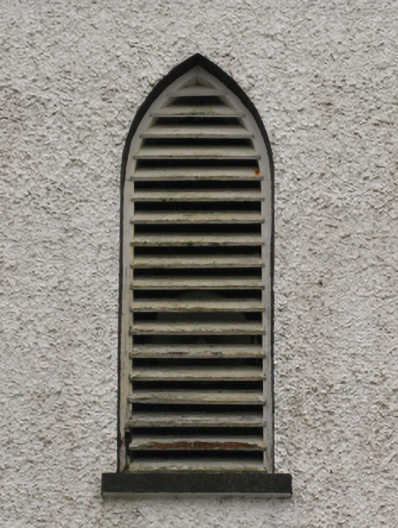
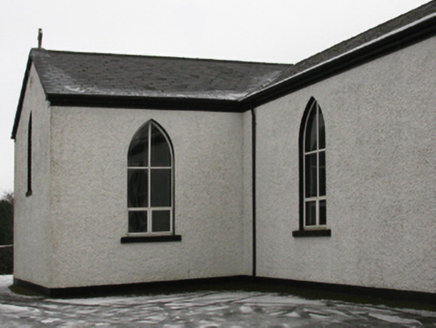
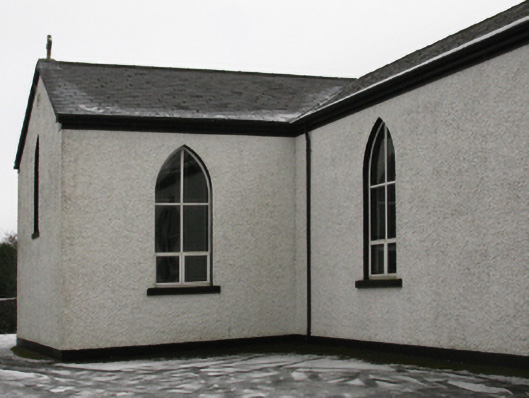
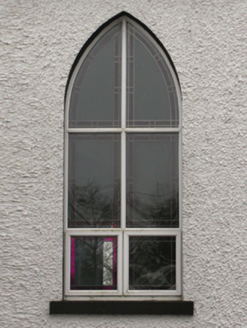
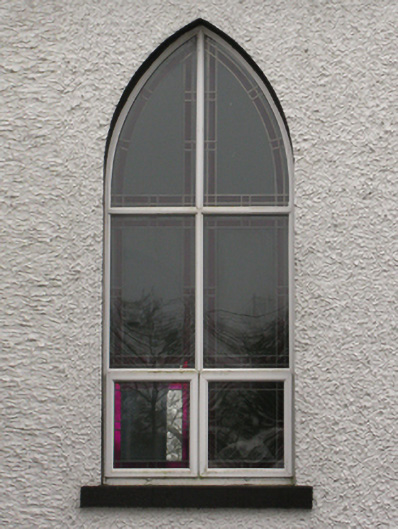
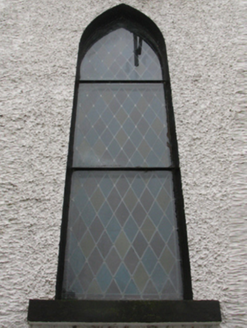
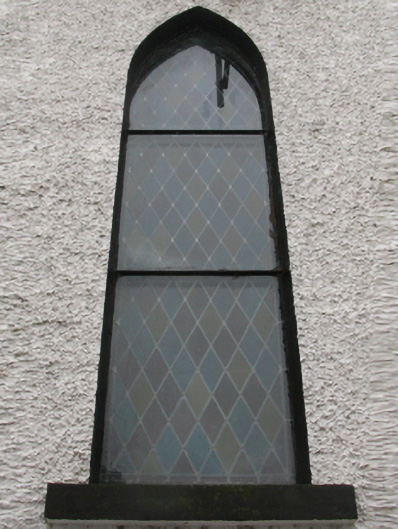
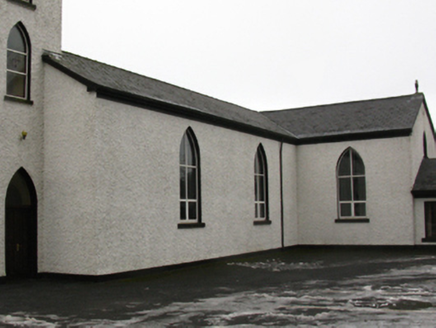
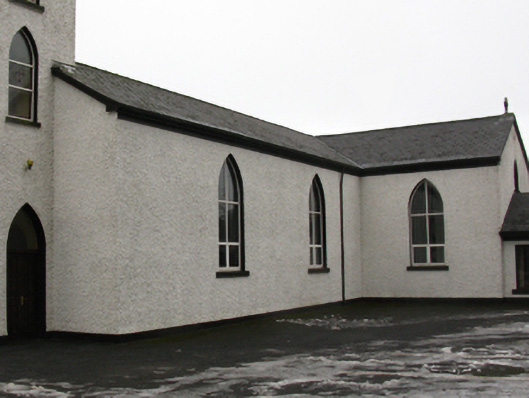
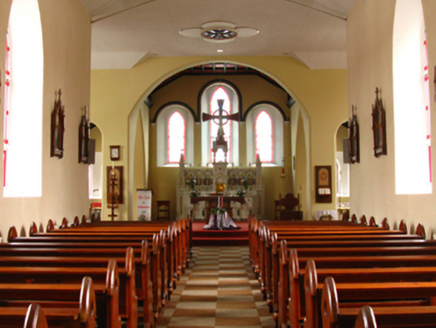
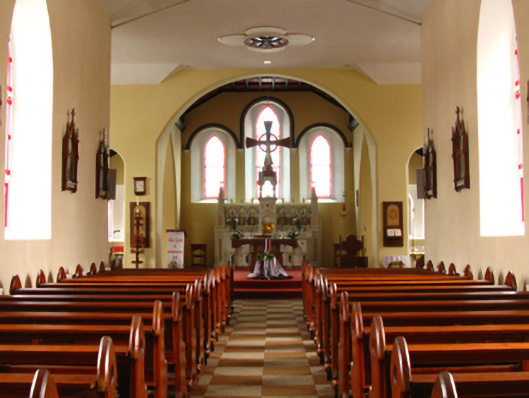
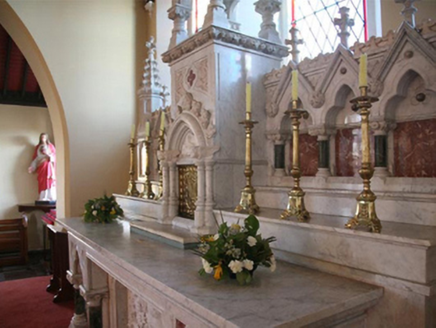
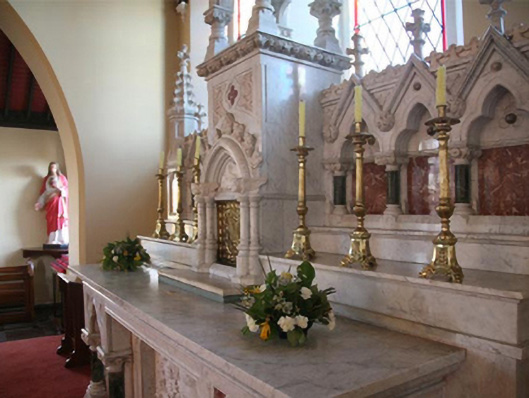
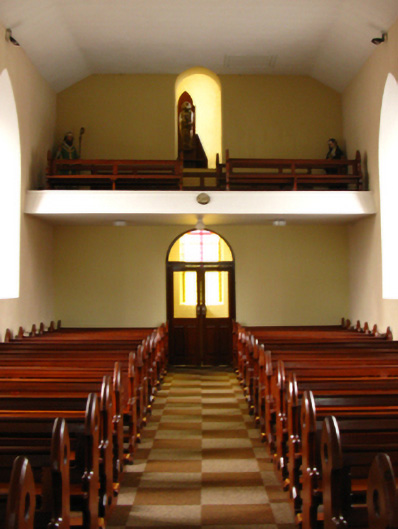
Detached four-bay double-height Catholic church, built 1826-7; dated 1827; extant 1838, on a cruciform plan comprising two-bay double-height nave opening into single-bay (single-bay deep) double-height transepts centred on single-bay double-height chancel to crossing (east) with single-bay three-stage tower to entrance (west) front on a square plan. "Improved", 1898, producing present composition. Extensively renovated, 1988, with sanctuary reordered. Replacement pitched artificial slate roof on a cruciform plan with ridge tiles terminating in cut-limestone Celtic Cross finials to apexes, and uPVC rainwater goods on timber eaves boards on rendered eaves. Roughcast walls on rendered plinth. Pointed-arch window openings with concrete sills, and concealed dressings framing replacement fixed-pane uPVC fittings having stained glass margins. Lancet "Trinity Window" to chancel (east) with concrete sills, and concealed dressings framing storm glazing over fixed-pane fittings having stained glass margins centred on lattice glazing bars. Lancet window opening to tower (first stage) with concrete sill, and concealed dressings framing storm glazing over fixed-pane fitting having stained glass margins centred on square leaded glazing bars. Pointed-arch opposing door openings to "cheeks" with concealed dressings framing replacement timber panelled double doors having overlights. Lancet window openings (second stage) centred on lancet niche on rope twist-detailed drag edged cut-limestone date stone ("1827") with concrete sills, and concealed dressings framing replacement fixed-pane uPVC fittings having stained glass margins. Lancet openings (bell stage) with concrete sills, and concealed dressings framing louvered timber fittings. Interior including vestibule (west); round-headed door opening into nave with glazed timber panelled double doors having overlight; full-height interior with carpet tiled central aisle between timber pews, paired Gothic-style timber stations, carpeted stepped dais to sanctuary to crossing (east) reordered, 1988, with segmental-headed chancel arch framing cut-veined white marble Gothic-style reredos below "Trinity Window", and vaulted timber boarded ceiling in carved timber frame on carved timber cornice. Set in relandscaped grounds.
Appraisal
A church erected by Reverend Andrew Gavin PP (d. 1845; fl. 1821-45) representing an integral component of the early nineteenth-century ecclesiastical heritage of south County Mayo with the architectural value of the composition, one showing the hallmarks of a period of construction coinciding with the dismantling of the Penal Laws under the Roman Catholic Relief Act, 1829, confirmed by such attributes as the cruciform plan form, aligned along a liturgically-correct axis; and the "pointed" profile of the openings underpinning a streamlined Georgian Gothic theme with the chancel defined by an elegant "Trinity Window": meanwhile, a comparison of the second (surveyed 1893; published 1896) and third (surveyed 1925; published 1930) editions of the Ordnance Survey clearly illustrates the continued development or "improvement" of the church at the turn of the twentieth century with those works including the pyramid-topped slender tower completed to a design by James Purcell Wrenn (1872-1955) of Great Brunswick Street [Pearse Street], Dublin (IAA). Having been well maintained, the elementary form and massing survive intact together with quantities of the original fabric, both to the exterior and to the interior reordered (1988) in accordance with the liturgical reforms sanctioned by the Second Ecumenical Council of the Vatican (1962-5) where contemporary joinery; and a "flèche"-topped reredos, all highlight the artistic potential of a church making a pleasing visual statement in a rural village setting.