Survey Data
Reg No
31310304
Rating
Regional
Categories of Special Interest
Architectural, Artistic, Historical, Social, Technical
Original Use
Church/chapel
In Use As
Church/chapel
Date
1835 - 1840
Coordinates
147810, 273499
Date Recorded
13/01/2011
Date Updated
--/--/--
Description
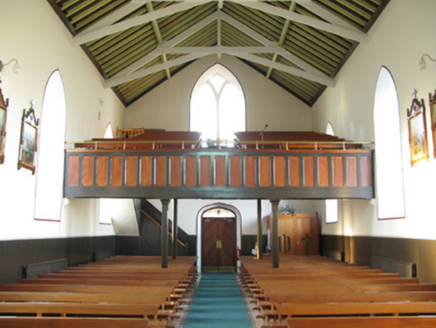
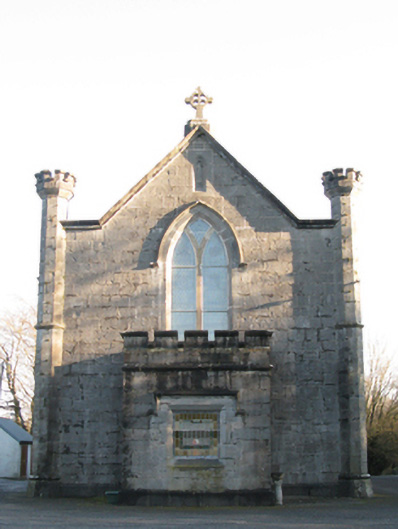
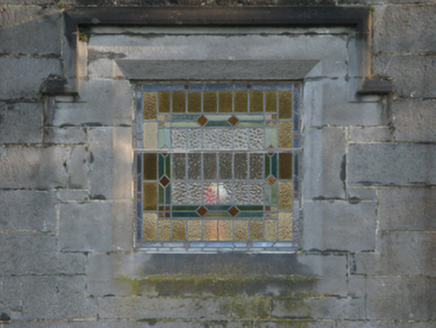
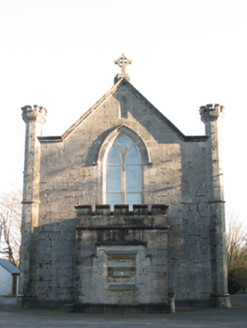
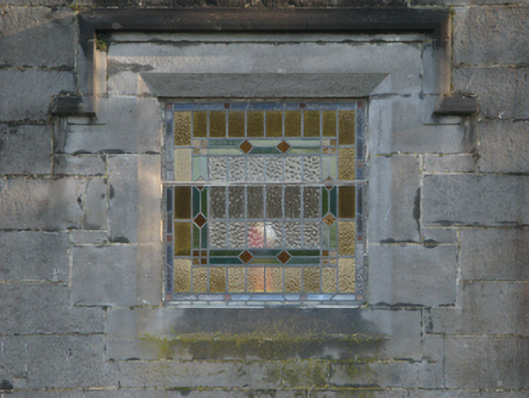
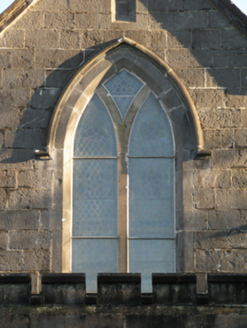
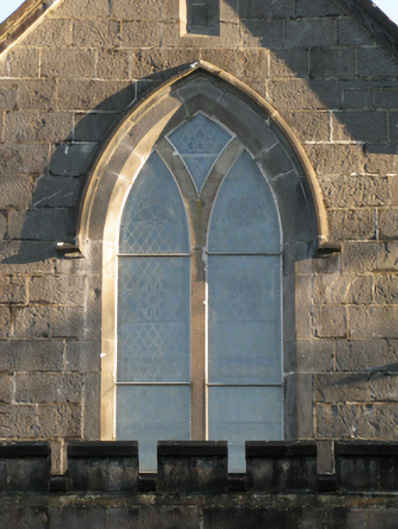
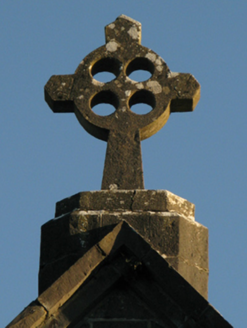
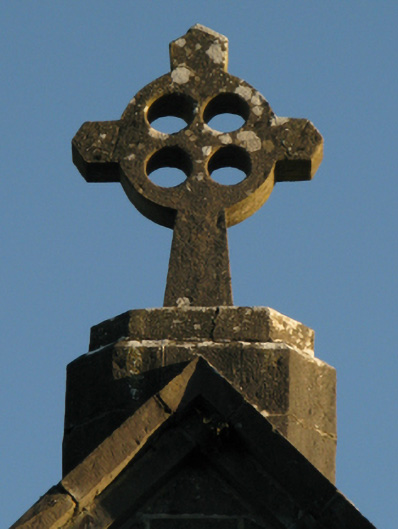
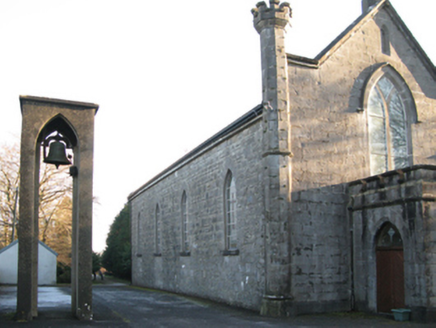
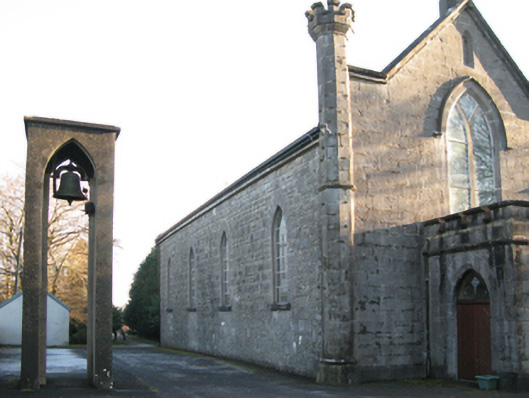
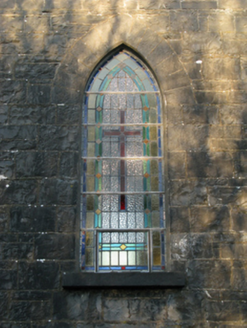
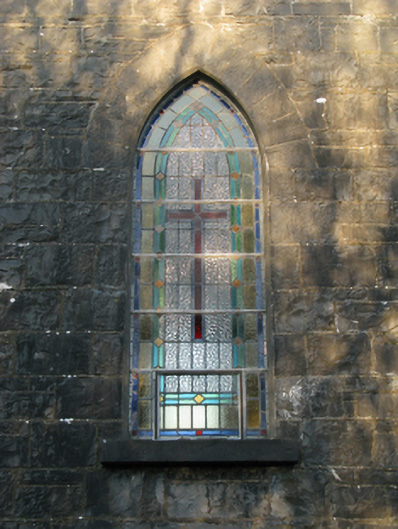
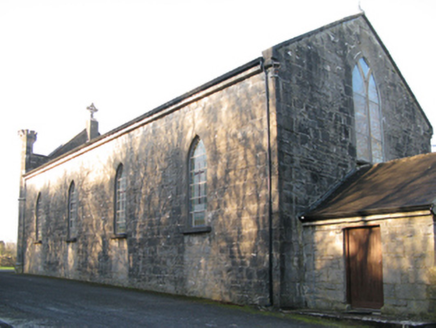
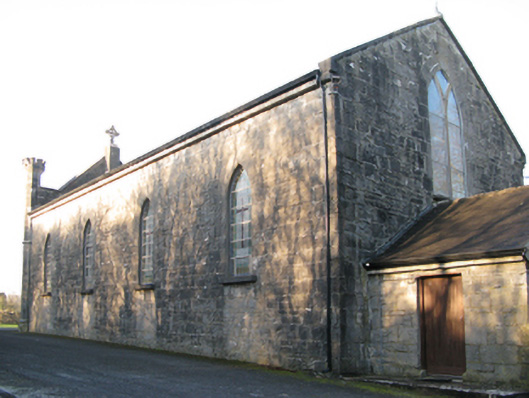
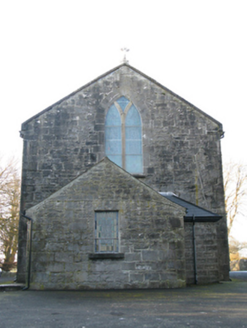
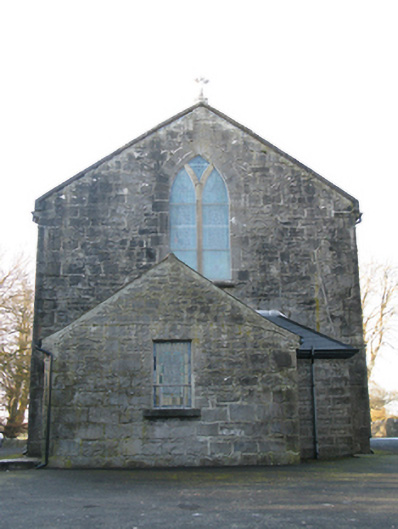
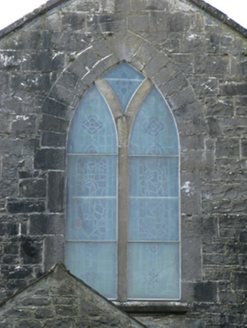
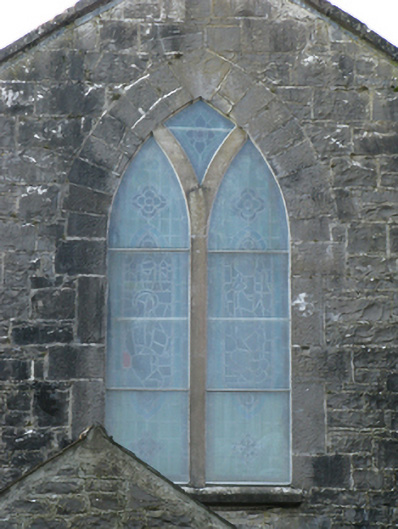
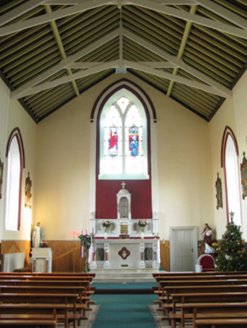
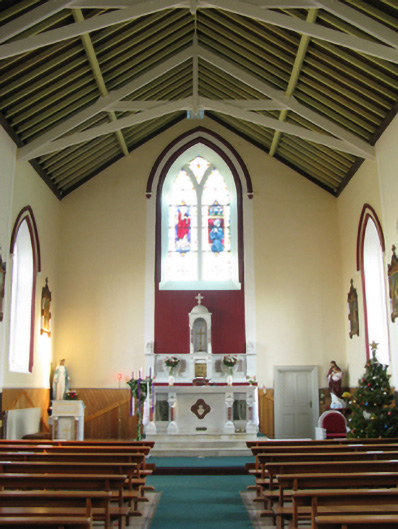
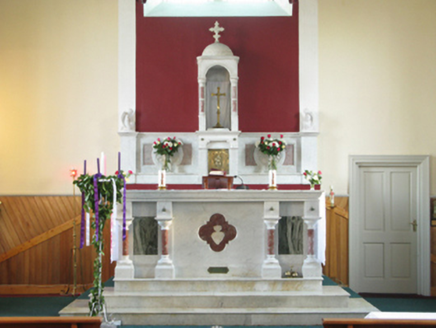
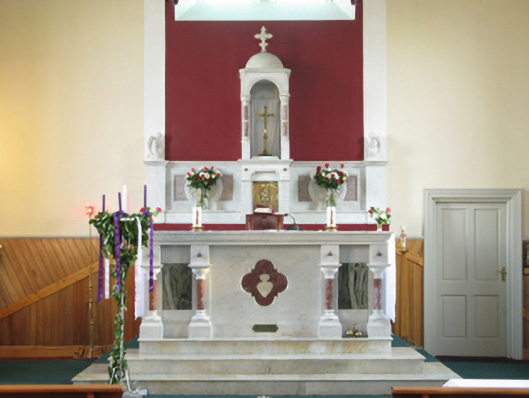
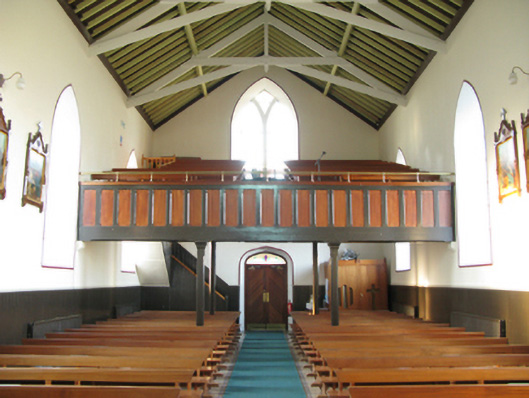
Detached four-bay double-height single-cell Catholic church, dated 1837; built 1839[?], with single-bay single-storey flat-roofed projecting porch to entrance (west) front on a square plan. Renovated, 1884-5, with interior "improved". Renovated, ----, with sanctuary reordered. Pitched slate roof with ridge tiles, dragged cut-limestone coping to gables including dragged cut-limestone stepped coping to gable to entrance (west) front with lichen-covered Celtic Cross finial to apex, and replacement uPVC rainwater goods on timber eaves boards on dragged cut-limestone eaves retaining cast-iron downpipes. Tuck pointed drag edged tooled limestone ashlar wall to entrance (west) front on drag edged tooled cut-limestone chamfered plinth with drag edged tooled limestone ashlar battlemented octagonal piers to corners; tuck pointed coursed or snecked limestone walls (remainder) on battered base with tooled cut-limestone flush quoins to corners. Pointed-arch window openings with drag edged dragged cut-limestone sills, and tooled limestone ashlar voussoirs framing fixed-pane fittings having stained glass margins centred on square leaded glazing bars. Pointed-arch window opening to chancel (east) with lichen-covered cut-limestone sill, Y-mullion, and drag edged tooled cut-limestone block-and-start surround framing storm glazing over fixed-pane fittings having stained glass margins centred on leaded stained glass panels. Pointed-arch window opening to entrance (west) front with Y-mullion, and drag edged tooled cut-limestone block-and-start surround having chamfered reveals with hood moulding over framing storm glazing over fixed-pane fittings having stained glass margins centred on leaded stained glass pierced quatrefoils. Square-headed window opening to porch, drag edged tooled cut-limestone block-and-start surround having chamfered reveals with hood moulding over framing fixed-pane fittings having stained glass margins centred on square leaded glazing bars. Pointed-arch opposing door openings with dragged edged tooled cut-limestone block-and-start surrounds having chamfered reveals framing replacement diagonal timber boarded or tongue-and-groove timber panelled double doors having overlights. Interior including vestibule (west); Tudor-headed door opening into nave with replacement diagonal timber boarded or tongue-and-groove timber panelled double doors having overlight; full-height interior open into roof "improved", 1884-5, with timber panelled choir gallery (west) on chamfered timber posts below stained glass "West Window" (undated), carpeted central aisle between replacement timber pews, timber boarded or tongue-and-groove timber panelled wainscoting supporting carved timber dado rail, paired Gothic-style timber stations between frosted glass windows, carpeted stepped dais to sanctuary (east) reordered, ----, with cut-veined white marble stepped "predella" supporting pierced quatrefoil-detailed memorial altar (undated) below stained glass "East Window" (undated), and exposed collared timber roof construction with wind braced rafters to timber boarded ceiling. Set in landscaped grounds.
Appraisal
A church erected under the aegis of Reverend Eugene [Owen] Coyne CC (d. 1866), and on a site donated by E.J. Nolan of Lugboy House (Bengal Catholic Expositor 1840, 55), regarded as an important component of the nineteenth-century ecclesiastical heritage of south County Mayo with the architectural value of the composition confirmed by such attributes as the rectilinear "barn" plan form, aligned along a liturgically-correct axis; the construction in a "sparrow pecked" deep grey limestone demonstrating good quality workmanship; the "pointed" profile of the openings underpinning a contemporary Georgian Gothic theme; and the toy fortifications embellishing the roofline as picturesque eye-catchers in the landscape. Having been well maintained, the elementary form and massing survive intact together with quantities of the historic or original fabric, both to the exterior and to the restrained interior "improved" (1884-5) by Reverend James Waldron (????) and thereafter reordered (----) in accordance with the liturgical reforms sanctioned by the Second Ecumenical Council of the Vatican (1962-5): meanwhile, an exposed roof construction pinpoints the engineering or technical dexterity of a church making a pleasing visual statement in a sylvan setting.