Survey Data
Reg No
31310030
Rating
Regional
Categories of Special Interest
Architectural, Historical, Social
Original Use
Farm house
Date
1700 - 1838
Coordinates
124902, 273790
Date Recorded
11/01/2011
Date Updated
--/--/--
Description
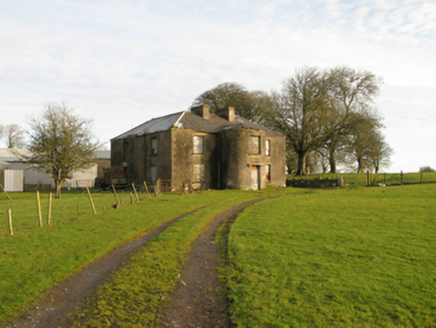
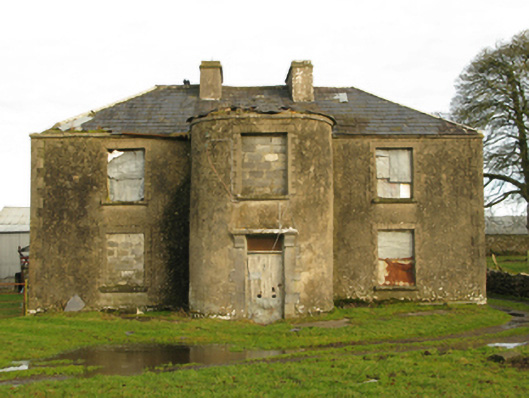
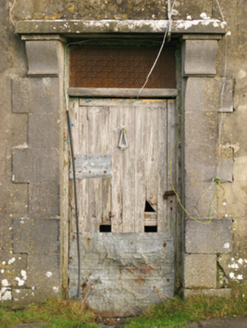
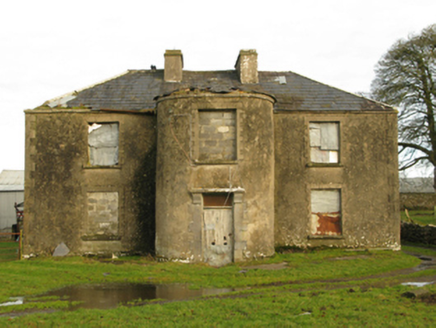
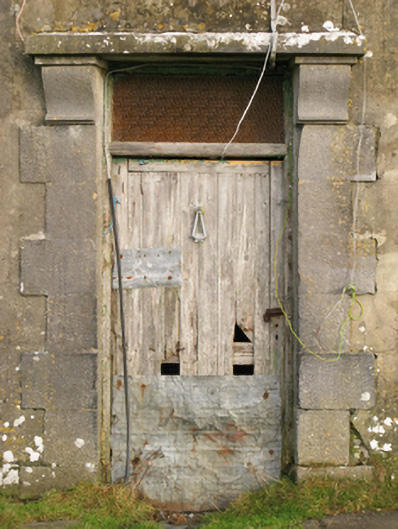
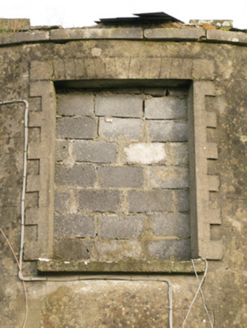
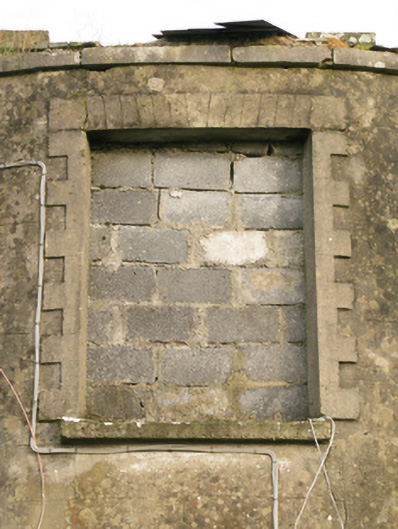
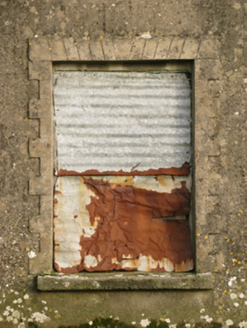
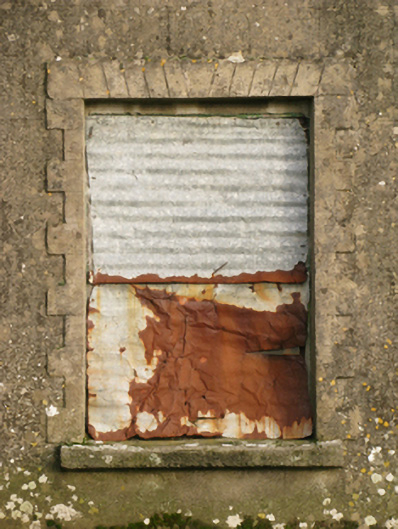
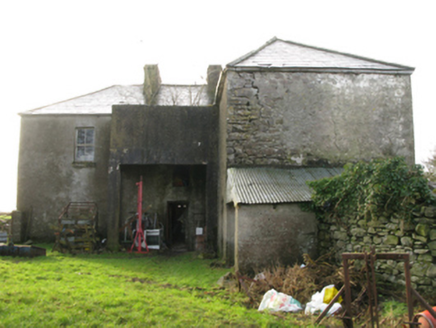
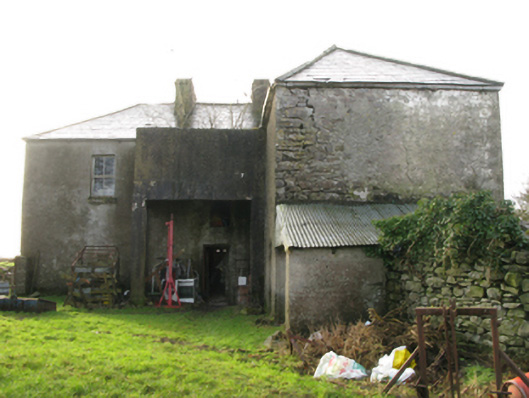
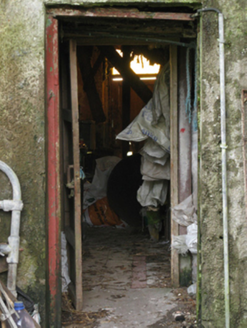
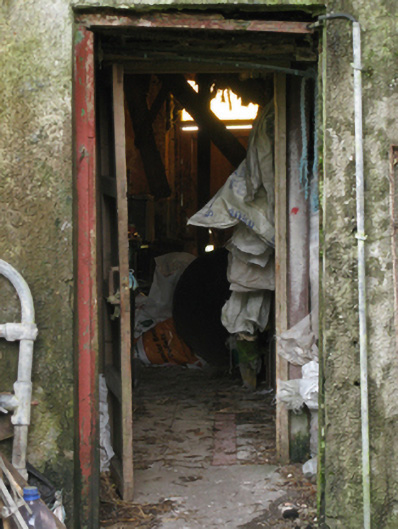
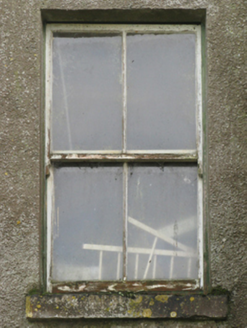
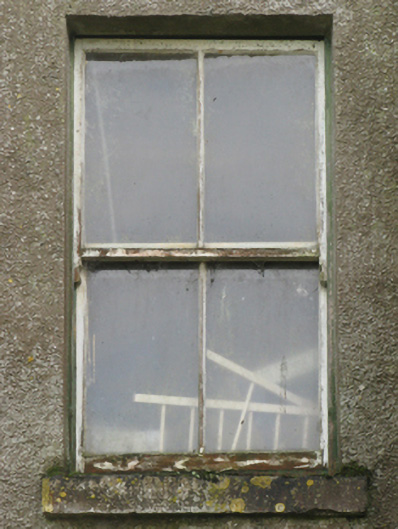
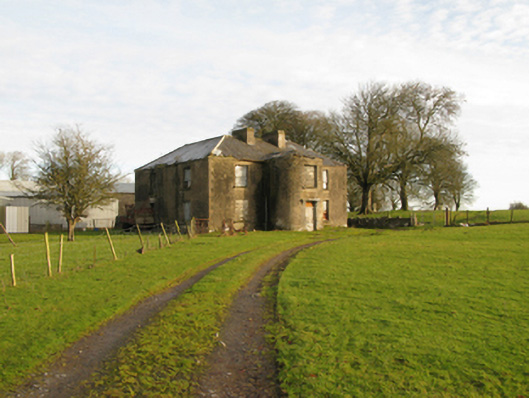
Detached three-bay two-storey farmhouse, extant 1838, on an L-shaped plan centred on single-bay full-height breakfront on an elliptical bowed plan with two-bay (west) or single-bay (east) two-storey side elevations. Vacant, 1911. Sold, 1941[?]. Vacant, 1996. Now disused. Hipped slate roof on an L-shaped plan on collared timber construction centred on half-conical slate roof with clay ridge tiles, paired rendered central chimney stacks having cut-limestone stringcourses below capping, and remains of cast-iron rainwater goods on cut-limestone eaves. Rendered, ruled and lined walls to front (south) elevation on battered base with rendered "bas-relief" quoins to corners; fine roughcast surface finish (remainder). Square-headed central door opening with drag edged tooled cut-limestone block-and-start surround supporting monolithic cornice on consoles framing timber boarded door having overlight. Square-headed window openings with drag edged dragged cut-limestone sills, and rendered "bas-relief" block-and-start surrounds to front (south) elevation framing concrete block infill with concealed dressings (remainder) framing two-over-two timber sash windows. Interior including (ground floor): central entrance hall retaining timber surrounds to door openings framing timber panelled doors. Set in unkempt grounds with lichen-covered cut-limestone monolithic piers to perimeter supporting spear head-detailed flat iron double gates.
Appraisal
A dilapidated farmhouse representing an integral component of the domestic built heritage of south County Mayo with the architectural value of the composition suggested by such traits as the compact plan form centred on a curvilinear breakfront showing a "sparrow pecked" doorcase demonstrating good quality workmanship; and the uniform or near-uniform proportions of the openings on each floor. A prolonged period of unoccupancy or neglect notwithstanding, the elementary form and massing survive intact together with quantities of the original fabric, both to the exterior and to the interior, thereby upholding much of the character or integrity of the composition. Furthermore, adjacent outbuildings (extant 1894); and an untended walled garden (extant 1838), all continue to contribute positively to the group and setting values of a self-contained ensemble having historic connections with the Brannick family including William Brunach [sic] (Lewis 1837 II, 517); and the Ruttledge family of nearby Togher including James Peter Ruttledge (d. 1876), later of Melbourne, Australia.