Survey Data
Reg No
31309901
Rating
Regional
Categories of Special Interest
Architectural, Historical, Social
Original Use
Garda station/constabulary barracks
Historical Use
House
Date
1870 - 1875
Coordinates
108683, 277558
Date Recorded
07/03/2011
Date Updated
--/--/--
Description
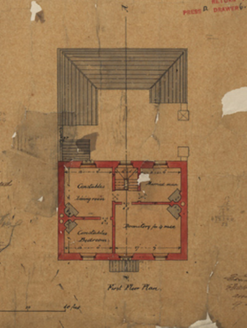
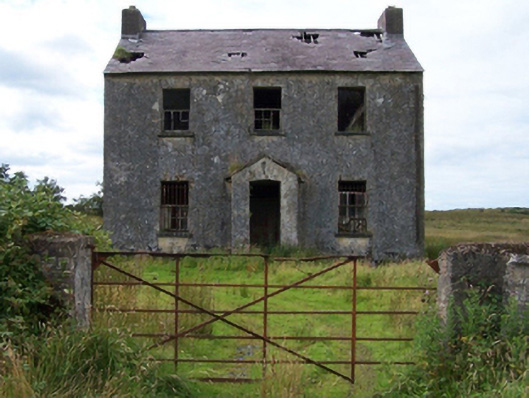
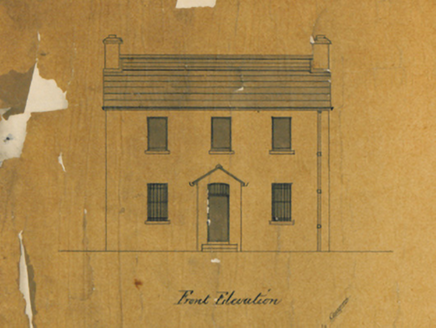
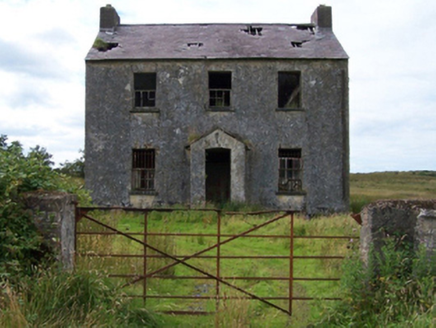
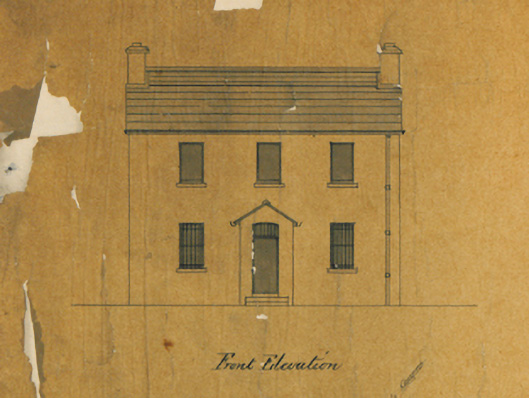
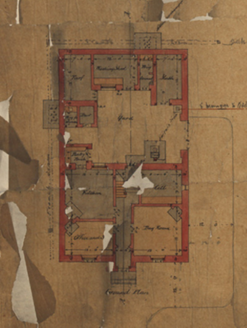
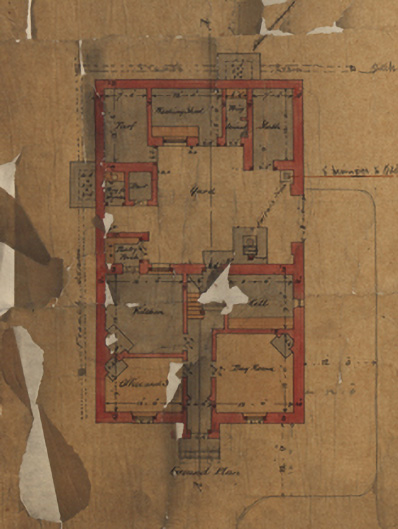
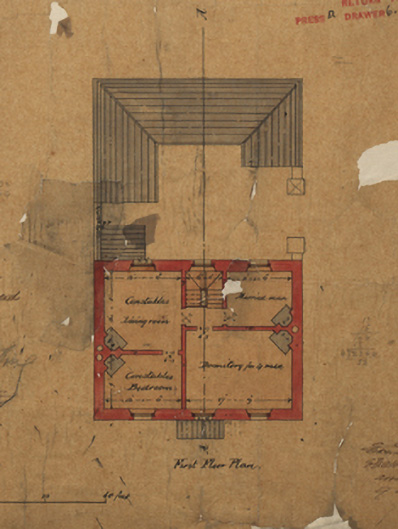
Detached three-bay two-storey constabulary barrack, designed 1873; built 1873-4; opened 1874, on a T-shaped plan centred on single-bay single-storey gabled advanced porch to ground floor. Occupied, 1901; 1911. Vacated, 1921. Leased, 1931. Now disused. Pitched slate roofs on collared timber construction including pitched (gabled) slate roof (porch), clay ridge tiles, red brick Running bond chimney stacks having chamfered capping supporting terracotta or yellow terracotta pots, and remains of cast-iron rainwater goods on exposed timber rafters retaining cast-iron downpipes. Roughcast walls. Camber-headed central door opening with overgrown threshold, and concealed red brick voussoirs framing remains of timber fittings. Square-headed window openings with drag edged dragged cut-limestone sills, and concealed red brick block-and-start surrounds framing six-over-six timber sash windows behind wrought iron bars. Set in unkempt grounds with rendered piers to perimeter supporting flat iron "farm gate".
Appraisal
A constabulary barrack erected to designs examined (1873) by Enoch Trevor Owen (c.1833-81), Assistant Architect to the Board of Public Works (appointed 1863), representing an important component of the later nineteenth-century built heritage of County Mayo with the architectural value of the composition, one recalling the contemporary Kilmovee Constabulary Barrack (1873-4), Kilmovee (see 31307305), confirmed by such attributes as the compact rectilinear plan form centred on a windbreak-like porch; and the very slight diminishing in scale of the openings on each floor producing a feint graduated visual impression. A prolonged period of neglect notwithstanding, the form and massing survive intact together with substantial quantities of the original fabric, both to the exterior and to the interior, thus upholding much of the character or integrity of a constabulary barrack making a picturesque, if increasingly forlorn visual statement in a somewhat bleak rural setting.