Survey Data
Reg No
31308903
Rating
Regional
Categories of Special Interest
Architectural, Historical, Social
Original Use
Hunting/fishing lodge
Historical Use
Farm house
Date
1814 - 1838
Coordinates
108242, 281111
Date Recorded
23/11/2010
Date Updated
--/--/--
Description
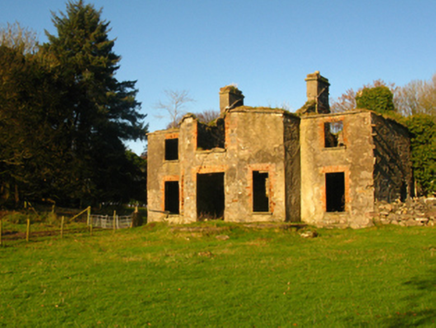
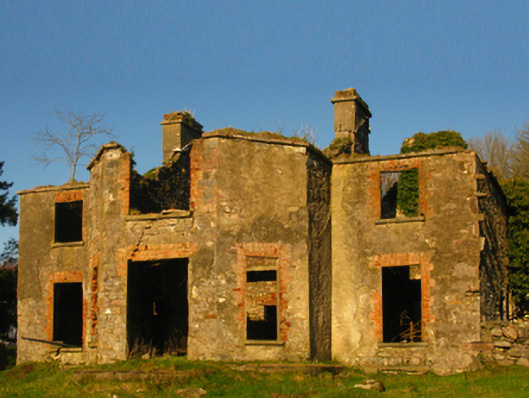
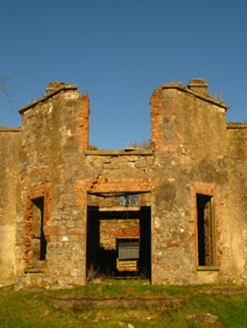
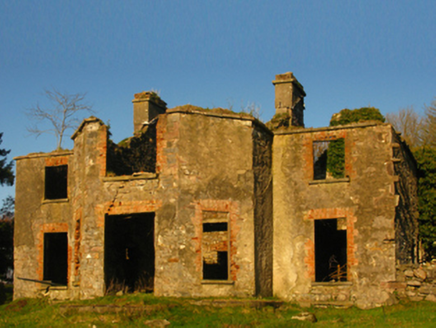
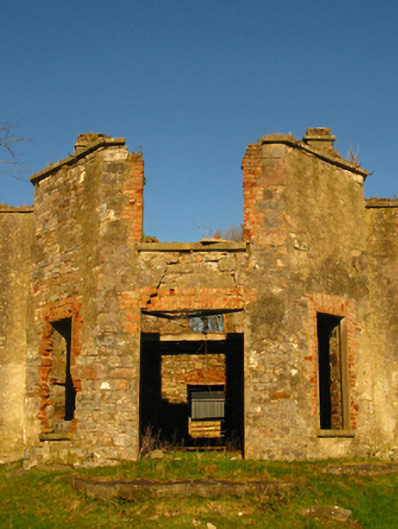
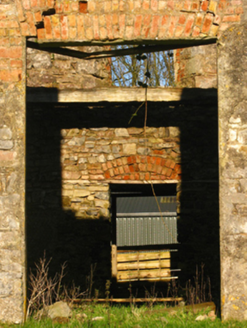
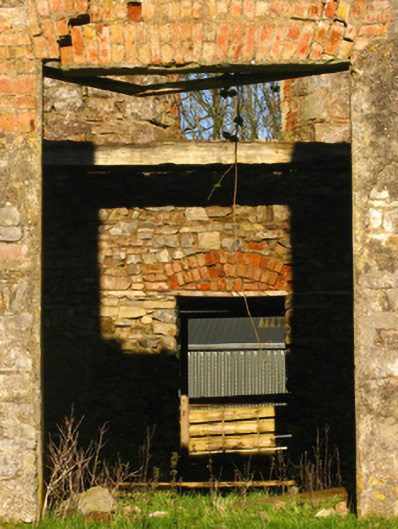
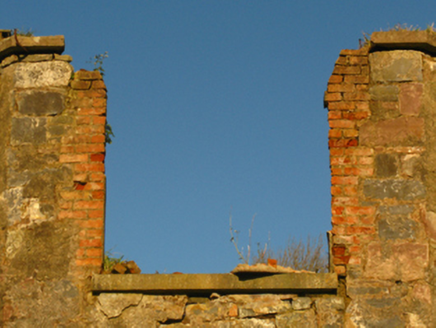
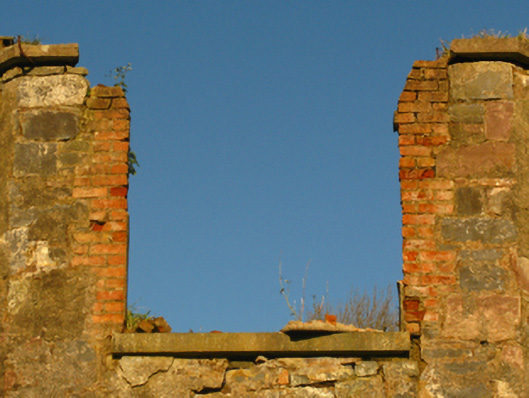
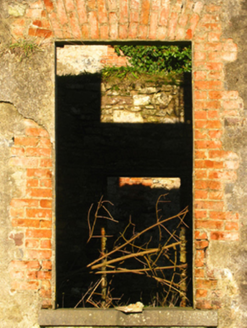
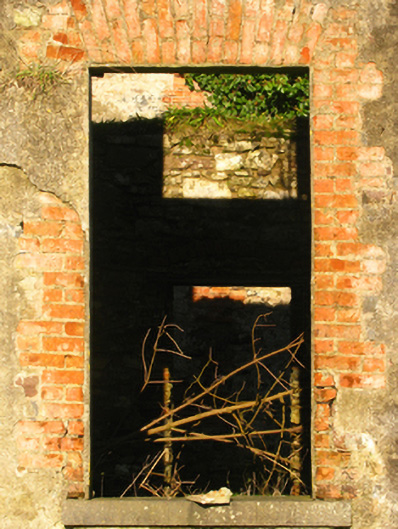
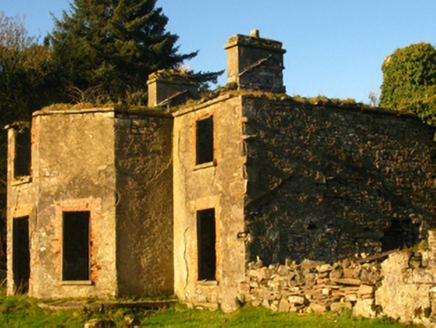
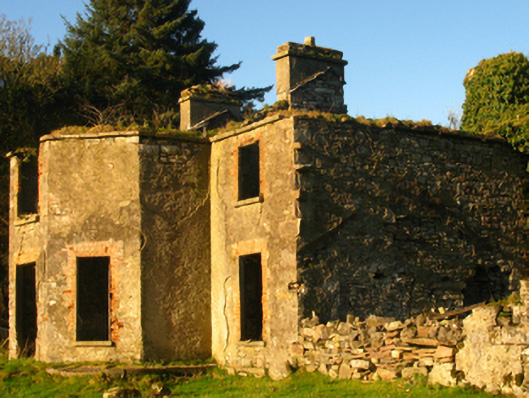
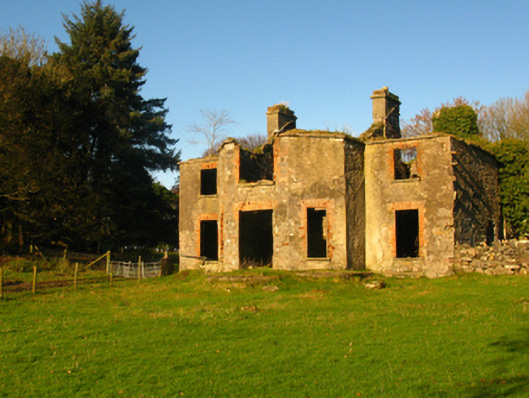
Detached three-bay two-storey sporting lodge, extant 1838, on an L-shaped plan centred on single-bay full-height breakfront on a half-octagonal plan; single-bay (west) or two-bay (east) two-storey side elevations. Occupied, 1911. Now in ruins. Roof now missing with paired rendered, ruled and lined central chimney stacks having lichen-covered cut-limestone stringcourses below capping supporting abbreviated terracotta or yellow terracotta octagonal pots, and no rainwater goods surviving on cut-limestone eaves retaining some cast-iron downpipes. Part overgrown fine roughcast coursed rubble limestone walls with concealed cut-limestone or sandstone flush quoins to corners. Square-headed central door opening with overgrown dragged cut-limestone step, and red brick voussoirs with no fittings surviving. Square-headed window openings with drag edged dragged cut-limestone sills, and red brick block-and-start surrounds with no fittings surviving. Interior in ruins. Set in unkempt grounds.
Appraisal
The shell of a hunting lodge erected for Barry John Yelverton (1790-1870), third Viscount Avonmore, representing an integral component of the early nineteenth-century built heritage of the rural environs of Killavally with the architectural value of the composition, one recalling the contemporary Ballyhowly House (1801) near Knock (see 31309201), suggested by such attributes as the deliberate alignment maximising on scenic vistas overlooking wooded grounds with Loughs Brennan and Kip in the near distance; the compact plan form centred on a polygonal breakfront; and the diminishing in scale of the openings on each floor producing a graduated visual impression. Although reduced to ruins following a prolonged period of unoccupancy in the twentieth century, the elementary form and massing survive intact together with remnants of the original fabric, thus upholding some of the character or integrity of the composition. Furthermore, adjacent outbuildings (extant 1896); and a walled garden (extant 1838), all continue to contribute positively to the group and setting values of a self-contained ensemble having subsequent connections with Major William Charles Yelverton (1824-83), fourth Viscount Avonmore; and the Joyce family including Patrick King Joyce (1857-1934), 'Farmer' (NA 1911).