Survey Data
Reg No
31308501
Rating
Regional
Categories of Special Interest
Architectural, Artistic, Historical, Social
Original Use
Church/chapel
In Use As
Church/chapel
Date
1860 - 1865
Coordinates
68944, 284450
Date Recorded
13/12/2010
Date Updated
--/--/--
Description
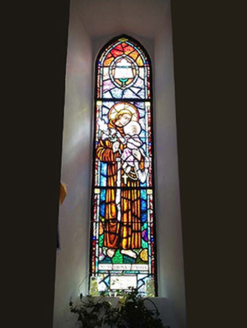
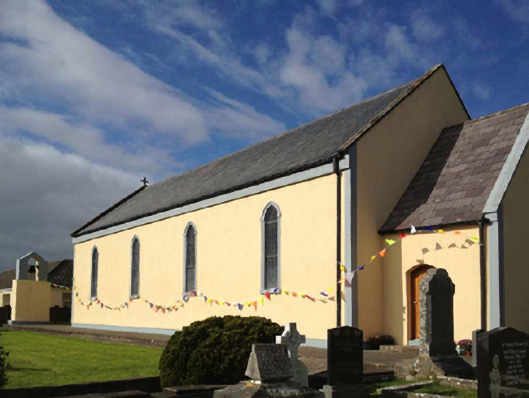
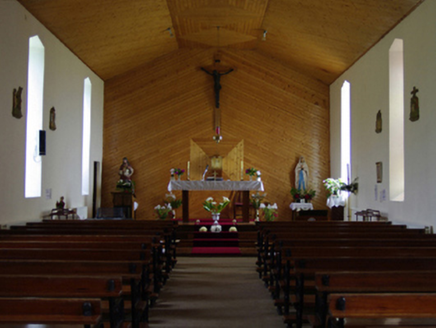
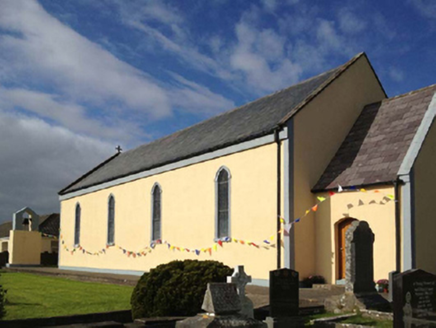
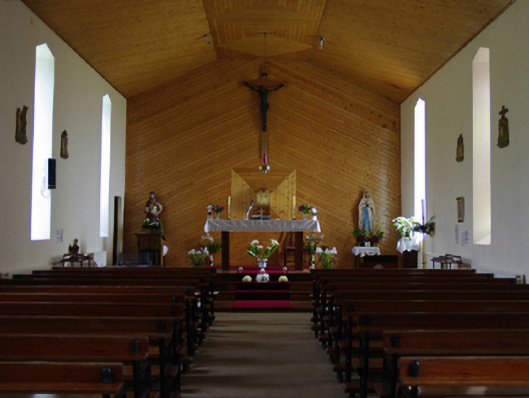
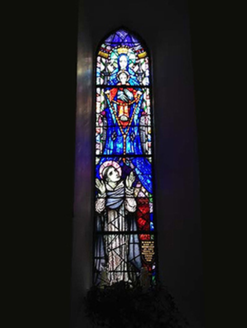
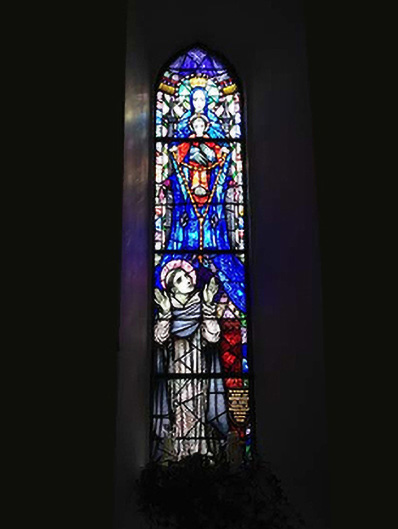
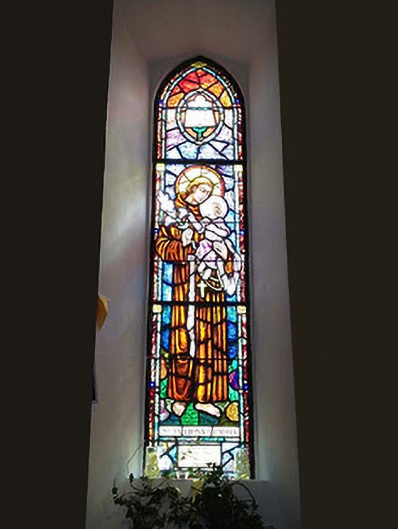
Detached four-bay double-height single-cell Catholic church, designed 1861; built 1862; dated 1862; extant 1911, with single-bay single-storey gabled projecting porch to entrance (west) front. Renovated, 1936-7, with interior "improved". Renovated, 1964-5, with sanctuary reordered. Renovated, 1988. Pitched slate roofs including pitched (gabled) slate roof to porch with clay ridge tiles, concrete coping to gables with Cross finial to apex (west), and replacement uPVC rainwater goods on cement rendered eaves. Replacement cement rendered walls bellcast over rendered plinth with rendered "bas-relief" piers to corners. Lancet window openings with concrete sills[?], and moulded rendered surrounds framing storm glazing over fixed-pane fittings having stained glass margins centred on lattice glazing bars. Segmental-headed opposing door openings to porch with concrete step thresholds, and concealed dressings framing timber boarded or tongue-and-groove timber panelled double doors. Interior including vestibule (west) with wall monument (ob. 1864); square-headed door opening into nave with glazed timber panelled double doors; full-height interior with carpeted central aisle between timber pews, stained glass memorial windows (????; 1953), and herring bone-pattern timber parquet stepped dais to sanctuary (east) reordered, 1964-5, with stepped "predella" supporting replacement altar table. Set in landscaped grounds shared with Saint Brigid's Abbey (founded 1224; rebuilt 1460).
Appraisal
A church erected to a design (1861) attributed to John Joseph Lyons (1828/9-80) of Lower Gardiner Street, Dublin (Irish Builder 1841, 448), representing an important component of the mid nineteenth-century ecclesiastical heritage of Clare Island with the architectural value of the composition confirmed by such attributes as the compact rectilinear "barn" plan form, aligned along a liturgically-correct axis; and the slender profile of the openings underpinning a streamlined "medieval" Gothic theme. Having been well maintained, the elementary form and massing survive intact together with quantities of the original fabric, both to the exterior and to the interior reordered (1964-5) in accordance with the liturgical reforms sanctioned by the Second Ecumenical Council of the Vatican (1962-5) where a restrained wall monument dedicated to Reverend James B. Davis (d. 1864); and the jewel-like ???? Memorial Window supplied (1953) by the Harry Clarke Stained Glass Studios (closed 1973) of Dublin, all highlight the artistic potential of the composition. An adjacent graveyard contributing positively to the group and setting values of the church in the shadow of the medieval Saint Brigid's Abbey (founded 1224; rebuilt 1460) features an array of markers of comparable artistic interest with one headstone identifying the so-called "Commonwealth War Grave" of Petty Officer Jubilee Jack Tweed (d. 1941), a casualty of the Second World War (1939-45).