
Survey Data
Reg No
31307913
Rating
Regional
Categories of Special Interest
Architectural, Artistic, Historical, Social
Original Use
Farm house
Date
1700 - 1838
Coordinates
124855, 287675
Date Recorded
06/01/2002
Date Updated
--/--/--
Description
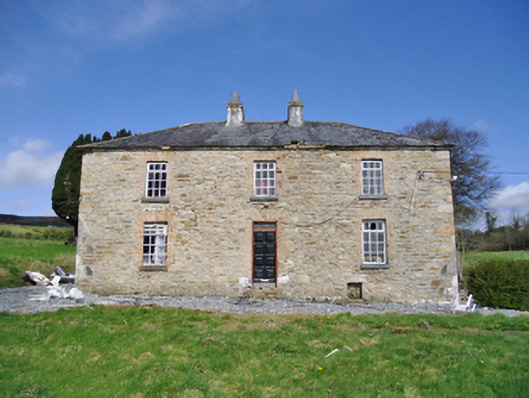
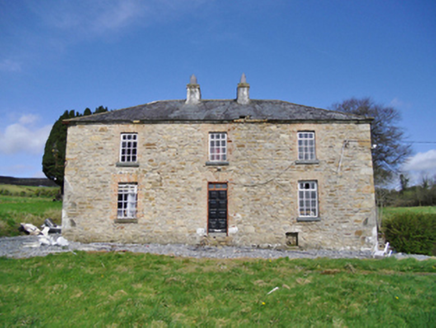
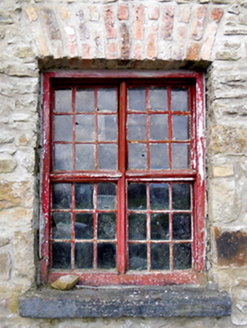
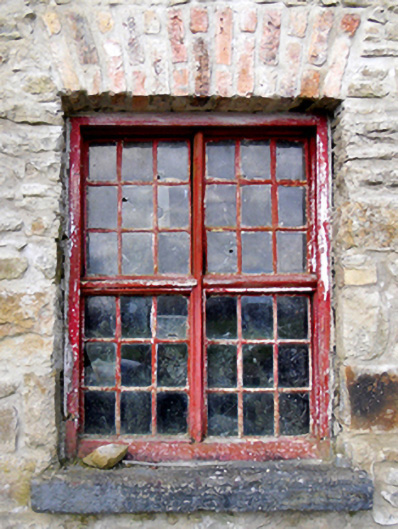
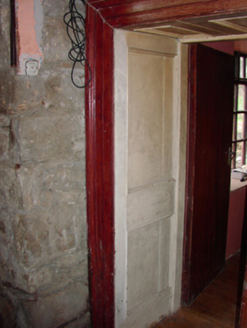
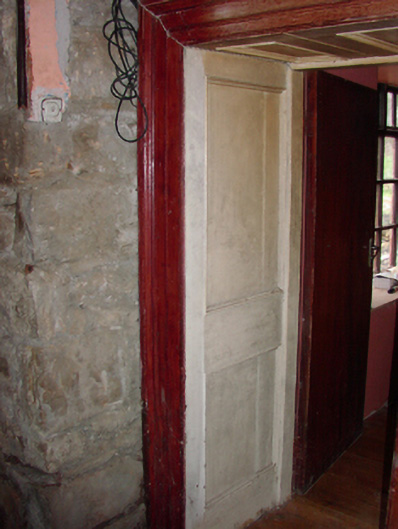
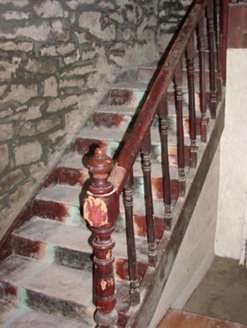
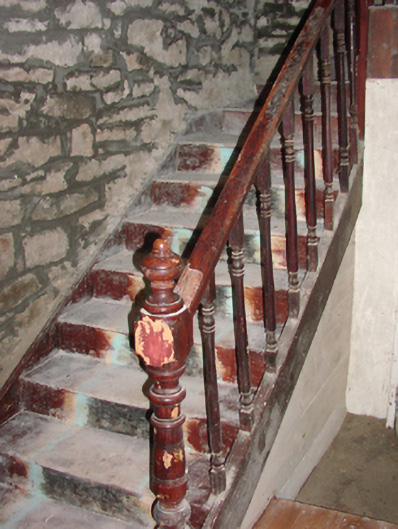
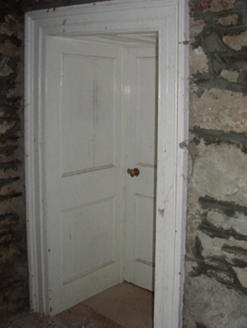
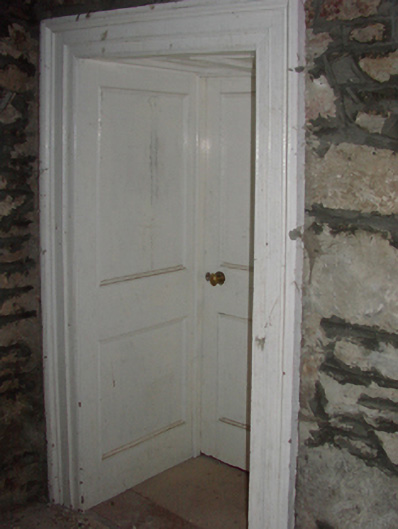
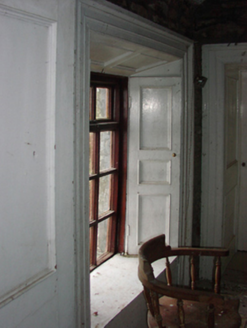
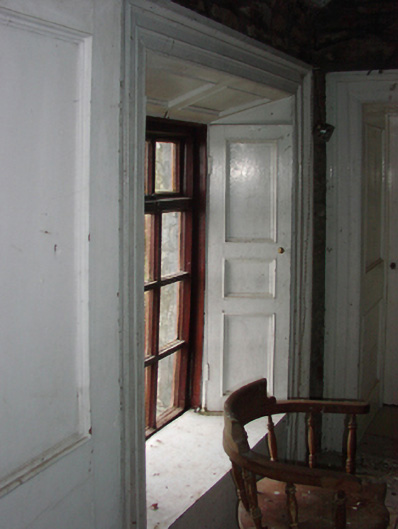
Detached three-bay two-storey over basement tenant farmhouse, extant 1838, on a T-shaped plan with single-bay (two-bay deep) two-storey lower central return (north). In occasional use, 1862. Occupied, 1911. Sold, 1931. Renovated, 1985. Resold, 1999. Vacant, 2002. Undergoing "restoration", 2009-12. Hipped slate roof on collared timber construction centred on pitched slate roof (north) with clay ridge tiles, paired rendered central chimney stacks having red brick stringcourses below capping supporting crested pots, and remains of cast-iron rainwater goods on limewashed rendered red brick header bond eaves retaining cast-iron octagonal or ogee hoppers and downpipes. Coursed rubble stone battered walls originally limewashed with squared rubble stone flush quoins to corners; remains of limewashed surface finish to side (west) elevation. Square-headed central door opening with red brick block-and-start surround framing timber panelled door having overlight. Square-headed window openings with drag edged dragged cut-limestone sills, and red brick block-and-start surrounds framing replacement timber casement windows retaining three-over-six (ground floor) or one-over-one (first floor) timber sash windows to rear (north) elevation. Interior including (ground floor): central entrance hall-cum-staircase hall retaining carved timber surrounds to door openings framing timber panelled doors, staircase on a dog leg plan with turned timber "spindle" balusters supporting carved timber banister terminating in turned timber newels, carved timber surrounds to door openings to landing framing timber panelled doors, and timber boarded vaulted ceiling; reception room (west) retaining carved timber surround to door opening framing timber panelled door with carved timber surround to window opening framing timber panelled shutters, and timber boarded ceiling; reception room (east) retaining carved timber surround to door opening framing timber panelled door with carved timber surround to window opening framing timber panelled shutters, and moulded plasterwork cornice to ceiling; kitchen (north) retaining hearth with tooled cut-limestone voussoirs; and carved timber surrounds to door openings to remainder framing timber panelled doors. Set in unkempt grounds.
Appraisal
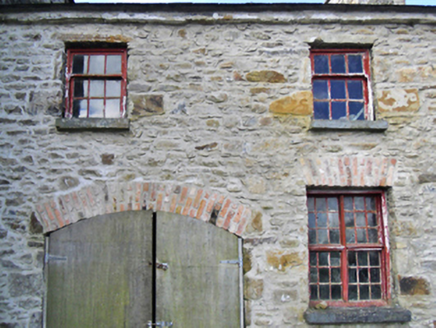
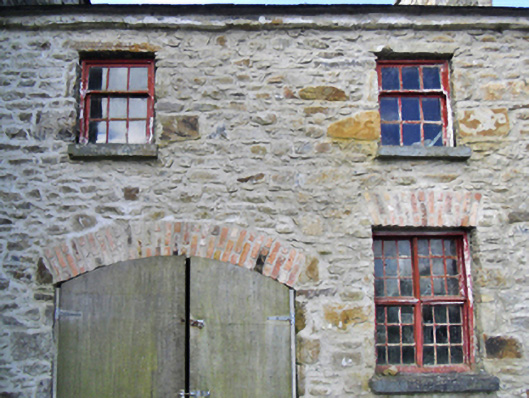
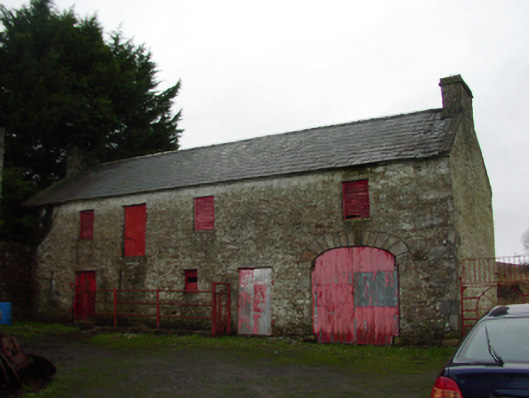
A tenant farmhouse representing an integral component of the early nineteenth-century domestic built heritage of the rural environs of Manulla with the architectural value of the composition, one repurposing the fabric of an eighteenth-century house shown as a partial ruin on an estate map drawn (1814) by John Longfield (c.1775-1833; NLI), suggested by such attributes as the compact plan form centred on a featureless doorcase; and the somewhat disproportionate bias of solid to void in the massing compounded by the very slight diminishing in scale of the openings on each floor producing a feint graduated visual impression. A prolonged period of unoccupancy notwithstanding, the elementary form and massing survive intact together with quantities of the original fabric, principally to the interior where contemporary joinery; restrained chimneypieces; and some sleek plasterwork refinements, all highlight the modest artistic potential of the composition: however, neither the removal of the surface finish nor the introduction of replacement fittings to most of the openings has had a beneficial impact on the external expression or integrity of the composition while an unfinished "restoration" may determine the ongoing architectural heritage status of the tenant farmhouse. An adjacent coach house-cum-stable outbuilding (extant 1894); and a slab-roofed double latrine (extant 1894), all continue to contribute positively to the group and setting values of a neat self-contained ensemble having historic connections with a succession of landlords including the Trenches of Heywood House, County Laois; the Domviles of Santry Court, County Dublin; and the McEllins of nearby Brees including John McEllin (d. 1934; NA 1911).