Survey Data
Reg No
31303015
Rating
Regional
Categories of Special Interest
Architectural
Original Use
Worker's house
Date
1890 - 1895
Coordinates
122872, 323587
Date Recorded
15/03/2011
Date Updated
--/--/--
Description
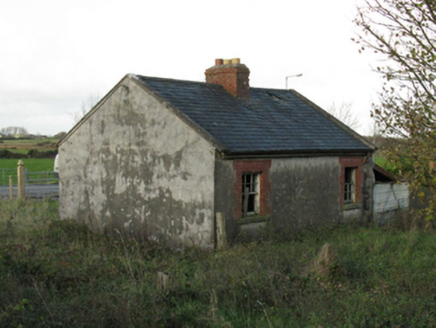
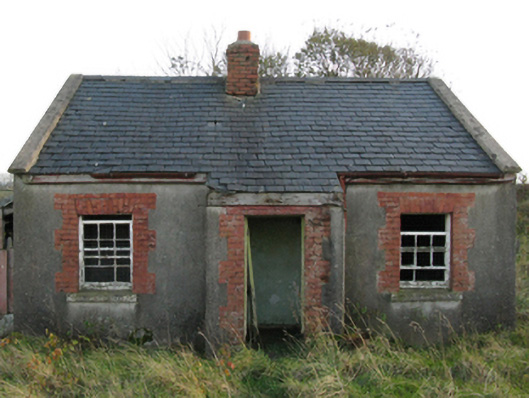
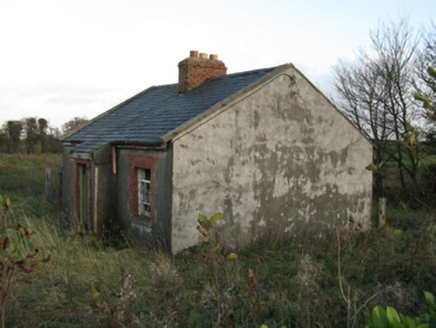
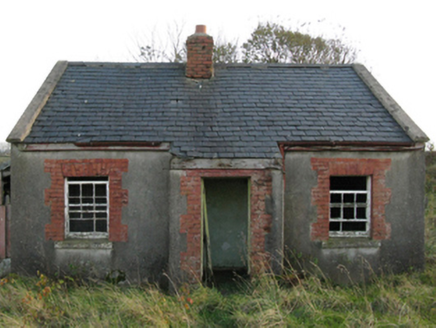
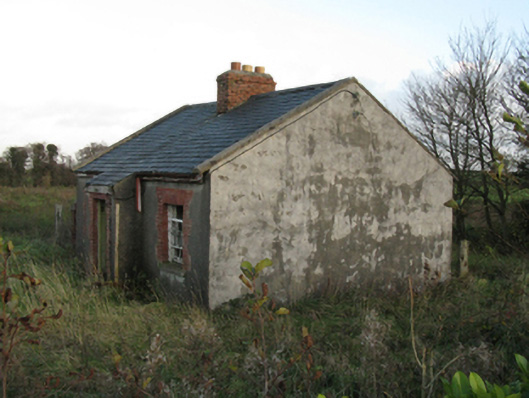
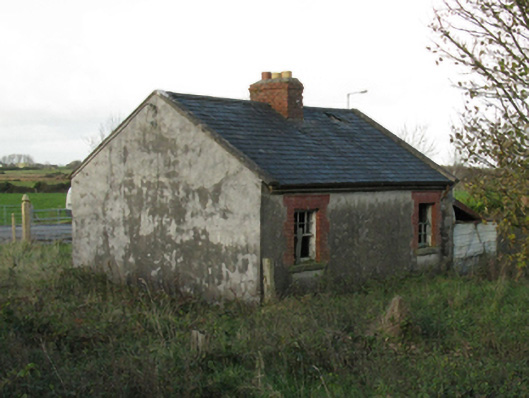
Detached three-bay single-storey crossing guard's lodge, commissioned 1893[?]; extant 1896, on a T-shaped plan centred on single-bay single-storey lean-to advanced porch with two-bay single-storey rear (south-east) elevation. Decommissioned, 1934. Now disused. Pitched slate roof on a T-shaped plan centred on lean-to slate roof with clay ridge tiles, red brick Running bond off-central chimney stack having stepped capping supporting terracotta or yellow terracotta pots, rendered chamfered coping to gables, and remains of cast-iron rainwater goods on timber eaves boards on exposed timber rafters retaining cast-iron downpipes. Rendered walls. Square-headed central door opening with red brick block-and-start surround framing unhinged timber boarded door. Square-headed flanking window openings with cut-limestone sills, and red brick block-and-start surrounds framing six-over-six timber sash windows. Set in unkempt grounds on a corner site.
Appraisal
A dilapidated crossing guard's lodge identified as an integral component of the late nineteenth-century built heritage of the rural environs of Ballina on account of the connections with the extension of the Midland Great Western Railway (MGWR) line (opened 1893) by the Midland Great Western Railway (MGWR) Company with the architectural value of the composition, a neo-vernacular "cottage" erected to a prototype design signed (1891) by William Barrington (1825-95), suggested by such attributes as the compact rectilinear plan form centred on a windbreak-like porch. A prolonged period of neglect notwithstanding, the elementary form and massing survive intact together with substantial quantities of the original fabric, thereby upholding much of the character or integrity of a crossing guard's lodge making a pleasing, if increasingly forlorn visual statement in a sylvan setting.