Survey Data
Reg No
31303005
Rating
Regional
Categories of Special Interest
Architectural, Artistic, Historical, Social, Technical
Original Use
Church/chapel
In Use As
Church/chapel
Date
1950 - 1960
Coordinates
118559, 319527
Date Recorded
25/02/2011
Date Updated
--/--/--
Description
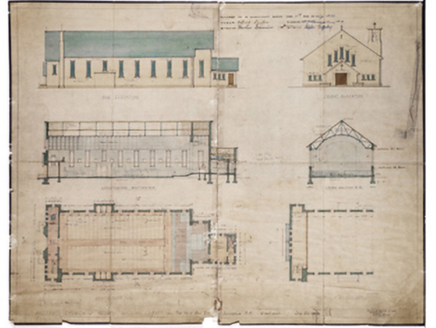
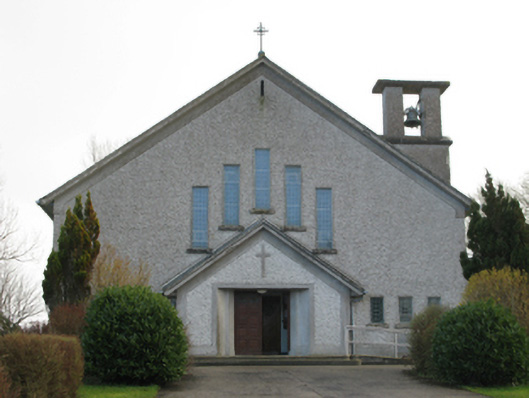
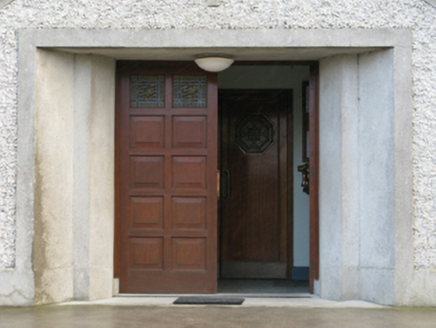
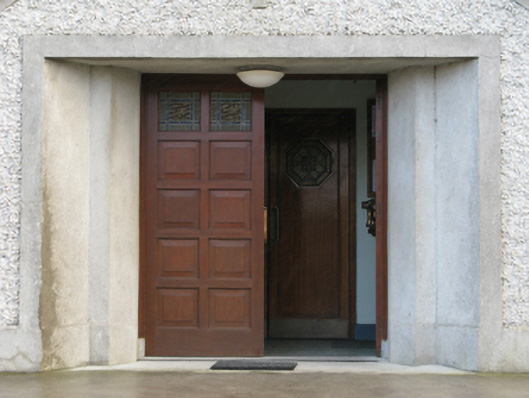
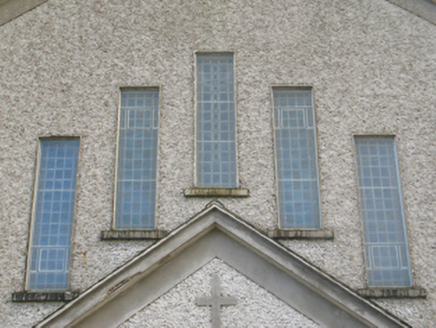
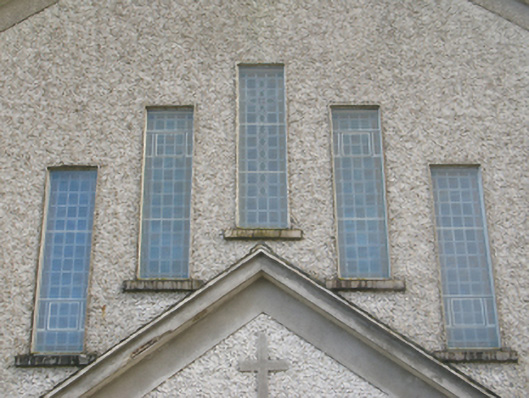
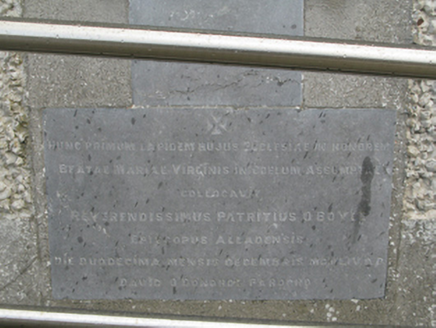
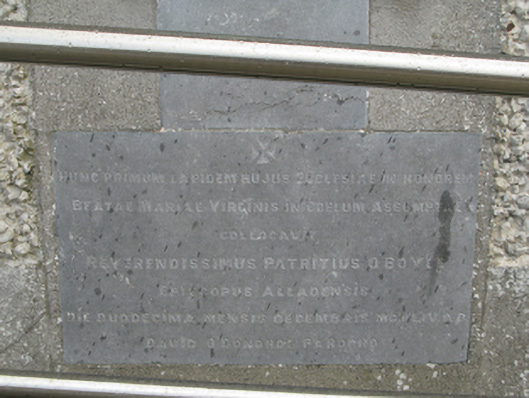
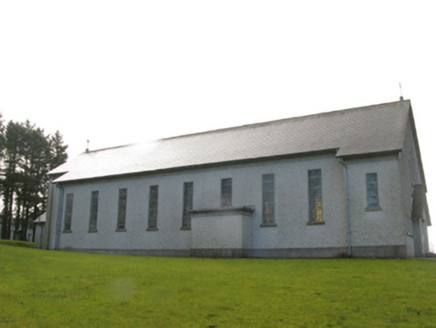
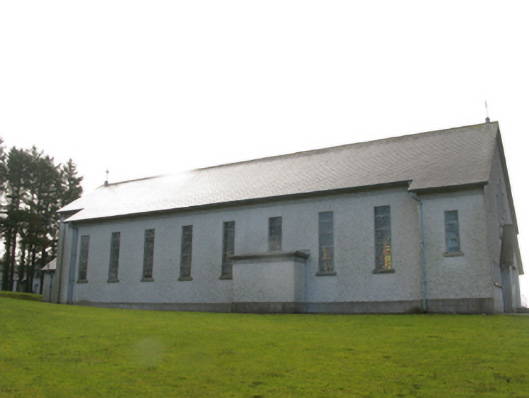
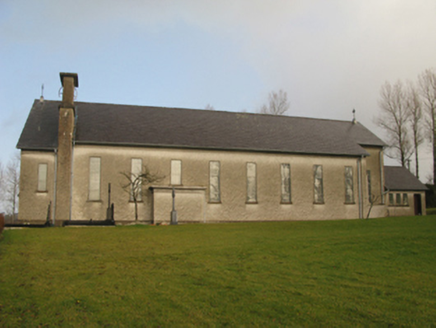
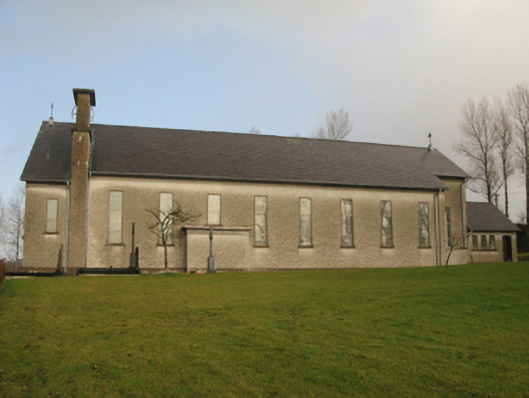
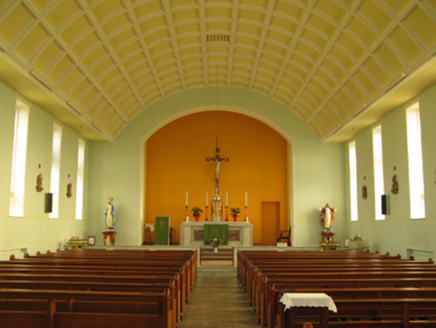
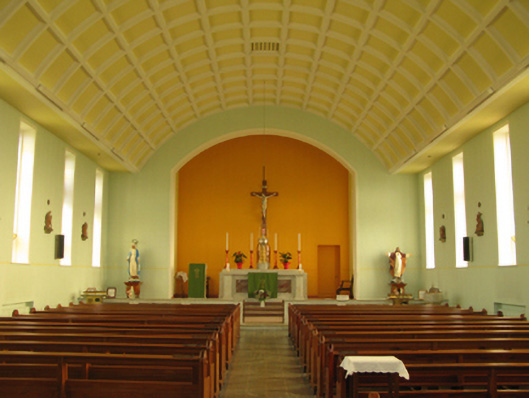
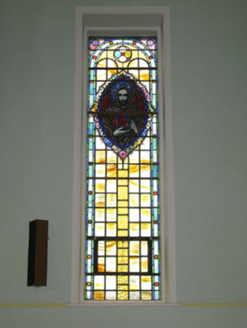
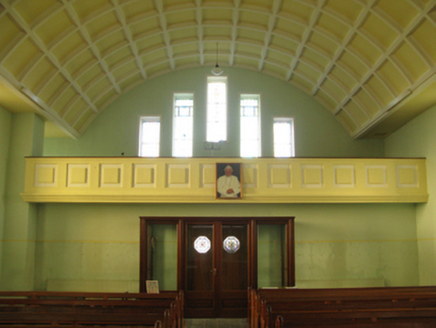
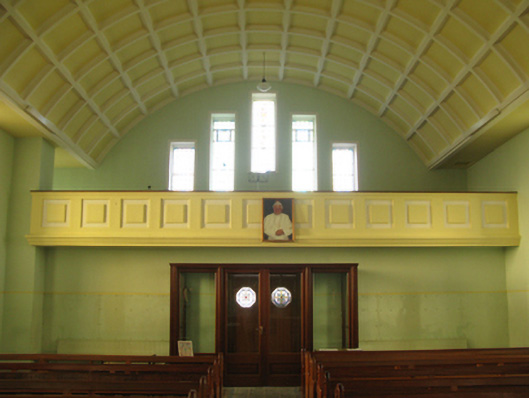
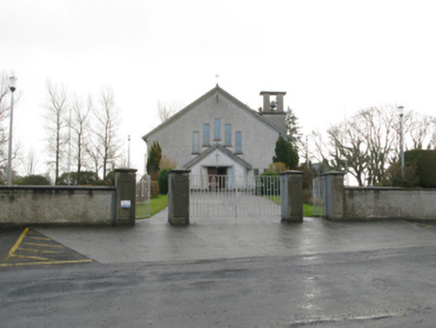
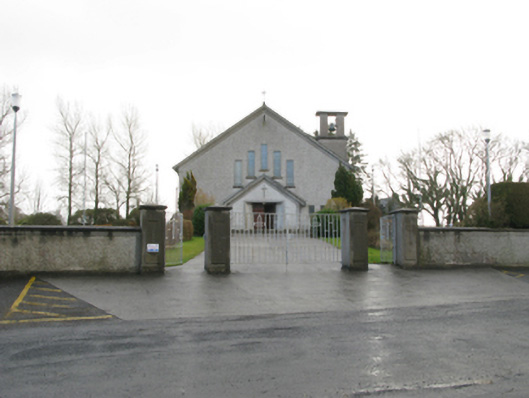
Detached ten-bay double-height Catholic church, designed 1951-3; dated 1954; built 1954-5, on a rectangular comprising nine-bay double-height nave opening into single-bay double-height chancel (east); single-bay single-storey gabled advanced porch to entrance (west) front. Pitched slate roofs on scissor truss construction; pitched (gabled) slate roof (porch), clay ridge tiles with copper Cross finials to apexes, and cast-aluminium rainwater goods on slightly overhanging box eaves with cast-aluminium downpipes. Roughcast walls on rendered plinth with rendered band to eaves. Square-headed window openings with concrete sills, and concealed dressings including reinforced concrete lintels framing storm glazing over fixed-pane fittings having margined square glazing bars. Square-headed window openings (east) with concrete sills, and concealed dressings including reinforced concrete lintels framing storm glazing over fixed-pane fittings having margined square glazing bars centred on leaded stained glass "lozenges". Square-headed door opening (porch) with rendered surround having splayed rebated reveals framing glazed timber panelled double doors. Square-headed stepped window openings (gable) with concrete sills, and concealed dressings including reinforced concrete lintels framing storm glazing over fixed-pane fittings having margined square glazing bars. Interior including vestibule (west); square-headed door opening into nave with glazed timber panelled double doors; full-height interior with panelled choir gallery (west), tiled central aisle between cruciform-detailed timber pews, segmental barrel vaulted coffered ceiling, and segmental-headed chancel arch framing cut-veined white marble stepped dais to sanctuary (east) with cut-veined white marble communion railings centred on carpeted stepped "predella" supporting cut-veined white marble panelled altar. Set in landscaped grounds with cruciform-detailed rendered panelled piers to perimeter having shallow pyramidal capping supporting mild steel double gates.
Appraisal
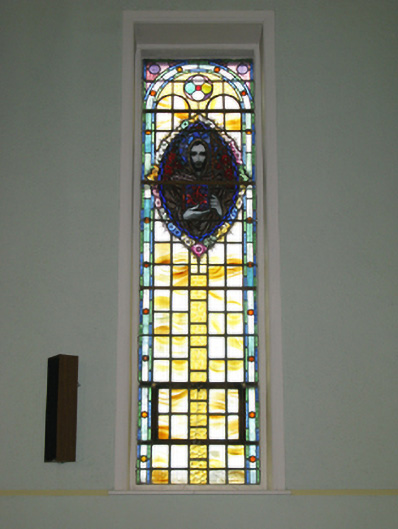
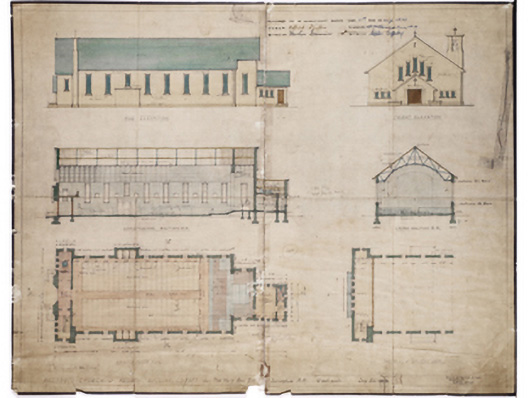
A church erected to designs signed (1951; 1953) by Simon Aloysius Leonard (1903-76) of William Henry Byrne and Son (formed 1902) of Suffolk Street, Dublin, representing an important component of the twentieth-century ecclesiastical heritage of County Mayo with the architectural value of the composition confirmed by such attributes as the rectilinear plan form; the slender profile of the openings underpinning a streamlined Modernist theme; and the simple bellcote embellishing the roof as an eye-catcher in the landscape. Having been well maintained, the form and massing survive intact together with substantial quantities of the original fabric, both to the exterior and to the interior where jewel-like stained glass attributable to Earley and Company (closed 1975) of Dublin highlights the artistic potential of the composition: meanwhile, a seemingly unsupported vaulted roof pinpoints the engineering or technical dexterity of a church making an imposing visual statement in a rural street scene. NOTE: This was the second attempt at building a new church to replace a nearby chapel described as 'a neat slated building...situated at Newtown' (Lewis 1837 I, 41) and William Henry Byrne and Son produced earlier sketch plans (July 1940) for a 'PROPOSED CHURCH AT ARDAGH [with] 378 SEATS EXCLUSIVE OF GALLERY'. The proposal was for a church in the eleventh-century Romanesque style with the stone faced walls given a battered silhouette; slender openings with the sanctuary lit by a "Trinity Window"; Celtic Cross finials decorating a high pitched roof; and a tapering tower house-like bell tower finished with crow stepped battlements. The proposal is likely to have been rejected owing to the projected costs and the drawings are labelled in pencil as "Cancelled".