Survey Data
Reg No
31301410
Rating
Regional
Categories of Special Interest
Architectural, Artistic, Historical, Social
Original Use
Farm house
In Use As
Farm house
Date
1895 - 1905
Coordinates
115500, 332911
Date Recorded
31/01/2011
Date Updated
--/--/--
Description
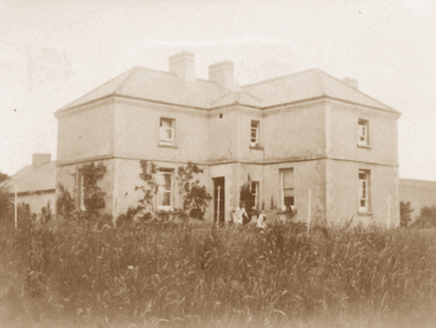
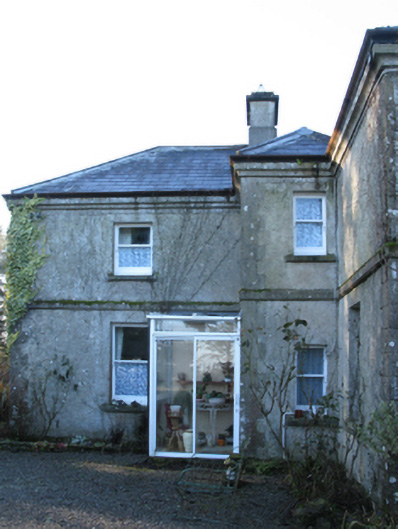
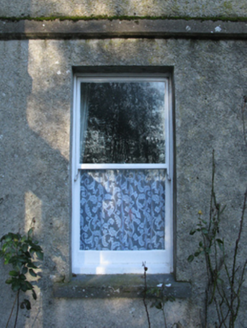
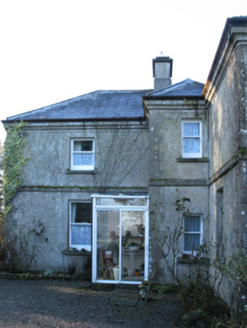
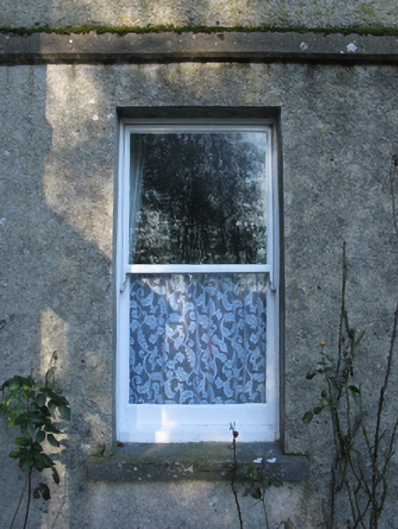
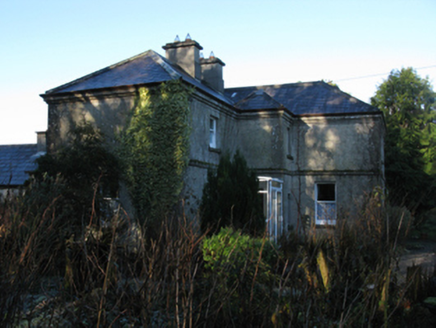
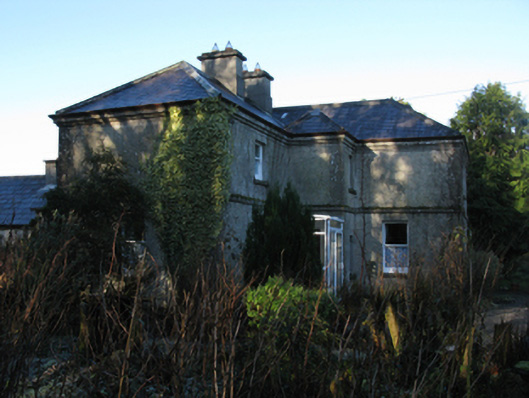
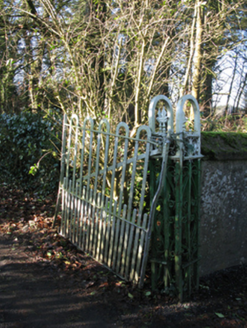
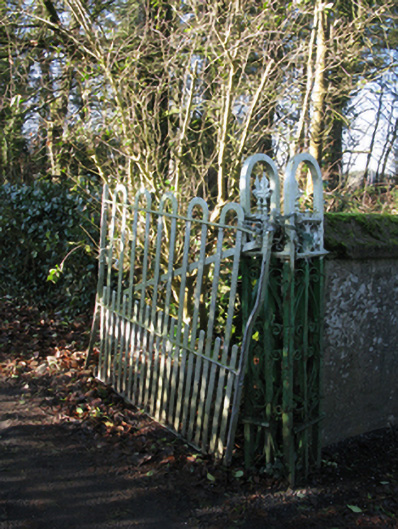
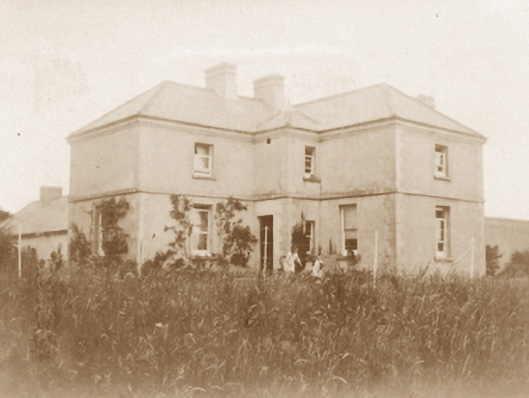
Detached three-bay two-storey farmhouse, built 1900[?]; occupied 1901, on an F-shaped plan centred on single-bay full-height breakfront on a square plan abutting single-bay (two-bay deep) two-storey projecting end bay. Hipped slate roof on an L-shaped plan centred on pyramidal slate roof with lead-covered roll moulded clay ridge tiles, paired rendered central chimney stacks on chamfered bases having stepped capping supporting terracotta pots, and cast-iron rainwater goods on tooled cut-limestone "Cavetto" cornice retaining cast-iron octagonal or ogee hoppers and downpipes. Part creeper- or ivy-covered fine roughcast walls on rendered chamfered plinth with tooled cut-limestone quoins to corners. Square-headed central door opening with concealed dressings framing timber panelled door. Square-headed window openings with drag edged dragged cut-limestone sills, and concealed red brick block-and-start surrounds framing one-over-one timber sash windows. Interior including (ground floor): entrance hall retaining carved timber surrounds to door openings framing timber panelled doors; and carved timber surrounds to door openings to remainder framing timber panelled doors with carved timber surrounds to window openings framing timber panelled shutters. Set in landscaped grounds with wrought iron "bird cage" piers to perimeter supporting looped flat iron double gates.
Appraisal
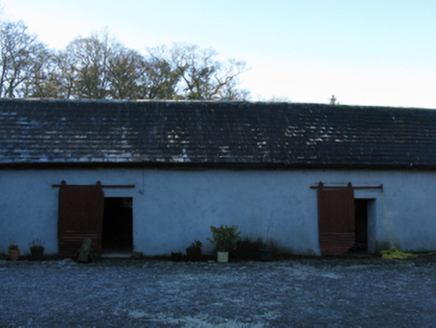
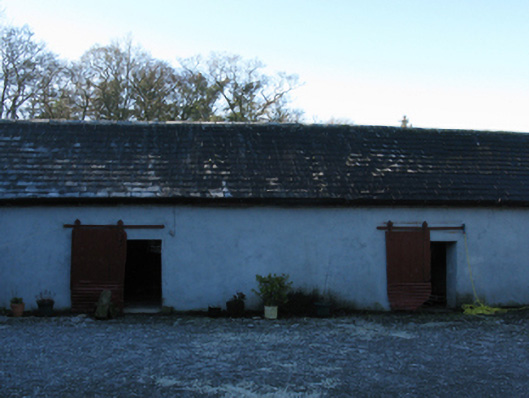
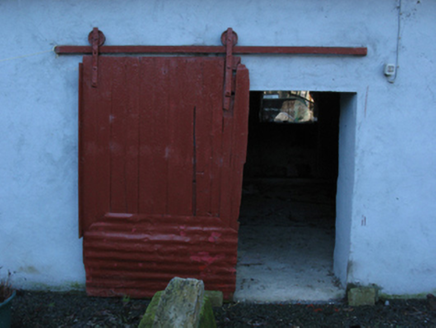
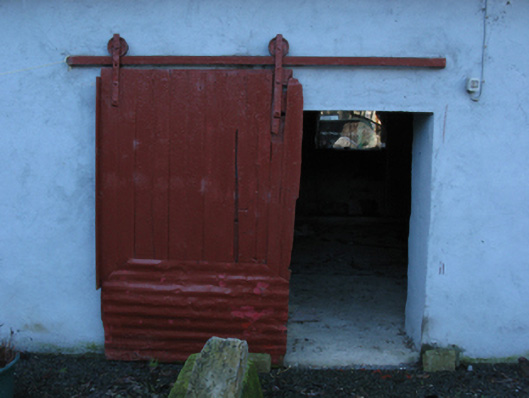
A farmhouse erected for James Hunter Massey (d. 1916) representing an interesting component of the domestic built heritage of north County Mayo with the architectural value of the composition suggested by such attributes as the compact plan form centred on an abbreviated turret-like breakfront; and the diminishing in scale of the openings on each floor producing a graduated visual impression. Having been well maintained, the elementary form and massing survive intact together with substantial quantities of the original fabric, both to the exterior and to the interior, thereby upholding the character or integrity of the composition. Furthermore, adjacent outbuildings (extant 1896) contribute positively to the group and setting values of a neat self-contained ensemble making a pleasing visual statement in a sylvan street scene.